
Sound is a vibration that travels through the air. Your ears catch those vibrations and turn them into signals your brain reads as sound. That is the whole process in one sentence — and the details are even more interesting.
This guide explains hearing in plain language, with a focus on helping kids (and the adults explaining it to them) understand what happens from the moment a dog barks to the moment you recognize it as a bark.
How Do We Hear? Ears And Sound Explained For Kids
Hearing starts with movement. When something vibrates — a guitar string, a voice, a slammed door — it pushes nearby air molecules back and forth. Those pushes spread outward as a wave.
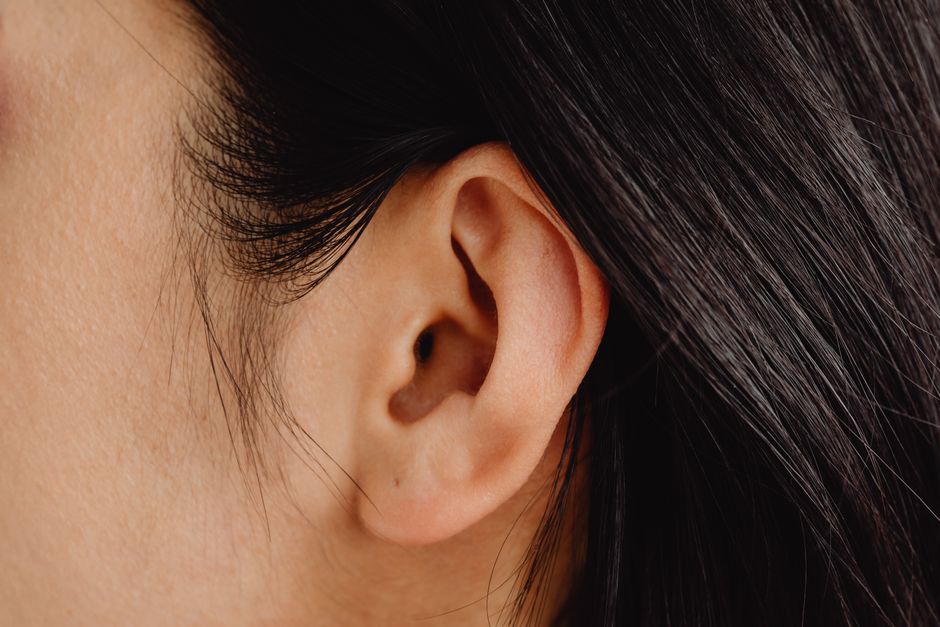
The wave travels through the air until it reaches your ear. Your outer ear, the part you can see, works like a small funnel. It collects the sound and sends it down a short tunnel called the ear canal.
At the end of that tunnel is the eardrum, a thin membrane stretched tight like the top of a drum. When sound waves hit it, it vibrates. That vibration is the moment sound becomes a physical movement inside your head.
From there, three tiny bones in the middle ear pick up the vibration and pass it along. These bones are the smallest in the human body. They boost the movement and deliver it to a fluid-filled chamber deep inside the ear.
Inside that chamber sits the cochlea, which is shaped like a snail shell. It is lined with thousands of tiny hair cells. When the fluid moves, the hairs bend. Bending triggers those cells to send electrical signals along the hearing nerve.
The nerve carries those signals to the brain. The brain sorts them into what we experience as pitch, loudness, and direction. It also compares them with sounds you have heard before, which is how you recognize your name in a noisy room or a friend’s voice on the phone.
What Each Part of the Ear Does
- Outer ear — collects sound and helps you tell where it came from.
- Ear canal — carries sound to the eardrum and produces earwax, which helps protect the skin inside.
- Eardrum — vibrates when sound hits it.
- Middle ear bones — pass the vibration along and amplify it.
- Cochlea — turns vibration into electrical signals.
- Hearing nerve — carries signals to the brain.
What Is Sound, Really?
Sound is a pressure wave moving through a medium — usually air, but also water or solid objects. In space, where there is essentially no air, sound has nothing to travel through, which is why space is silent.
Two properties of a sound wave matter most for hearing. Frequency, measured in hertz, determines pitch. A high frequency sounds high; a low frequency sounds low. Amplitude determines loudness, measured in decibels.
Human hearing generally spans frequencies from about 20 hertz to 20,000 hertz. Young children can often hear the upper end of that range. Many adults lose the ability to hear the highest frequencies as they age, which is a normal part of aging and not a sign of disease on its own.
Here is something worth knowing: sound waves do not just enter the ear through the air. They also reach the cochlea through vibrations in the bones of your skull. That pathway is much weaker, but it is real — and it is why a recording of your own voice sounds different from what you hear when you speak. When you talk, you hear yourself partly through bone conduction, which makes your voice sound fuller and lower to you than to everyone else.
Why Do We Have Two Ears?
Two ears give you directional hearing. A sound coming from your right reaches your right ear a fraction of a second before it reaches your left. It also arrives slightly louder on the right side. Your brain compares these tiny differences and calculates where the sound came from.
This is why covering one ear makes it harder to locate sounds. It is also why people with hearing loss in one ear often struggle to follow conversation in a crowded room, even when the other ear works normally.
How Loud Is Too Loud for Your Ears?
Loudness is measured in decibels. The scale is not linear — each increase of about 10 decibels represents roughly ten times more sound intensity. That is why a sound at 90 decibels is far more powerful than one at 80.
Long or repeated exposure to loud sound damages the hair cells in the cochlea. These cells do not regenerate in humans. Once damaged, the loss is permanent. This is well established and is one of the most important facts about hearing protection.
General guidance from hearing health organizations uses a rule of thumb: if you have to shout to be heard by someone an arm’s length away, the background noise is likely loud enough to be a concern over time. Noise-induced hearing loss often develops slowly and painlessly, so it can go unnoticed until it is significant.
For children, the same principle applies. Headphones turned up loud, concerts, and noisy machinery all expose young ears to the same risk. Volume limits on devices and breaks from loud sound are the main practical protections. No specific safe listening duration applies to every person, because individual susceptibility varies — but shorter time and lower volume both reduce risk.
Why Do Ears Make Wax?
Earwax, called cerumen, is produced in the outer part of the ear canal. It traps dust and small particles, repels water, and helps protect the skin lining the canal. It is part of normal ear health, not a sign of poor hygiene.
Most ears clean themselves. Wax slowly moves outward and falls away or is wiped off when you wash. Cotton swabs pushed into the canal can pack wax deeper, scratch the skin, or injure the eardrum. Clinicians generally advise against putting anything smaller than your elbow into your ear canal.
If wax builds up enough to block hearing or cause discomfort, a clinician can remove it safely. That is a common and routine procedure.
What Happens When Hearing Does Not Work as Expected?
Hearing problems fall into a few broad categories, and the category matters for what can be done.
Conductive hearing loss involves a problem carrying sound to the inner ear — for example, a wax blockage, fluid behind the eardrum, or a hole in the eardrum. Sensorineural hearing loss involves damage to the hair cells or the hearing nerve, and it is usually permanent. Mixed hearing loss combines both.
In children, fluid behind the eardrum is common after colds and often clears on its own. Persistent fluid or repeated ear infections can affect hearing and, in young children, may affect speech development if not addressed. This is why pediatric hearing checks matter.
Newborn hearing screening is standard practice in the United States and many other countries. It catches significant hearing loss early, when support for language development is most effective. If a child seems not to respond to sound, or speech is delayed, an evaluation by a clinician is the right next step — not a wait-and-see approach.
Signs worth checking in children include not turning toward sound, unclear speech compared with peers, frequently asking for repetition, and turning up the TV volume higher than the rest of the family needs.
How Can You Protect Your Hearing?
Hearing protection is straightforward and well supported. The core ideas are lower volume, shorter exposure, and distance from the source.
- Keep personal audio at a volume where others nearby cannot hear it.
- Take breaks from loud environments.
- Use ear protection around loud machinery, power tools, and at loud events.
- Move away from the source of loud sound when you can.
None of this restores hearing that is already lost. It prevents further loss. That distinction matters, especially for kids learning habits they will carry for decades.
Hearing is one of the senses people tend to take for granted until it changes. Understanding how it works — from a vibrating eardrum to a signal in the brain — makes it easier to treat it with care.
Frequently Asked Questions
How do ears turn sound into something the brain understands?
Sound vibrations move the eardrum and three tiny middle ear bones, which pass the movement into the fluid-filled cochlea. Hair cells there convert the movement into electrical signals that travel along the hearing nerve to the brain.
Why does my own voice sound different in a recording?
When you speak, you hear yourself partly through vibrations in your skull bones as well as through the air. A recording captures only the air pathway, so it sounds thinner and higher than the voice you are used to hearing.
Can damaged hair cells in the ear grow back?
In humans, cochlear hair cells do not regenerate, so hearing loss from loud noise is permanent. Protection is the only reliable way to prevent it from getting worse.
Is it safe to clean ears with cotton swabs?
No, clinicians generally advise against putting cotton swabs inside the ear canal. They can push wax deeper, scratch the canal, or damage the eardrum, and ears usually clean themselves without help.
