
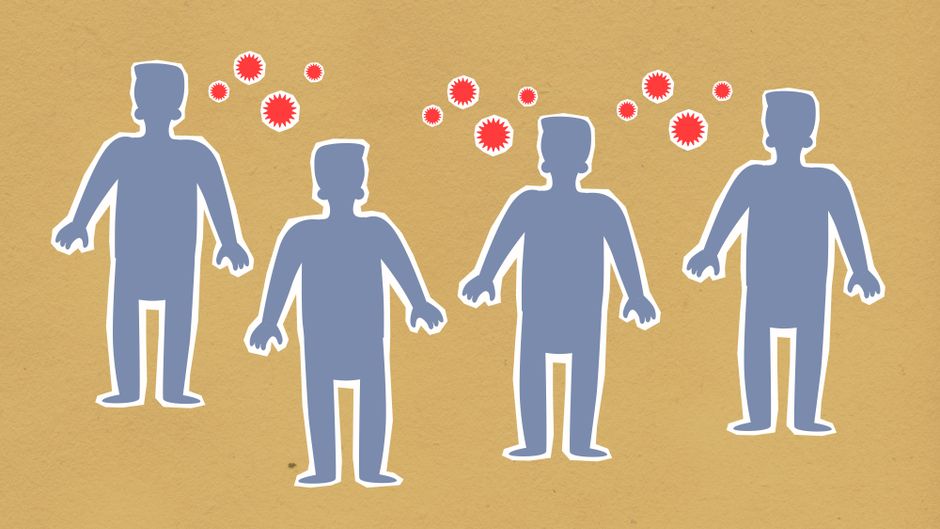
Viruses spread through a sequence of steps: they exit an infected person, travel through the air or another route, enter a new person’s body, and then infect that person’s cells. The most common route is through respiratory droplets and aerosols released when someone coughs, sneezes, talks, or breathes. These particles can be inhaled by someone nearby, or they can land on surfaces where the virus may survive long enough to be picked up by hands and transferred to the eyes, nose, or mouth.
What Exactly Happens When a Virus Spreads?
Every virus needs a host cell to reproduce. A virus cannot multiply on its own. It must enter a living cell and hijack that cell’s machinery to make copies of itself.
The process starts when a virus particle reaches a susceptible person. The virus attaches to specific receptors on the surface of host cells. Think of it like a key fitting into a lock. Once attached, the virus enters the cell, releases its genetic material, and forces the cell to produce new viral parts. These parts assemble into new viruses, which then exit the cell to infect other cells or to be shed from the body and spread to other people.
Before any of this happens, the virus must physically get from one person to another. That journey is what we call transmission.
How Do Viruses Spread Step by Step?
Understanding the full chain of infection helps explain why certain behaviors reduce risk. The chain has clear links.
Step 1: The virus exits the source. An infected person releases virus particles through respiratory secretions, saliva, blood, or other bodily fluids. For respiratory viruses, this happens through coughing, sneezing, talking, singing, or simply breathing.
Step 2: The virus travels. The particles move through the environment. Respiratory droplets and aerosols travel through the air. Some viruses travel through contaminated food or water. Others, like HIV or hepatitis B, travel through blood or sexual contact. Some viruses hitch a ride on surfaces, which are called fomites.
Step 3: The virus enters a new host. A new person must take the virus in. For respiratory viruses, this usually means inhaling particles. It can also mean touching a contaminated surface and then touching the face. For foodborne viruses, it means swallowing contaminated food or water. For bloodborne viruses, it means the virus enters through broken skin or mucous membranes.
Step 4: The virus infects cells. Once inside the new host, the virus finds its target cells. It attaches, enters, and begins replicating. This is the point of no return — infection is now established.
Step 5: The new host sheds virus. The newly produced viruses exit the body through the same routes. The cycle repeats. This is why one infected person can start a chain of transmission that spreads through a community.
What Are the Main Ways Viruses Spread?
Not all viruses spread the same way. The route matters because it determines which precautions work.
Airborne and respiratory spread. This is the most common route for viruses like influenza, SARS-CoV-2 (the virus that causes COVID-19), and respiratory syncytial virus (RSV). Larger droplets fall quickly to the ground, usually within a few feet. Smaller aerosols can hang in the air for minutes to hours, especially indoors. Good ventilation and masks reduce this risk.
Surface (fomite) spread. Viruses can land on doorknobs, countertops, phones, and other objects. Some respiratory viruses survive on surfaces for hours or days, depending on the material and conditions. The risk from surfaces is real but generally lower than airborne spread for most respiratory viruses. Handwashing interrupts this route.
Direct contact. Some viruses spread through direct physical contact. This includes touching, kissing, and sexual contact. Herpes simplex virus and human papillomavirus (HPV) spread this way.
Fecal-oral spread. Norovirus and hepatitis A spread when tiny amounts of infected stool contaminate food, water, or hands. Good hand hygiene after using the bathroom is the main defense.
Blood and body fluids. HIV, hepatitis B, and hepatitis C spread through blood and certain body fluids. This happens through shared needles, transfusions with contaminated blood, or unprotected sexual contact.
Vector-borne spread. Some viruses need a living carrier, or vector, to move between hosts. Mosquitoes spread dengue, Zika, and West Nile virus. Ticks spread certain encephalitis viruses. The virus replicates inside the vector before being transmitted to the next human or animal.





How Long Can Viruses Survive Outside the Body?
Survival time depends on the virus and the surface. It is not a single number.
Enveloped viruses, like influenza and coronaviruses, have a fatty outer layer. This layer dries out and degrades relatively quickly on surfaces. Non-enveloped viruses, like norovirus and rhinovirus (a cause of the common cold), lack this fatty layer. They are more resistant to drying and many disinfectants.
Research has shown that influenza viruses can survive on stainless steel and plastic for up to 48 hours. Coronaviruses can survive on similar surfaces for several days under laboratory conditions. But survival does not equal infectiousness. The amount of virus that remains able to cause infection drops rapidly over time. In real-world conditions, with air movement, sunlight, and cleaning, the risk from surfaces drops much faster than lab studies suggest.
Temperature and humidity also matter. Cold, dry conditions generally preserve viruses longer. Warm, humid conditions break them down faster. This is one reason respiratory viruses spread more easily in winter, though human behavior — more time indoors — plays a larger role.
Does the Amount of Virus Matter?
Yes, and this concept is called the infectious dose. It is the number of virus particles needed to start an infection in a new host.
For some viruses, the infectious dose is very small. Norovirus, for example, can cause illness with fewer than 20 virus particles. That is an extraordinarily small amount — invisible to the naked eye and easily transferred from a contaminated finger to the mouth.
For other viruses, the infectious dose is higher. The body’s immune system and physical barriers like mucus can neutralize small amounts of virus before infection takes hold.
Exposure to a higher dose of virus generally increases the chance of infection. Some research also suggests that higher initial doses may lead to more severe illness, though this is not confirmed for every virus. The practical takeaway is that reducing exposure — even if you cannot eliminate it — lowers risk.
Why Do Some People Spread Viruses Without Symptoms?
Some infected people shed virus before they feel sick. Others never develop symptoms at all. Both groups can transmit the virus.
The time between exposure and symptom onset is called the incubation period. During part of this period, called the presymptomatic phase, a person may already be shedding virus. For influenza, shedding can begin about one day before symptoms appear. For SARS-CoV-2, presymptomatic transmission was a major driver of spread during the COVID-19 pandemic.
People who remain asymptomatic throughout their infection can also transmit virus. The extent of asymptomatic transmission varies by virus. For influenza, asymptomatic people appear to transmit less than symptomatic people, likely because they do not cough or sneeze as much. For SARS-CoV-2, asymptomatic transmission was documented but the exact contribution is still debated.
This is why public health measures like testing, masking, and isolation are important even when people feel fine. You cannot always tell who is infectious.
How Can You Reduce the Spread of Viruses?
The most effective measures target the weakest link in the chain of transmission.
Vaccination is the single most powerful tool for many viral diseases. Vaccines prevent infection, reduce viral shedding, and lower the chance of severe illness. They protect both the vaccinated person and those around them through herd immunity.
Hand hygiene interrupts the surface-to-face route. Washing hands with soap and water for at least 20 seconds is highly effective. Soap breaks down the fatty envelope of many viruses, inactivating them. Alcohol-based hand sanitizers with at least 60% alcohol are a good alternative when soap is not available.
Respiratory etiquette reduces airborne spread. Covering coughs and sneezes, wearing masks during respiratory illness outbreaks, and staying home when sick all reduce the number of virus particles released into the air.
Ventilation dilutes airborne virus. Opening windows, using air purifiers with HEPA filters, and spending time outdoors reduce the concentration of infectious aerosols in indoor spaces.
Surface cleaning matters most for viruses that survive well on surfaces, like norovirus. For respiratory viruses, routine cleaning of high-touch surfaces is helpful but less critical than ventilation and masking.
Safe food handling prevents fecal-oral spread. Washing produce, cooking food to proper temperatures, and avoiding food prepared by someone who is ill reduce risk.
Safe sex and needle practices prevent bloodborne and sexually transmitted viruses. Condoms reduce the risk of HIV and HPV transmission. Never sharing needles eliminates the main route for hepatitis B and C.
Frequently Asked Questions
Can viruses spread through the air over long distances?
Some viruses can travel long distances in tiny aerosol particles that stay suspended in the air. Measles virus is highly contagious and can remain infectious in the air for up to two hours in enclosed spaces.
How long do cold and flu viruses live on surfaces?
Cold and flu viruses can survive on hard surfaces like plastic and stainless steel for up to 48 hours. The amount of infectious virus drops rapidly within the first few hours, so the actual risk of infection from surfaces is lower than people often assume.
Does washing hands prevent the spread of all viruses?
Handwashing prevents viruses that spread through the fecal-oral route and through contaminated hands touching the face. It does little to prevent airborne transmission, which requires masks and ventilation.
Can you spread a virus before you have symptoms?
Yes, many respiratory viruses can be spread during the presymptomatic period. Influenza and SARS-CoV-2 can both be transmitted one to two days before symptoms appear.
