
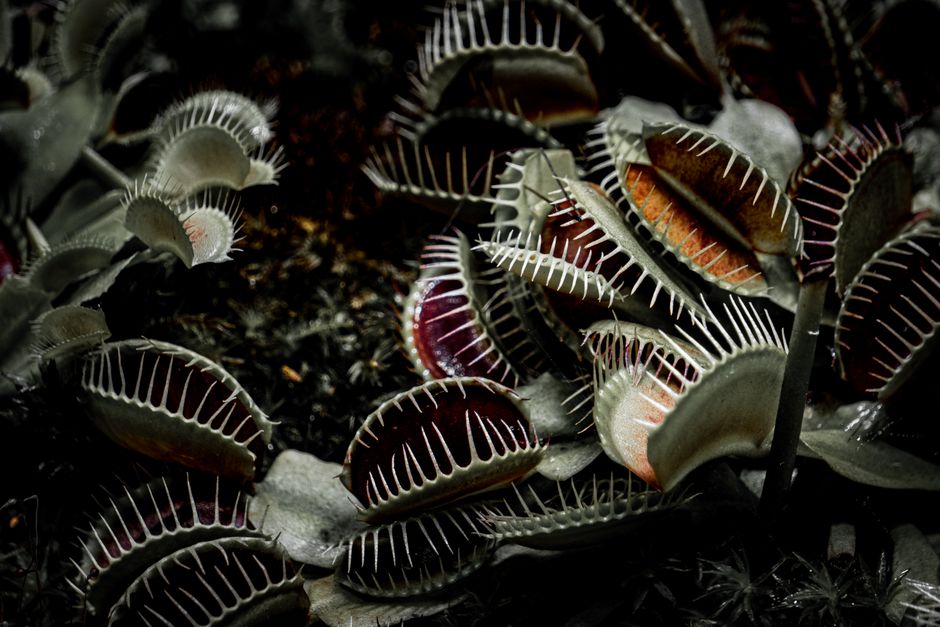
A Venus flytrap digests an insect in two stages: first it seals its trap shut around the prey, then it floods the closed trap with digestive enzymes that break the insect down into nutrients it can absorb. The whole process takes roughly five to twelve days. Once the meal is finished, the trap reopens and the leftover shell usually blows or washes away.
That is the short answer. The longer story involves trigger hairs, electrical signals, a strict five-trigger rule, and a plant that lives in some of the poorest soil on Earth. Understanding how the digestion actually works explains why the plant evolved this strange behavior in the first place.
Why Does a Venus Flytrap Need to Digest Insects at All?
Venus flytraps grow in nutrient-poor environments. Their native range is a small strip of coastal North and South Carolina, where they live in sandy, acidic, waterlogged soil that is low in nitrogen and phosphorus. Most plants get those nutrients from the ground. A flytrap cannot.
So it gets them from animals instead. The insects it catches are not a source of energy the way food is for you or me. The plant still makes its own energy through photosynthesis, using sunlight, water, and carbon dioxide. The insect is a fertilizer delivery system. Digestion releases nitrogen, phosphorus, and other minerals from the prey’s body, and the plant absorbs them through the trap surface.
This distinction matters. A Venus flytrap kept in bright light and clean water can survive for a long time without catching anything. It will simply grow more slowly and look less vigorous. Feeding it does not replace sunlight. It supplements it.
What Happens Inside the Trap When It Closes?
The trap does not digest immediately. Closing and digesting are two separate events, and the plant only starts the second one if the prey is worth the cost.
When an insect brushes against the trigger hairs inside the trap, it generates a small electrical signal. Two hairs touched in quick succession, or one hair touched twice within about twenty seconds, is enough to snap the trap shut. The trap then forms a sealed cavity. The edges press together and the lobes curve inward, creating a tight enclosure.
At this point the plant is still deciding. If the trapped object keeps moving and touching the trigger hairs, the plant receives more signals and commits to digestion. If the object is a pebble, a twig, or a dead insect that does not move, the trap typically reopens within a day or so and resets. This is a real energy-saving mechanism. Closing a trap and producing enzymes costs the plant resources it cannot easily replace.
Researchers have studied this signaling in detail. Work published in Current Biology described how the plant uses calcium-based electrical signals to count touches and trigger the digestive response only after enough stimulation. The plant is, in a functional sense, counting.
How Does a Venus Flytrap Digest Its Prey Step by Step?
Once the trap commits, digestion follows a fairly consistent sequence.
- The trap seals shut, creating a closed chamber with the prey inside.
- Glands on the inner surface of the trap release a digestive fluid containing enzymes.
- The enzymes break down the insect’s soft tissues into simpler compounds.
- The plant absorbs those compounds through the same glandular surface.
- The trap reopens, usually leaving behind the hard exoskeleton, wings, and legs.
The fluid is not just an acid bath. It is a mix of enzymes, including proteases that break down proteins and chitinases that attack chitin, the tough material in an insect’s exoskeleton. The fluid also contains antimicrobial compounds, which likely help prevent the trapped prey from rotting and harming the plant.
Digestion typically takes somewhere between five and twelve days, depending on the size of the prey and the temperature. Warmer conditions speed it up. Colder conditions slow it down. A trap that has just finished a meal stays closed for a while afterward and may not reopen for another day or two.
-
 What Causes Sudden Sharp Pain in Lower Back? Everything You Need to Know
-
Fitness tips for daily routine? Everything You Need to Know
-
Enlarged Prostate Symptoms Men: Know Everything About BPH
-
Does Corn Digest in the Human Body? What You Should Know
-
What is the Phone Number for Readers Digest Customer Service?





How Does the Plant Absorb the Nutrients?
Absorption happens directly through the inner surface of the trap. The glands that released the enzymes also take up the breakdown products. This is similar in principle to how roots absorb minerals from soil, just happening across a leaf surface instead.
Once inside, nitrogen and phosphorus get used for the same things they are used for in any plant: building proteins, DNA, and the molecules involved in photosynthesis. The nutrients are not stored in the trap itself. They are transported into the rest of the plant.
Each trap has a limited working life. A trap can usually only digest a handful of meals before it stops functioning and is replaced by a new one growing from the center of the plant. This is one reason overfeeding a Venus flytrap is not helpful. It wears out traps faster than the plant can replace them.
Does a Venus Flytrap Only Eat Insects?
In the wild, Venus flytraps eat mostly crawling insects and spiders. Ants, beetles, spiders, and similar small arthropods make up most of their diet. Flying insects are less common prey because the trap depends on the animal walking across the trigger hairs rather than landing on them.
They can catch small frogs, lizards, or other vertebrates on rare occasions, but this is not normal and not beneficial. A prey animal that is too large can damage the trap or cause it to rot. The plant is not a predator in the sense a snake or a hawk is. It is a small, stationary plant that catches what happens to walk into it.
There is a common misconception that Venus flytraps eat anything that touches them. They do not. The trap discriminates based on movement and repeated triggering, and it will reject non-food items by reopening without digesting them.
What Happens If You Feed a Venus Flytrap the Wrong Thing?
Feeding a Venus flytrap hamburger meat, cheese, or other human food is a bad idea. These foods are fatty, salty, and prone to rotting. They can cause the trap to blacken and die, and in some cases the rot spreads into the rest of the plant.
The same applies to dead insects that do not move. A trap that closes on a dead bug usually reopens without digesting it, because the plant needs the repeated trigger signal to commit. If the dead insect does trigger digestion, it can still cause problems because dead prey often carries bacteria that the plant’s antimicrobial fluid may not fully control.
If you keep a Venus flytrap as a houseplant, the most reliable approach is to let it catch its own food outdoors or in a bright window. If you feed it manually, live insects that are appropriately sized for the trap are the safest choice. No clinical or horticultural guidelines exist for feeding frequency in cultivated plants, but most growers suggest no more than one insect per trap every few weeks, and only during the growing season.
How Is Venus Flytrap Digestion Different From Other Carnivorous Plants?
Different carnivorous plants use different strategies, and the Venus flytrap is one of the more active ones.
- Pitcher plants trap insects in a slippery pool of fluid and digest them slowly over weeks.
- Sundews use sticky tentacles to catch prey, then curl around it and digest it on the leaf surface.
- Bladderworts suck tiny aquatic organisms into underwater bladders in milliseconds.
- Venus flytraps use a snap-trap mechanism and a sealed digestive chamber, which is unusual because the digestion happens in a closed, enzyme-filled cavity rather than on an open surface.
The sealed chamber is the key difference. It concentrates the enzymes, keeps them from washing away in rain, and reduces the chance that other organisms will steal the meal before the plant absorbs it.
What Does This Mean for People Who Grow Them?
Understanding the digestion process changes how you care for the plant. A few practical points follow from the biology.
Do not trigger traps for fun. Each closure costs energy, and a trap that closes without a meal still has to reopen and reset. Repeated false triggering can weaken the plant over time.
Do not feed it more than it would catch in the wild. In its native habitat, a Venus flytrap might catch a few insects per month during the growing season. More food is not better.
Do not fertilize the soil. The plant gets its nutrients from prey, and standard fertilizers can burn the roots. Distilled water or rainwater is usually recommended because tap water minerals can build up in the soil.
Finally, expect the plant to go dormant in winter. Venus flytraps need a cold dormancy period to stay healthy long term. A plant that skips dormancy year after year tends to decline. This is not about digestion, but it is one of the most common reasons cultivated plants fail.
Frequently Asked Questions
How long does it take a Venus flytrap to digest an insect?
Digestion typically takes about five to twelve days, depending on prey size and temperature. The trap then reopens and the leftover exoskeleton usually falls or washes away.
Do Venus flytraps digest dead insects?
Usually not. The plant needs repeated trigger-hair movement to commit to digestion, so a dead insect that does not move often causes the trap to reopen without digesting.
Can a Venus flytrap digest human food like meat or cheese?
No. Human food is fatty, salty, and prone to rotting, and it can cause the trap to blacken and die. Live insects are the appropriate food.
What happens if a Venus flytrap trap closes on something it cannot digest?
The trap typically reopens within a day or so and resets, without producing digestive enzymes. This is an energy-saving response, not a failure.
