
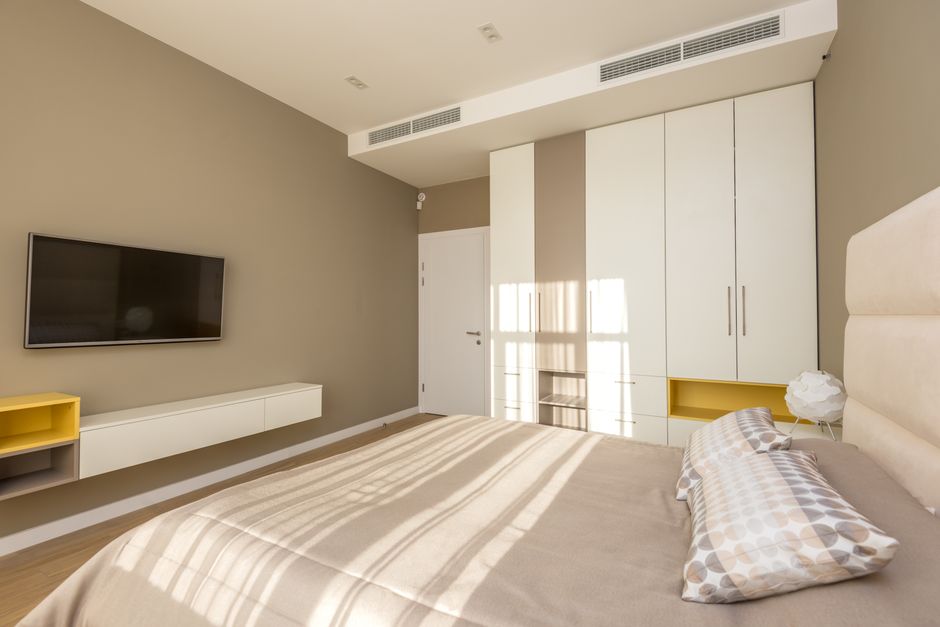
Every time you breathe inside your home, you are part of a system you probably never think about. Ventilation systems work by moving stale indoor air out and bringing fresh outdoor air in, either through natural leaks and openings or through mechanical fans and ducts. That exchange controls moisture, odors, pollutants, and carbon dioxide. Without it, the air inside a modern, tightly sealed home can become more polluted than the air outside.
How Do Ventilation Systems Work In Your Home?
Ventilation works on a simple principle: air must move. A fan or a pressure difference pushes air out, and replacement air flows in from somewhere else. That “somewhere else” is the part most people overlook.
Homes exchange air in two basic ways. Natural ventilation happens through open windows, doors, and the small gaps around them. Infiltration is the unintentional leakage through cracks, gaps around pipes, and poorly sealed frames. Mechanical ventilation uses fans and ducts to move air on purpose.
The physics matter. Air flows from areas of higher pressure to lower pressure. When a bathroom exhaust fan runs, it lowers pressure inside the room and air rushes in from the rest of the house. That replacement air has to come from outside eventually, or the fan just stirs the same air around.
This is why a house needs a path for fresh air to enter wherever air is being pushed out. A tight home with strong exhaust fans and no deliberate intake can end up pulling air backward down a chimney or through a garage. That is a real safety concern, not a theoretical one.
What Is the Difference Between Natural and Mechanical Ventilation?
Natural ventilation relies on wind and temperature differences to push air through openings. Mechanical ventilation uses powered fans and ductwork to control the exchange. The two are not equally reliable.
On a still, mild day, a house with windows closed may barely exchange any air. Natural ventilation depends on weather you cannot control. Mechanical systems run when you switch them on, regardless of conditions outside.
Older homes tend to leak enough that infiltration provides a baseline of air exchange. Newer homes are built tighter for energy efficiency, which means they often need deliberate mechanical ventilation to stay healthy. This is one of the less obvious trade-offs of better-sealed construction: less wasted energy, but also less free air movement.
- Natural ventilation: windows, doors, and unintentional leaks. Free but unpredictable.
- Local exhaust: bathroom and kitchen fans that remove moisture and cooking pollutants at the source.
- Whole-house systems: ducted fans or balanced systems that exchange air throughout the home.
Which Rooms Need Exhaust Fans and Why?
Bathrooms and kitchens generate the most moisture and airborne pollutants in a home, so they get dedicated exhaust fans. These are the workhorses of everyday ventilation.
A shower can release a large amount of water vapor into the air. Without exhaust, that moisture condenses on cool surfaces and feeds mold growth. Kitchen cooking produces grease particles, odors, and combustion byproducts if you cook with gas. A range hood that vents outdoors removes these at the source.
Here is a detail many people miss: a range hood that recirculates air through a filter does not vent pollutants outside. It traps some grease and odors but returns the air to the room. Only hoods ducted to the outdoors remove combustion gases and fine particles from the kitchen.
Bathroom fans should run long enough to clear moisture, not just long enough to fog the mirror. The general guidance from building and health organizations is to run the fan until moisture clears, which often means leaving it on well after you leave the room. If you can, let it run for a while after a shower rather than switching it off immediately.
What Does a Whole-House Ventilation System Do?
Whole-house systems exchange air across the entire home rather than one room at a time. They range from a single fan that pulls fresh air into the ductwork to balanced systems that both exhaust stale air and supply fresh air.
The most efficient type is a heat recovery ventilator, often called an HRV. It uses a heat exchanger so that outgoing warm air warms the incoming cold air, reducing the energy lost through ventilation. An energy recovery ventilator, or ERV, does the same but also transfers some moisture, which can help in very dry or very humid climates.
These systems are common in cold climates and in tightly built homes where infiltration is minimal. They run continuously at low speed or cycle on and off. The core idea is balance: as much air comes in as goes out, so the house is not placed under pressure.
Balanced ventilation matters because unbalanced exhaust can create backdrafting. If a house is under strong negative pressure, combustion appliances like a gas water heater or furnace may pull exhaust gases back into the living space instead of up the flue. That is a genuine health hazard, and it is why balanced systems and proper appliance venting are taken seriously in building codes.
How Do You Know If Your Home Is Poorly Ventilated?
Poor ventilation leaves clues. The most reliable signs are moisture, stale air, and lingering odors that do not clear.
- Condensation on windows, especially in winter
- Persistent musty smells or visible mold in bathrooms and corners
- Cooking odors that hang around long after a meal
- Feeling stuffy or headachy in a room with the door closed
- Allergy-like symptoms that improve when you leave the house
Carbon dioxide is a useful rough indicator. People exhale it, and in a poorly ventilated room it builds up. Higher levels are associated with stuffiness and reduced alertness, though the exact thresholds and effects are still being studied. A room that feels “stale” with several people in it is often a room with rising carbon dioxide and no fresh air coming in.
One caution: a home can feel fine and still have ventilation problems. Odor and stuffiness are not precise measurements. If you suspect a serious issue, such as backdrafting from a gas appliance or a carbon monoxide concern, that is a job for a qualified professional, not a guess.
Does Ventilation Remove Indoor Air Pollutants?
Ventilation is one of the most effective ways to reduce indoor air pollutants, because it removes them from the space entirely. Filtration traps particles; ventilation replaces the air. The two work together.
Indoor air can contain fine particles, volatile organic compounds from paints and furnishings, and combustion byproducts from gas stoves. Ventilation dilutes and removes these. This is why source control, filtration, and ventilation are usually discussed as a trio rather than competing options.
Ventilation is not a complete solution. It cannot remove pollutants faster than they are produced, and bringing in outdoor air also brings in whatever is outside, including pollen and, in some areas, pollution. In those cases, filtration of the incoming air becomes part of the strategy.
The honest position on air quality is that no single measure does everything. Good ventilation, source control, and filtration each address part of the problem. Claims that one system “purifies” a whole home should be treated with skepticism unless the specifics are clear.
Can Ventilation Cause Problems If It Is Done Wrong?
Yes. Ventilation done poorly can create new problems even as it solves others. The main risks are backdrafting, excess moisture, and energy waste.
Backdrafting happens when exhaust fans pull more air out of a home than can flow in, creating negative pressure that draws combustion gases back inside. This is a serious safety issue. Homes with gas appliances and strong exhaust need a clear path for makeup air.
Over-ventilating in humid climates can pull moist outdoor air into the home, raising indoor humidity and encouraging mold. Under-ventilating does the opposite, trapping moisture inside. The right balance depends on your climate, your home’s tightness, and the systems you have.
Energy waste is the trade-off nobody loves. Every bit of conditioned air you exhaust has to be replaced, and that replacement air must be heated or cooled. Heat recovery and energy recovery ventilators exist specifically to reduce this loss, which is why they are standard in efficient homes.
If you are unsure whether your home is ventilated adequately, a home energy assessment or a consultation with a qualified HVAC professional can measure air exchange and check for pressure problems. That is more reliable than guessing from how a room feels.
Frequently Asked Questions
How does a home ventilation system work?
It moves stale indoor air out and brings fresh outdoor air in, using either natural openings or powered fans and ducts. This exchange controls moisture, odors, and indoor pollutants.
Do I need a ventilation system in my home?
Most homes benefit from at least local exhaust in bathrooms and kitchens, and tightly sealed newer homes often need deliberate whole-house ventilation. Whether you need a full system depends on your home’s tightness and climate.
Should I run my bathroom fan all the time?
No, but it should run long enough to clear moisture after showers, which often means leaving it on for a while after you leave the room. Continuous low-speed operation is used in some whole-house setups but is not the same as a standard bathroom fan.
Is it bad to keep windows closed all the time?
In a well-sealed home with no mechanical ventilation, yes, indoor pollutants and moisture can build up. If windows stay closed, running exhaust fans and using a whole-house system helps keep air moving.
