
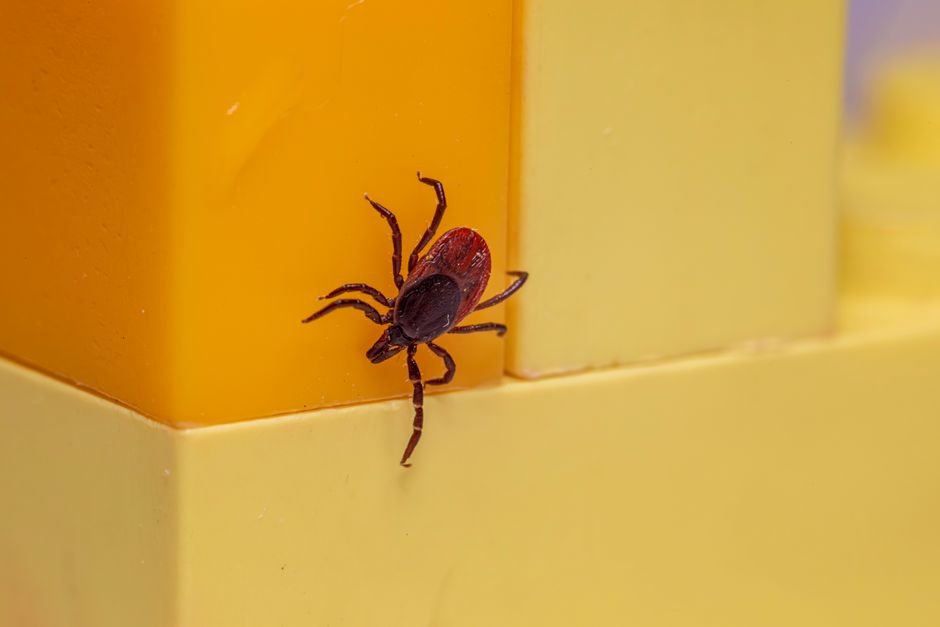
Ticks reproduce through a life cycle that depends on taking blood meals from animals, including people. A female tick must feed on blood before she can lay eggs, and a single female can produce thousands of them in one batch. Understanding that cycle is what makes tick prevention effective, because it shows you exactly where ticks are vulnerable: the moments when they must find a host and feed.
How Do Ticks Reproduce?
Reproduction begins with a blood meal. A female tick cannot develop eggs without one. She feeds slowly over several days, mates, and then drops off the host to lay her eggs in a sheltered spot on the ground. After laying, she dies.
The number of eggs varies by species and by how much blood the female took in. Some species lay a few hundred eggs. Others lay several thousand. The eggs hatch into larvae, and the cycle starts again.
Most tick species follow what is called a three-host life cycle. Each stage — larva, nymph, and adult — feeds on a different animal and then drops off to molt or, in the adult female’s case, to lay eggs. A single tick may feed on three separate hosts across its lifetime, which is one reason ticks spread disease so efficiently between wildlife and people.
Two features of this process matter for anyone trying to avoid tick bites. First, ticks do not jump or fly. They wait on vegetation and grab onto a host that brushes past. Second, mating usually happens on the host itself while the female is feeding, not off in the environment.
What Are the Stages of a Tick’s Life Cycle?
Ticks pass through four life stages: egg, larva, nymph, and adult. Each active stage after hatching requires a blood meal to move forward.
- Egg. Laid in a cluster on the ground, often in leaf litter or under vegetation. Eggs hatch into larvae.
- Larva. About the size of a poppy seed. Larvae typically feed on small animals such as mice or birds, then drop off and molt into nymphs.
- Nymph. About the size of a sesame seed. Nymphs feed on a wider range of hosts, including people, then molt into adults.
- Adult. Larger and easier to see. Adult females feed, mate, and lay eggs. Adult males generally do not take a large blood meal.
The nymph stage is the one most often linked to human illness. Nymphs are small enough to go unnoticed, and they feed for long enough to transmit certain pathogens. That combination makes them hard to detect and hard to remove quickly.
The full cycle from egg to egg-laying adult usually takes about two years, though this varies widely by species and climate. Ticks in colder regions may take longer. Some species can survive for many months between meals while waiting for a host.
Where Do Ticks Lay Their Eggs?
Female ticks lay eggs in sheltered, humid places near the ground. Leaf litter, tall grass, brush, and the edges where a lawn meets woods are common sites. Moisture matters because eggs and newly hatched larvae dry out easily.
After feeding, a female drops off her host and may travel only a short distance before laying. She does not wander far. This is why tick populations tend to concentrate in specific habitat types rather than spreading evenly across a landscape.
One detail people often miss: a female tick can lay her eggs without ever being noticed on a pet or a person. She feeds, drops off, and completes the cycle in the environment. Finding no ticks on your body does not mean ticks are not reproducing nearby.
How Fast Can Tick Populations Grow?
Populations can grow quickly when conditions are favorable. A single female laying thousands of eggs means that even a small number of reproducing adults can produce a large local population over a season or two.
Most of those eggs and larvae do not survive. They dry out, are eaten by predators, or fail to find a host. Survival rates are low, but the sheer number of eggs offsets that. This is why removing a single engorged female from a pet matters — she may be days away from laying thousands of eggs in or around your home.
Climate plays a role. Warmer temperatures can shorten development times and expand the range where some species can complete their cycle. Researchers have documented shifts in tick populations and tick-borne disease patterns over recent decades, though the picture varies by region and species.
What You Need to Do to Interrupt the Cycle
You cannot eliminate ticks from the environment. You can reduce your exposure and make your immediate surroundings less hospitable to them. The steps below are the ones most consistently supported by public health guidance.
Protect yourself outdoors
Use an EPA-registered insect repellent and follow the label. Treat clothing and gear with products containing permethrin where appropriate, again following label directions. Wear light-colored clothing so ticks are easier to spot, and tuck pants into socks in high-risk areas.
Check for ticks after being outdoors
Check your body, your children, and your pets after time in grassy or wooded areas. Pay attention to warm, hidden areas: behind the knees, in the armpits, around the waist, in the hair, and behind the ears. Showering soon after coming inside can help wash off unattached ticks and gives you a chance to do a full check.
Remove attached ticks promptly
Use fine-tipped tweezers to grasp the tick as close to the skin as possible and pull straight up with steady pressure. Do not twist, crush, or burn the tick, and do not smother it with petroleum jelly or other substances. Clean the bite area afterward. Prompt removal reduces the chance of transmission for many tick-borne diseases, though timing varies by disease.
Manage your yard
Keep grass mowed, clear leaf litter, and create a gravel or wood-chip border between your lawn and any wooded edge. Keep playground equipment and seating away from tree lines. These steps reduce the habitat where ticks wait for hosts and where females lay eggs.
Protect pets
Use tick prevention products recommended by your veterinarian and check pets regularly. Pets can carry ticks into the home and into close contact with people. Ask your vet which products are appropriate for your animal, since some products are toxic to certain species.
Do All Ticks Carry Disease?
No. Many ticks carry no disease-causing organisms, and not every bite transmits illness. But some species carry pathogens, and the risk depends on the tick species, its stage, how long it stays attached, and the region you are in.
Different tick species transmit different diseases. This is why local guidance matters more than general rules. Your state or county health department tracks which ticks and which diseases are present in your area.
If you develop a rash, fever, or flu-like symptoms after a tick bite or after time in tick habitat, contact a healthcare provider and mention the possible exposure. This is general information, not a diagnosis, and symptoms can have many causes.
Why Understanding Tick Reproduction Helps
Every prevention step connects back to the life cycle. Ticks must find a host to feed. Females must feed to lay eggs. Larvae and nymphs must survive in moist habitat. Disrupt any of those points and you lower your risk.
The most useful takeaway is timing. Ticks are active when temperatures are above freezing, with peak activity in many regions during warmer months. Checking yourself and your pets consistently during those periods matters more than any single product or yard treatment.
Frequently Asked Questions
How many eggs does a tick lay?
A single female tick can lay hundreds to several thousand eggs in one batch, depending on the species and how much blood she consumed. She lays once and then dies.
Do ticks lay eggs on humans?
No. Female ticks drop off the host after feeding and lay eggs in sheltered spots on the ground, such as leaf litter or tall grass.
Can ticks reproduce indoors?
Some species, including the brown dog tick, can complete their life cycle indoors in cracks and crevices. Others generally need outdoor habitat to reproduce.
How long does it take for tick eggs to hatch?
Hatching time varies by species and temperature, typically taking weeks to a few months. Warmer conditions speed development, and eggs require moisture to survive.
