
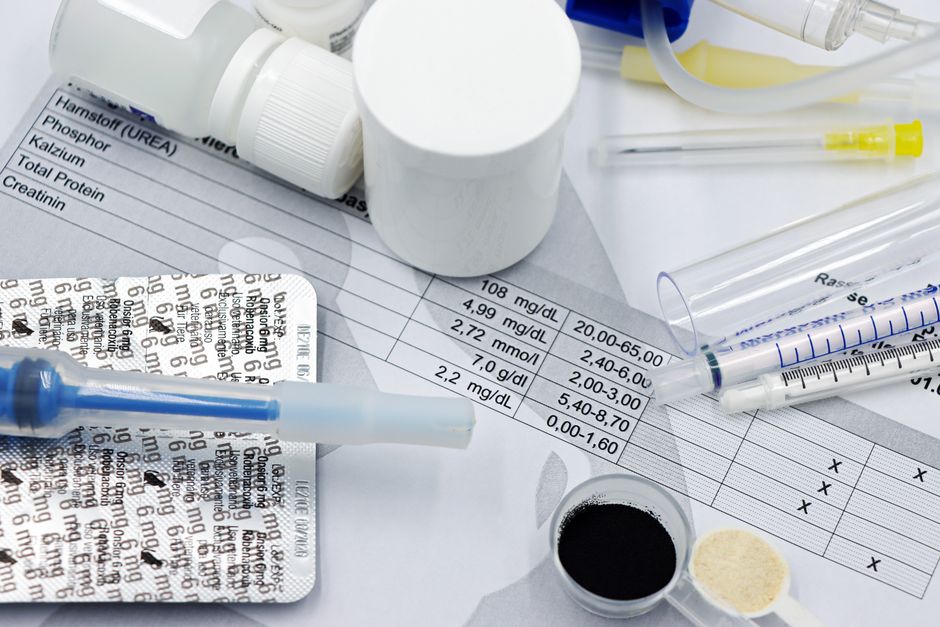
If a doctor suspects a kidney stone, the first test is usually a urine sample to look for blood and crystals, followed by imaging — most often a CT scan — to confirm the stone and show where it is. Blood tests are also common to check kidney function and rule out other causes. The exact path depends on your symptoms, your age, and whether you have had stones before.
Kidney stones are common. Roughly 1 in 11 people in the United States will have one at some point, according to the National Kidney Foundation. Knowing how they are found can take some of the fear out of the process.
How Do They Test For Kidney Stones?
There is no single test. Doctors combine your history, a physical exam, urine testing, blood testing, and imaging to reach a diagnosis.
The process usually moves in this order:
- Medical history and exam. Your doctor asks about pain location, how it started, and whether you have had stones before. They may press on your back and belly to find areas of tenderness.
- Urine test. A dipstick can detect blood, which is present in most people with a kidney stone. The urine may also be checked for infection or crystals.
- Blood tests. These check kidney function, calcium, uric acid, and electrolytes. They help rule out other conditions and look for causes.
- Imaging. This is what confirms the stone. The type of scan depends on your situation.
No single step is enough on its own. A urine test showing blood does not prove a stone is there — many things cause blood in urine. Imaging is what makes the diagnosis.
What Imaging Tests Are Used to Find Kidney Stones?
A non-contrast CT scan of the abdomen and pelvis is the most accurate imaging test for kidney stones. It finds stones that other scans can miss, including small ones in the ureter, the tube that carries urine from the kidney to the bladder.
Here is how the main imaging options compare:
| Test | Strengths | Limitations |
|---|---|---|
| Non-contrast CT | Highest accuracy; finds stones of nearly any size and location; fast | Uses radiation; not always the first choice in pregnancy or in young people who may need repeat scans |
| Ultrasound | No radiation; safe in pregnancy; good for seeing kidney swelling | Can miss small stones, especially in the ureter |
| X-ray (KUB) | Quick and low cost | Misses many stones, including uric acid stones and small stones |
| Intravenous pyelogram (IVP) | Shows how urine flows and where a stone is blocking | Uses contrast dye and radiation; largely replaced by CT |
CT is not always the right call. In pregnancy, ultrasound is usually preferred to avoid radiation to the fetus. In younger people who may need many scans over a lifetime, doctors sometimes start with ultrasound. Guidelines from the American Urological Association support ultrasound as a first test in certain cases, with CT used when needed.
What Does the Urine Test Actually Show?
A urinalysis is quick and often the first lab test done. It can show blood, which is present in most — but not all — people with a kidney stone.
The urine may also be checked for:
- Red blood cells. Even small amounts can point toward a stone.
- White blood cells. These can suggest infection, which sometimes happens alongside a stone.
- Crystals. Certain crystals can hint at the stone type, though this is not a reliable stand-alone test.
- pH and other chemistry. These can point to conditions that raise stone risk.
A normal urine test does not rule out a stone. Some stones cause no bleeding at the time of testing. That is why imaging matters.
Why Do Doctors Order Blood Tests for Kidney Stones?
Blood tests do two jobs. They check how well your kidneys are working, and they look for underlying causes of stone formation.
Common blood tests include:
- Creatinine and BUN. These measure kidney function. A stone that blocks urine flow can raise these values.
- Calcium. High blood calcium can point to a parathyroid problem that causes stones.
- Uric acid. High levels raise the risk of uric acid stones.
- Electrolytes. These help assess hydration and overall balance.
If you have had more than one stone, or if stones run in your family, your doctor may order a 24-hour urine collection. This test measures how much urine you make in a day and what is in it. It can guide treatment to prevent future stones. It is not typically done for a first, uncomplicated stone.
Does Passing a Stone Confirm the Diagnosis?
Yes — if you catch the stone, it can be analyzed. Stone analysis tells your doctor what the stone is made of, which helps guide prevention.
Most stones are calcium oxalate. Others include uric acid, struvite, and cystine stones. Each type has different causes and different prevention strategies. Knowing the type matters more than most people realize.
If you think you passed a stone, your doctor may ask you to strain your urine to catch it. A strainer looks like a fine mesh cone that fits over the toilet. Not every stone is caught, and that is okay. Imaging can still show whether stones remain.
What Other Conditions Can Look Like a Kidney Stone?
Kidney stone pain can mimic several other problems. This is one reason testing matters — the symptoms alone are not enough to tell them apart.
Conditions that can cause similar pain include:
- Urinary tract infection
- Kidney infection
- Appendicitis
- Gallbladder problems
- Muscle strain in the back
- Ovarian cysts or other pelvic issues
- Aortic aneurysm, which is rare but serious
The classic stone symptom is severe, wave-like pain that starts in the back or side and moves toward the groin. It often comes and goes. Blood in the urine and nausea are common. But not everyone has the classic pattern. Some people have vague discomfort or no pain at all, especially with small stones found by chance on imaging done for another reason.
When Should You Get Tested?
Seek medical care if you have severe pain in your back or side that will not go away, blood in your urine, fever with pain, or trouble urinating. Fever with flank pain can signal an infection that needs urgent treatment.
Do not wait out severe pain at home. A stone that blocks urine flow can damage the kidney if it goes untreated for too long. Most small stones pass on their own, but larger ones may need a procedure.
If you have had a stone before, your risk of another one is higher. Your doctor may recommend preventive testing and changes based on what caused the first stone.
What Happens After the Diagnosis?
Once a stone is confirmed, treatment depends on its size, location, and whether it is blocking urine flow. Small stones — often those under 5 millimeters — pass on their own in many cases. Larger stones or ones causing a blockage may need a procedure such as shock wave lithotripsy or a scope-based removal.
Your doctor may also recommend drinking more water and changing your diet based on the stone type. For some people, medication can lower the risk of new stones. These steps are guided by your test results, not by guesswork.
Frequently Asked Questions
Can a kidney stone be diagnosed without a CT scan?
Yes. Ultrasound is often used first, especially in pregnancy or in younger people. CT is more accurate but is not always necessary.
What is the first test for a kidney stone?
A urine test is usually first, checking for blood and other signs. Imaging follows to confirm the stone.
Do you always have blood in your urine with a kidney stone?
No. Most people do, but not everyone. A normal urine test does not rule out a stone.
How long does it take to get kidney stone test results?
Urine and blood results are often ready the same day. Imaging results are usually available within hours to a day, depending on the facility.
