
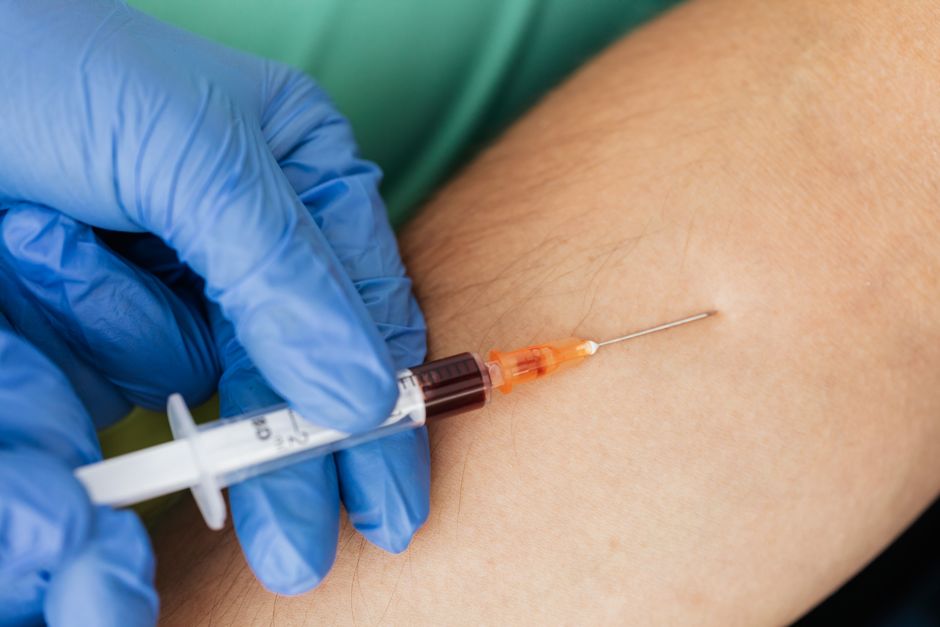
Drawing blood from a 1 year old baby is usually a short procedure that takes a few minutes. A small needle goes into a vein, most often on the inside of the elbow or the back of the hand. The blood flows into a small tube or a tiny container. For most toddlers this is a routine blood draw, not a major medical event.
The details matter more than parents expect. Where the blood comes from, how the child is held, and what happens before and after all shape how the experience goes. Here is what the process actually looks like.
How Do They Draw Blood From A 1 Year Old Baby?
Most blood draws on a 1 year old use a method called venipuncture. A trained professional — a phlebotomist, nurse, or doctor — finds a vein, cleans the skin, and inserts a thin needle. Blood is pulled into a tube attached to the needle or into a small syringe.
The veins used most often in toddlers are:
- The inside of the elbow (the antecubital area)
- The back of the hand
- The top of the foot, if arm veins are hard to reach
- The scalp, in rare cases and usually only in younger infants
For a 1 year old, the arm and hand are the standard sites. The needle is smaller than what adults typically see, matched to the child’s small veins. The whole collection usually takes less than a minute once the needle is in place.
One detail that surprises many parents: a 1 year old often does not need to be fasting for a routine blood draw. Fasting is only required for specific tests, and the lab or clinic will tell you in advance if it is.
Why Is a Blood Draw Different for a 1 Year Old Than an Adult?
A toddler’s veins are smaller, closer to the surface, and easier to collapse. That changes the technique.
Adults can usually hold still and follow instructions. A 1 year old cannot. So the person drawing blood has to work around movement, and the child often needs to be held in a specific position to keep the arm steady and safe.
There is also a volume limit. A 1 year old has far less blood than an adult. Clinical guidelines set limits on how much blood can safely be drawn at one time, based on the child’s weight. This is why the tubes used for a toddler are smaller, and why a doctor will not order more blood than the test actually requires.
The needle stick itself is not the hard part for most toddlers. The hard part is being held still. That is why positioning and comfort measures get so much attention in pediatric settings.
How Is the Baby Held During the Blood Draw?
Holding a 1 year old still is a safety measure, not a punishment. A sudden jerk of the arm during a needle stick can cause injury to the child or the person drawing blood.
There are two common approaches:
- Comfort positioning. The child sits on a parent’s lap, facing the parent, with one arm extended to the side. The parent wraps both arms around the child’s body and holds the free arm. This keeps the child calm and close.
- Supine positioning. The child lies on their back on an exam table, with a parent or staff member holding the extended arm steady.
Some hospitals and clinics use a device called a papoose board or a similar wrap that keeps the child’s body still. This sounds worse than it is, but parents should know it exists. If you are not comfortable with a particular restraint method, you can ask about alternatives.
You can also ask whether a parent can hold the child instead of a staff member. Many clinics allow this, and it often keeps the child calmer.




What Can Parents Do to Make It Easier?
Preparation helps, but it does not eliminate crying. Crying during a blood draw is normal and expected at this age. It is not a sign that something went wrong.
A few things that tend to help:
- Bring the child fed and rested if the test does not require fasting. A hungry, tired toddler is harder to settle.
- Bring a comfort item — a pacifier, a favorite toy, or a small blanket.
- Ask about topical numbing cream. A lidocaine cream applied to the skin about 30 minutes before the draw can reduce the pain of the needle stick. Not every clinic offers it, and it does not help if the vein is hard to find, but it is worth asking about.
- Ask whether a sweet-tasting solution is an option. Some pediatric settings use a small amount of sucrose or glucose solution for infants. The evidence for this is stronger in newborns and younger infants than in 1 year olds.
- Stay calm yourself. Toddlers pick up on a parent’s tension.
Do not promise the child that it will not hurt. A 1 year old will not understand the promise anyway, and it sets up a mismatch between what you said and what happens.
What About a Heel Stick or Finger Prick?
These are different procedures and are used for different reasons.
A heel stick is common in newborns. A small lancet pricks the heel, and a few drops of blood are collected on a card or in a tiny tube. By 1 year old, a heel stick is rarely used for routine testing because the heel tissue is thicker and the sample volume is limited.
A finger prick is sometimes used for quick tests, like a hemoglobin check or a lead screening. It gives a small drop of blood and takes seconds. But finger-prick results can be less accurate than a venous sample for some tests, so a finger prick is often followed by a vein draw if the result is abnormal or needs confirmation.
So the answer depends on the test. A quick screening might use a finger prick. A full blood panel almost always uses a vein.
What Are the Risks and Side Effects?
Serious complications from a routine blood draw in a healthy 1 year old are rare. The most common issues are minor.
- Bruising. A small bruise at the needle site is common and fades within a few days.
- Bleeding. A little bleeding after the needle comes out is normal. Pressure with a gauze pad stops it.
- Fainting. Some children feel lightheaded. This is more common in older kids and teens than in 1 year olds.
- Infection. Rare, because the skin is cleaned before the needle goes in.
- Hematoma. Blood collecting under the skin. This can happen if the vein is fragile or the needle moves.
There is one risk that gets less attention: too much blood drawn over time. For a 1 year old, repeated draws can add up. Clinical guidelines set limits based on weight, and hospitals track cumulative blood loss in sick infants. For a healthy toddler getting one routine draw, this is not a concern. For a child who is hospitalized and getting frequent tests, it is something the medical team monitors.
When Should You Call the Doctor After a Blood Draw?
Most blood draws need no follow-up care beyond a bandage and a little extra attention.
Call the doctor if you see:
- Bleeding that does not stop after several minutes of firm pressure
- Swelling that keeps growing
- Redness, warmth, or pus at the site
- A fever
- Signs of infection or a reaction that worries you
These are uncommon. In most cases, the child is back to normal within minutes of the draw, often before the bandage is even on.
What Happens to the Blood After It Is Drawn?
The tube is labeled with the child’s name, date of birth, and the time of collection. It goes to a lab, where it is processed based on the test ordered.
Some tests need the blood to clot first. Some need it to stay liquid. Some need to be spun in a centrifuge to separate the blood into layers. That is why you may see several tubes of different colors — each color signals a different additive or no additive at all.
Results usually come back within a day for routine tests. Some specialized tests take longer. The ordering doctor reviews the results and contacts you if anything needs attention.
Frequently Asked Questions
How much blood is taken from a 1 year old?
The amount is kept small and is based on the child’s weight, following clinical guidelines that limit total blood drawn. A routine test typically uses just a few small tubes, far less than what would affect a healthy toddler.
Does a 1 year old need to fast before a blood draw?
Most routine blood draws do not require fasting. Fasting is only needed for specific tests, and the clinic or lab will tell you in advance if your child needs to skip a feeding.
Can a parent hold their 1 year old during a blood draw?
Yes, many clinics allow a parent to hold the child on their lap during the draw. Ask the staff beforehand, since positioning is chosen for safety as well as comfort.
Is it normal for a 1 year old to cry during a blood draw?
Yes, crying is expected at this age and is not a sign that something went wrong. The procedure is brief, and most children settle within minutes afterward.
