
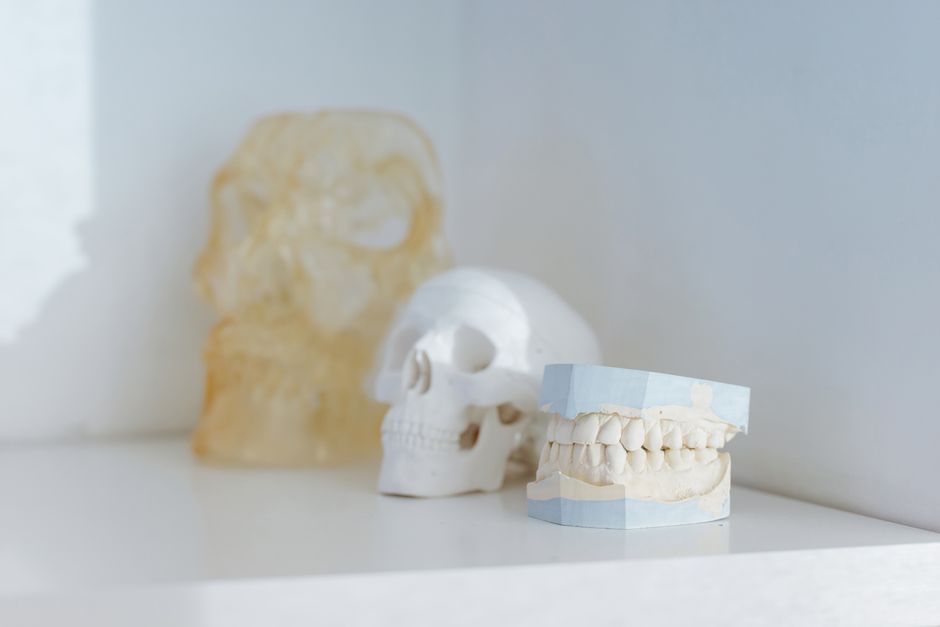
Your teeth start forming long before you are born. By the sixth week of pregnancy, the basic structures that will become baby teeth are already in place. This process is not random. It follows a precise biological timeline controlled by genes and signaling molecules. Understanding how teeth grow helps explain why some people have dental problems and others do not.
When Do Teeth Actually Start Forming?
Tooth development begins in the womb. Around the sixth week of fetal development, cells in the mouth start to thicken and form what is called the dental lamina. This is a band of tissue that will eventually give rise to all the teeth.
By the third or fourth month of pregnancy, the baby teeth have already started to form their hard outer layers. The permanent teeth begin developing around the time of birth. This means that when a baby is born, both sets of teeth are already in progress inside the jawbone.
Research published in the Journal of Dental Research has mapped out these early stages in detail. The process involves a complex dance of proteins and genes. One key player is a protein called SHH, or Sonic Hedgehog. It signals cells to start forming tooth structures.
What Are the Stages of Tooth Development?
Tooth development happens in distinct stages. Scientists divide it into the bud stage, the cap stage, and the bell stage. Each stage has a specific purpose.
In the bud stage, small clusters of cells form from the dental lamina. These look like little buds and will become each individual tooth. In the cap stage, the bud grows into a shape that looks like a cap. Cells inside this structure begin to specialize. Some will form enamel. Others will form dentin.
The bell stage is when the tooth takes on its final shape. Cells called ameloblasts produce enamel. Cells called odontoblasts produce dentin. The root starts to form. By the end of this stage, the tooth is almost complete but still hidden under the gums.
One non-obvious fact is that enamel is the only part of the tooth that does not come from the same embryonic layer as the rest of the body. Enamel comes from the ectoderm, which is the same layer that forms skin and nerves. Dentin, pulp, and cementum come from the mesenchyme. This is why enamel cannot regrow if damaged. The cells that made it are gone after the tooth erupts.
How Do Teeth Grow Through the Gums?
Eruption is the process where a tooth moves from inside the jawbone through the gum tissue and into the mouth. It is not a simple upward push. The tooth actually moves through a tunnel of bone and tissue that the body creates.
Specialized cells called osteoclasts break down bone ahead of the tooth. Other cells build bone behind it to provide support. The tooth moves at a very slow rate. Baby teeth typically start to erupt around six months of age. The lower front teeth usually come in first.
By age three, most children have all 20 baby teeth. These teeth are smaller and whiter than permanent teeth. They also have thinner enamel. This is why baby teeth can decay faster than adult teeth.
| Tooth Type | Eruption Age Range | Number of Teeth |
|---|---|---|
| Lower central incisors (baby) | 6-10 months | 2 |
| Upper central incisors (baby) | 8-12 months | 2 |
| First molars (baby) | 13-19 months | 4 |
| Canines (baby) | 16-23 months | 4 |
| Second molars (baby) | 23-33 months | 4 |





What Happens When Baby Teeth Fall Out?
Losing baby teeth is a normal part of how teeth grow. Around age six, the roots of baby teeth begin to dissolve. The body reabsorbs the root tissue. This is called resorption. As the root disappears, the tooth becomes loose and eventually falls out.
Permanent teeth are already forming underneath. They push up through the same space. By age 12 or 13, most children have lost all their baby teeth and have 28 permanent teeth. The four wisdom teeth usually come in between ages 17 and 25.
Not everyone gets all four wisdom teeth. Some people are born with fewer. Some have none at all. This is a normal variation. The American Dental Association notes that wisdom teeth are often removed because they can cause crowding or become impacted.
What Can Go Wrong During Tooth Development?
Many things can disrupt the process of how teeth grow. Genetics play a large role. Some people are born with missing teeth, a condition called hypodontia. Others may have extra teeth, called hyperdontia.
Nutrition matters during development. A lack of vitamin D can affect enamel formation. A lack of vitamin C can affect dentin. Fluoride is important for enamel strength, but too much during early childhood can cause fluorosis, which shows up as white spots on the teeth.
Some studies suggest that certain medications can affect tooth development. Tetracycline antibiotics, if given to children under eight, can cause permanent staining of the teeth. This is why these antibiotics are not prescribed to young children or pregnant women unless absolutely necessary.
Injuries to baby teeth can also affect permanent teeth. If a baby tooth is knocked out too early, the permanent tooth may come in crooked. If a baby tooth is infected, the infection can damage the permanent tooth bud underneath.
- Hypodontia: missing one or more teeth
- Hyperdontia: extra teeth growing in
- Amelogenesis imperfecta: defective enamel formation
- Dentinogenesis imperfecta: defective dentin formation
- Impacted teeth: teeth that cannot erupt normally
How Do Teeth Grow The Science Of Tooth Development and Modern Research
Researchers are still learning about how teeth grow. One area of active study is tooth regeneration. Scientists are trying to understand if humans can regrow teeth like some animals can. Sharks grow new teeth throughout their lives. Humans only get two sets.
Some research has focused on stem cells. The dental pulp contains stem cells that can form dentin. In laboratory settings, these cells have been used to grow small tooth-like structures. But growing a full functional tooth in a human has not been achieved yet.
Research published in Nature has identified genes that control tooth shape and number. By understanding these genes, scientists hope to one day stimulate tooth growth in adults. As of 2026, no clinical treatments exist for regrowing human teeth. Anyone claiming otherwise is selling something that does not work.
Another area of research is the link between tooth development and overall health. Some studies suggest that problems with tooth development may be linked to certain genetic syndromes. For example, children with ectodermal dysplasia often have missing or misshapen teeth. This condition affects the same embryonic layer that forms teeth.
Common Misconceptions About Tooth Growth
One common myth is that teeth continue to grow throughout life. They do not. Teeth are fully formed by the time they erupt. What can appear to be growth is actually wear and tear. As enamel wears down, teeth can look shorter. They do not get longer.
Another myth is that calcium supplements can make teeth grow stronger after they are already formed. Calcium is essential during development, but once teeth are fully formed, supplements do not make them harder. Fluoride and good oral hygiene are more effective for maintaining enamel.
Some people believe that losing a baby tooth early means nothing. It does matter. Baby teeth hold space for permanent teeth. If a baby tooth is lost too early, the neighboring teeth can shift into that space. This can cause crowding and misalignment later.
The idea that teething causes fevers is also not supported by evidence. Teething can cause mild discomfort, drooling, and irritability. But a fever over 101 degrees Fahrenheit is not caused by teething. If a child has a high fever during teething, look for an infection or illness instead.
Frequently Asked Questions
When do baby teeth start forming in the womb?
Baby teeth start forming around the sixth week of pregnancy. The basic structures are in place by the third or fourth month.
Can adults grow new teeth naturally?
No. Humans only grow two sets of teeth in their lifetime. No natural process exists for adults to grow a third set.
What causes a tooth to be impacted?
An impacted tooth is blocked from erupting by another tooth, bone, or tissue. Wisdom teeth are the most common impacted teeth.
Does thumb sucking affect how teeth grow?
Yes. Prolonged thumb sucking after age four can push front teeth forward and change the shape of the jaw. Most children stop on their own by that age.
