
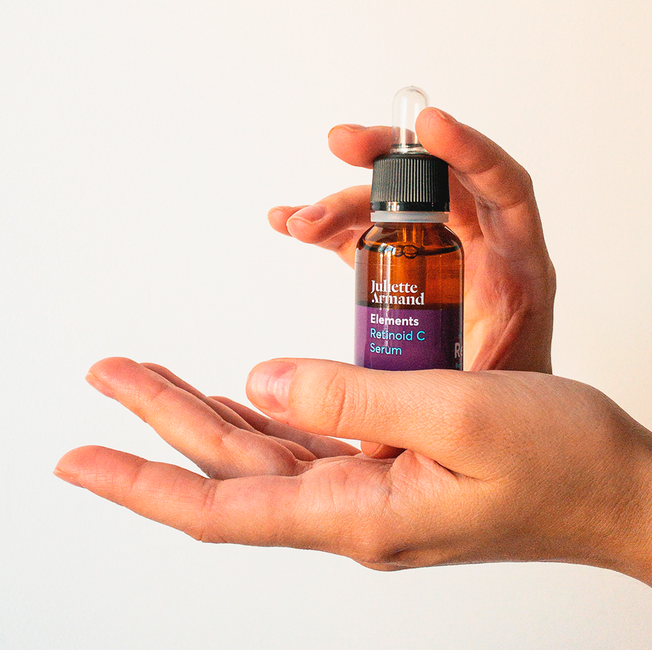
Retinoids speed up skin cell turnover and boost collagen production by binding to specific receptors in your skin cells. They work at the genetic level, telling your cells to behave like younger, healthier versions of themselves. This is not a surface-level effect — retinoids actually change how your skin functions from the inside out.
Dermatologists have prescribed retinoids for decades, and the science behind them is well-established. Unlike many skincare ingredients that sit on top of your skin, retinoids penetrate deep and alter cell behavior. The result is smoother texture, fewer fine lines, clearer pores, and more even tone.
But not all retinoids are the same. Some are prescription-strength, others are available over the counter. Some work fast, others are gentle. Understanding the difference matters if you want results without wrecking your skin barrier.
What Exactly Happens When Retinoids Touch Your Skin?
Retinoids are derivatives of vitamin A. When you apply them to your skin, they convert into retinoic acid, the active form that your skin cells can actually use. This conversion process varies depending on the type of retinoid you use.
Once active, retinoic acid enters the nucleus of your skin cells and binds to retinoic acid receptors. This binding triggers changes in gene expression. Your cells start turning over faster — roughly every 3 to 5 days instead of the typical 28 days for older skin. Dead cells slough off quicker, and new cells rise to the surface sooner.
This acceleration is why retinoids help with acne. Clogged pores clear out faster. It is also why they reduce fine lines. More collagen production means the skin plumps up from within. Research published in the Journal of the American Academy of Dermatology confirms that topical retinoids stimulate collagen synthesis and inhibit collagen breakdown.
One non-obvious detail: retinoids also normalize how your skin sheds. In acne-prone skin, cells stick together abnormally and clog pores. Retinoids tell those cells to detach properly. That is why they prevent breakouts rather than just treating existing ones.
How Do Retinoids Actually Work On Your Skin Compared to Other Anti-Aging Ingredients?
Most anti-aging ingredients work on the surface. Moisturizers hydrate. Antioxidants neutralize free radicals. Peptides send signals to produce more collagen, but the evidence for their absorption is weaker.
Retinoids are different. They actually enter the cell and change gene expression. No other common skincare ingredient does this at the same level. The American Academy of Dermatology states that topical retinoids are the gold standard for photoaging treatment.
Here is a quick comparison of how retinoids stack up against other popular ingredients:
| Ingredient | Mechanism | Depth of Action | Evidence Strength |
|---|---|---|---|
| Retinoids | Gene expression change | Cellular level | Strong — decades of clinical trials |
| Vitamin C | Antioxidant, collagen support | Surface to mid-layer | Moderate — good but not as deep |
| Peptides | Signal collagen production | Surface | Weak to moderate — limited absorption evidence |
| AHAs/BHAs | Exfoliate dead cells | Surface only | Strong for texture, no collagen effect |
| Niacinamide | Anti-inflammatory, barrier support | Surface to mid-layer | Moderate — good for maintenance |
Retinoids are not magic. They take time, cause irritation for many people, and require consistent use. But no other ingredient has the same depth of evidence for reversing signs of aging. That is why dermatologists keep prescribing them.
What Type of Retinoid Should You Use?
There are two main categories: prescription and over-the-counter. Prescription retinoids include tretinoin, tazarotene, and trifarotene. These are pure retinoic acid or close to it. They work fast but cause more irritation.
Over-the-counter retinoids include retinol, retinaldehyde, and retinyl esters. These must convert to retinoic acid after application. The conversion process makes them weaker but gentler. Retinol is roughly 10 to 20 times less potent than prescription tretinoin.
Some studies suggest that retinaldehyde converts to retinoic acid in a single step, making it more efficient than retinol. But direct head-to-head comparisons are limited. For most people, starting with a low-strength retinol is the safest approach.
If you have persistent acne or significant photoaging, a prescription retinoid may be worth discussing with a dermatologist. The American Academy of Dermatology recommends tretinoin as first-line treatment for acne and photoaging. But if your skin is sensitive or you are new to retinoids, start with an over-the-counter product.
One thing many articles get wrong: higher concentration does not always mean better results. A 0.025% tretinoin cream used consistently for six months will outperform a 0.1% cream used inconsistently because of irritation. Slow and steady wins this race.





What Are the Side Effects and How Do You Manage Them?
Retinoids cause a predictable set of side effects often called the retinoid purge or retinization. This includes redness, peeling, dryness, and stinging. It usually starts within the first week and can last 4 to 6 weeks. For some people it lasts longer.
Research shows that up to 80% of people experience some irritation when starting a retinoid. This is normal and temporary. Your skin is adapting to a faster cell turnover rate. The irritation does not mean the product is bad or that you are allergic.
Here are practical strategies that reduce irritation without killing results:
- Apply retinoid to completely dry skin. Wait 20 minutes after washing your face.
- Start with once or twice per week. Increase frequency slowly over several weeks.
- Use a pea-sized amount only. More product does not mean more results.
- Apply moisturizer after retinoid, or try the sandwich method — moisturizer, retinoid, moisturizer.
- Stop all other active ingredients like AHAs, BHAs, and benzoyl peroxide during the adjustment period.
- Wear sunscreen every day. Retinoids make your skin more sensitive to UV damage.
If irritation is severe or lasts beyond 8 weeks, you may be using too strong a product or applying too frequently. Back off and rebuild slowly. Some people never tolerate prescription retinoids and do fine with over-the-counter retinol.
One clarification that matters: the purge is not the same as a breakout. A purge happens in areas where you already get acne. New breakouts in places you normally do not break out may indicate irritation or a reaction to another ingredient in the product.
How Long Before You See Results and How Do You Maintain Them?
Realistic timelines matter. Retinoids do not work overnight. For acne, some improvement is visible in 4 to 6 weeks. Full results for acne typically take 12 weeks. For anti-aging, the timeline is longer. Fine lines and texture improve noticeably around 12 to 24 weeks of consistent use.
Collagen remodeling takes time. You are literally rebuilding the structural support of your skin. A study published in JAMA Dermatology found that tretinoin improved photoaging after 24 weeks, with continued improvement over 2 years of use.
Maintenance requires consistency. If you stop using retinoids, your skin gradually returns to its baseline. The faster cell turnover slows down. Collagen production declines. Within 4 to 8 weeks of stopping, most benefits are lost. This is not a treatment you do for a few months and quit.
Many people wonder if they can take a break. Short breaks of a few days are fine. Longer breaks of a week or more mean you will likely need to go through the adjustment period again. If you travel or have a special event, it is better to use a lower dose than to stop entirely.
One under-discussed point: retinoids can make your skin look worse before it looks better. The purge phase can be discouraging. Knowing this in advance helps you push through the first month instead of giving up. If you can tolerate the adjustment period, the long-term results are worth the temporary frustration.
What Common Mistakes Do People Make With Retinoids?
The most common mistake is using too much too often. People want fast results and end up damaging their skin barrier. Red, peeling, stinging skin is not a sign that the product is working — it is a sign you need to slow down. More is not better with retinoids.
Another mistake is applying retinoid to damp skin. Water increases absorption dramatically, which sounds good but actually causes more irritation. Always apply to dry skin. Waiting 20 minutes after washing is not optional for most people.
Mixing retinoids with other strong actives is another problem. Using retinoid with benzoyl peroxide, salicylic acid, or high-concentration vitamin C at the same time is a recipe for irritation. Use retinoid at night and keep your morning routine simple.
Some people also skip sunscreen because they do not see immediate sun damage. Retinoids make your skin more vulnerable to UV radiation. The CDC states that UV exposure is the primary cause of skin aging. If you use retinoids without sunscreen, you may undo the benefits and increase your risk of sun damage.
A final mistake: expecting retinoids to fix everything. They are excellent for fine lines, texture, and acne. They do not significantly tighten loose skin, remove deep wrinkles, or erase dark spots on their own. For those issues, other treatments like lasers or chemical peels may be needed. Retinoids are a powerful tool, not a cure-all.
Frequently Asked Questions
Can I use retinoids if I have sensitive skin?
Yes, but start with a low-strength over-the-counter retinol and apply it only once or twice per week. Use the sandwich method with moisturizer to reduce irritation.
Should I use retinoids in the morning or at night?
Always at night. Retinoids break down in sunlight and can make your skin more sensitive to UV damage. Morning use is not recommended.
Can I use retinoids while pregnant or breastfeeding?
No. The FDA advises against using prescription retinoids like tretinoin during pregnancy. Over-the-counter retinol is also not recommended due to limited safety data. Consult your doctor.
How long does the retinoid purge last?
Most people experience a purge for 4 to 6 weeks after starting. It usually improves after that as your skin adjusts to the faster cell turnover rate.
