
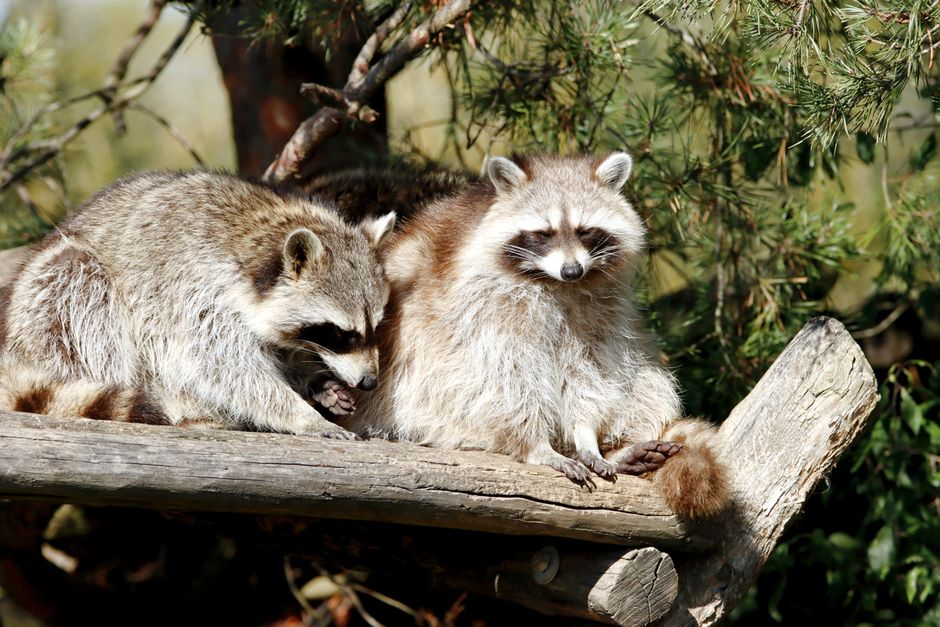
Raccoons defend themselves with sharp teeth and claws, a fierce bite, and a dramatic bluff display — puffing up their fur, standing on hind legs, and hissing or growling to look bigger than they are. They are not built to fight large predators and usually try to escape up a tree or into water first. When cornered, a raccoon will fight hard, and its bite can cause serious injury to a person or animal.
Most people asking this question are not wildlife biologists. They are homeowners who just saw a raccoon in the yard, heard something in the trash can, or watched a dog get too close. What follows is what is actually known about how raccoons handle threats, and where the popular stories about them go wrong.
How Do Raccoons Defend Themselves From Predators?
Raccoons rely on escape, bluffing, and a last-resort fight, in that order. Their first defense is simply not being found. Raccoons are mostly nocturnal and use dense cover, trees, and burrows to avoid predators. When a threat appears, the animal’s instinct is to flee — up a tree, into a culvert, or into water.
Raccoons are strong swimmers and will enter water to escape. They are also capable climbers. A raccoon that reaches a tree trunk or a high branch has largely removed itself from danger, since most of its predators cannot follow as easily.
If escape is blocked, the raccoon escalates. The bluff is well documented: the animal stands on its hind legs, arches its back, puffs out its fur, and makes loud hissing, growling, or screeching sounds. The goal is to look larger and more dangerous than it is. This display is often enough to make a dog or a person back away.
When bluffing fails and the animal is physically cornered, it will bite and scratch. A raccoon’s teeth and foreclaws are effective weapons, and a cornered raccoon is genuinely dangerous. This is the key point: the fight is a last resort, not a first move.
What Predators Do Raccoons Actually Face?
Adult raccoons have few natural predators, but the list is real. Coyotes, bobcats, mountain lions, wolves, and large domestic dogs will take raccoons. Great horned owls and eagles can take smaller or younger animals. In some areas, alligators are a threat near water.
The bigger risk is to young raccoons. Kits are small, less mobile, and easier prey for foxes, owls, snakes, and even male raccoons. This is one reason mother raccoons are especially defensive — a female with kits is more likely to stand her ground than a lone adult.
Humans are the most significant threat to raccoons overall, mostly through vehicles, habitat loss, and trapping rather than direct predation. That matters for how raccoons behave around people: they have learned that humans are sometimes a source of food and sometimes a danger, and their responses reflect both.
Why Do Raccoons Hiss and Puff Up Their Fur?
The puffing is a size illusion, and it works. A raccoon’s fur is dense, and when the animal arches its back and raises the hair, its apparent body size increases substantially. Combined with standing upright and making noise, the display signals “not worth the risk” to a predator that is weighing whether to attack.
The hissing and growling serve the same purpose. They are warning sounds, not an opening attack. A raccoon making this display is usually giving the threat a chance to leave.
Here is the part people often get wrong: a raccoon that is hissing and backing away is not necessarily about to attack. It is trying to avoid a fight. The dangerous situation is the one where the animal has no escape route and the display is not working. That is when a bite becomes likely.
Are Raccoons Dangerous to People and Pets?
Yes, but mostly in specific circumstances. A healthy raccoon that has an escape route will almost always take it. The risk rises sharply when a raccoon is cornered, handled, or protecting kits.
The main concern is rabies. Raccoons are one of the animals most commonly reported rabid in the United States, and rabies is fatal once symptoms appear. Any bite or scratch from a raccoon is a medical matter, not something to shrug off. Wound care and a prompt conversation with a healthcare provider or local health department are the standard response. Post-exposure treatment is highly effective when started promptly and is not something to delay.
Raccoons can also carry raccoon roundworm, a parasite shed in their feces. The eggs can persist in soil, and ingesting them is the route of concern — which is why soil or material contaminated with raccoon droppings should not be handled casually. This is a real hazard, though it is uncommon and tied to specific exposure.
For pets, the risk is mostly direct conflict. A dog that corners a raccoon can be bitten or scratched. Keeping dogs leashed and away from raccoons, especially at night, removes most of that risk.
What Should You Do If You Encounter a Raccoon?
Give it space and a way out. Most encounters end the moment the animal has an escape route. Do not corner it, do not try to pick it up, and do not let pets approach it.
If a raccoon is in a garage, shed, or other enclosed space, open a door and leave the area quiet. The animal will usually leave on its own once it feels safe. If it does not, or if it appears sick, contact local animal control rather than handling it yourself.
Signs that a raccoon may be sick rather than merely defensive include unusual daytime activity, staggering, disorientation, or a lack of fear of people. These signs are not specific to rabies — several conditions can cause them — so the right move is to keep distance and call animal control, not to diagnose the animal yourself.
If you are bitten or scratched, wash the wound thoroughly with soap and water and seek medical advice promptly. That guidance is consistent across public health agencies and is not a judgment call.
What Raccoons Do Not Do
Some common beliefs about raccoon defense are not supported. Raccoons do not “play dead” as a defensive strategy — that behavior is associated with opossums. A raccoon that appears limp or unresponsive is more likely sick or injured than pretending.
Raccoons also do not typically attack unprovoked. The image of a raccoon launching itself at a person walking by is not how these animals normally behave. Aggression toward people is usually tied to cornering, handling, or illness.
One more clarification worth making: the raccoon’s famous “washing” behavior is not cleaning. Raccoons have highly sensitive forepaws and often manipulate food in water or rub it between their hands to explore texture. It looks like washing. It is not about hygiene, and it has nothing to do with defense.
Frequently Asked Questions
Will a raccoon attack a human?
A raccoon will bite or scratch a person if it is cornered, handled, or protecting young, but unprovoked attacks are uncommon. The safest response is to give the animal an escape route and keep your distance.
Can raccoons climb trees to escape predators?
Yes, climbing is one of their main defenses, and they are strong climbers. Reaching a tree or high branch removes them from most ground predators.
Do raccoons play dead when threatened?
No, playing dead is not a raccoon defense behavior and is more associated with opossums. A raccoon that seems limp or unresponsive is more likely sick or injured.
What should I do if a raccoon is hissing at me?
Back away slowly and give it space to leave, since hissing is usually a warning display rather than an attack. Do not corner it or try to scare it into a fight.
