
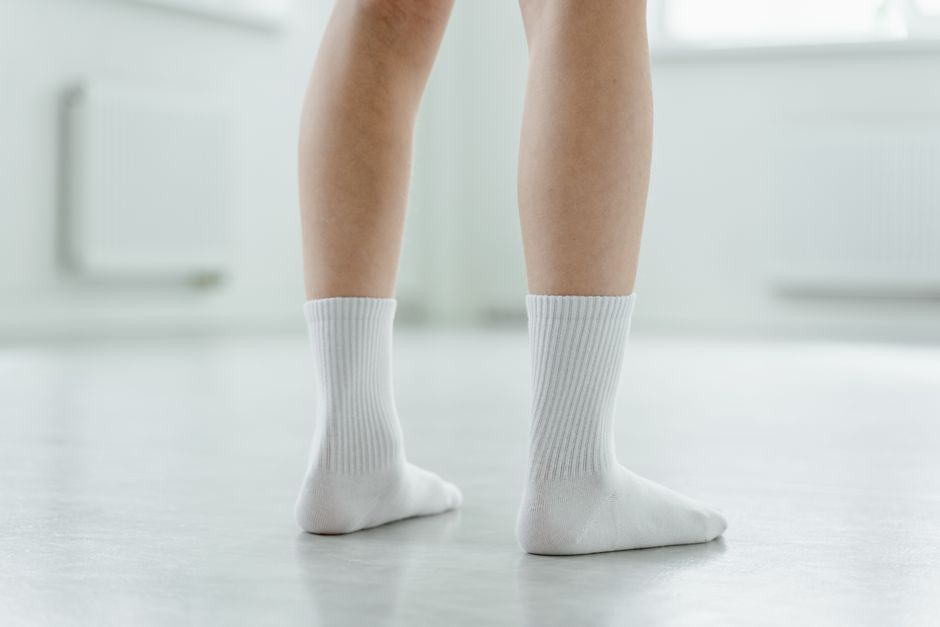
Pressure socks, also called compression stockings, apply graduated pressure to your legs, with the tightest fit at the ankle and gradually less pressure moving up toward the knee or thigh. This external squeeze helps your veins push blood back up to your heart, working against gravity and preventing blood from pooling in your lower legs. They are a well-established medical tool for improving circulation, reducing swelling, and lowering the risk of blood clots.
How Do Pressure Socks Work
The veins in your legs have one-way valves that open to let blood flow upward and close to stop it from falling back down. When these valves weaken or the muscles around them become less active, blood can pool in the lower leg, causing swelling, achiness, and even varicose veins.
Pressure socks add external support to this system. They squeeze the leg just enough to narrow the veins, which increases blood flow velocity. Faster blood flow means the valves close properly and blood does not stagnate. The graduated design matters because it mirrors the natural pressure gradient of a healthy leg — highest at the ankle, lowest at the top.
Think of it like a gentle hand wrapping around your calf and foot, constantly pushing fluid upward. This works in two ways: it supports the vein walls and it helps the lymphatic system move excess fluid out of the tissue. That is why compression therapy is a first-line treatment for chronic venous insufficiency and lymphedema.
Who Actually Needs Pressure Socks?
Doctors commonly prescribe pressure socks for people with chronic venous insufficiency, a condition where leg veins struggle to return blood to the heart. Symptoms include heavy, tired legs, ankle swelling, skin changes, and visible varicose veins.
They are also standard care for people at risk of deep vein thrombosis, or DVT. This includes patients recovering from surgery, people on long flights, and individuals who are bedridden. In these situations, the socks reduce blood stagnation, which is a primary factor in clot formation.
Pregnant women often benefit from them too. Pregnancy increases blood volume and the growing uterus puts pressure on pelvic veins, which slows return flow from the legs. Many obstetricians recommend compression stockings for leg swelling during pregnancy, though you should always get a doctor’s approval first.
People who stand or sit for long hours at work may use them for comfort, but this is not a medical requirement. If your legs feel heavy or swollen at the end of the day, they may help. If you have no symptoms, they are not necessary.
Different Compression Levels and What They Mean
Compression stockings are not one-size-fits-all. They come in different pressure levels, measured in millimeters of mercury, or mmHg. This number tells you how much pressure the sock applies to your leg.
- 8-15 mmHg: Mild support. Usually sold over the counter for minor leg fatigue or slight swelling.
- 15-20 mmHg: Light compression. Often used for travel, mild varicose veins, and early pregnancy swelling.
- 20-30 mmHg: Moderate compression. This is the most commonly prescribed range for chronic venous insufficiency and post-surgical use.
- 30-40 mmHg: Firm compression. Reserved for more severe venous disease, lymphedema, or DVT prevention in high-risk patients.
- 40+ mmHg: Very firm. Used under medical supervision for severe lymphedema or advanced venous disease.
The right level depends on your condition, not your preference. A doctor or a certified fitter should determine your prescription level. Wearing a pressure that is too high can restrict blood flow and cause damage, especially for people with arterial disease.
Note that over-the-counter “support socks” sold at pharmacies are often 8-15 mmHg. They are not the same as prescription-grade compression stockings and will not treat a diagnosed medical condition.




How to Put Them On Correctly
Getting compression stockings on is the hardest part for most people. The fabric is tight by design, and wrestling with it can leave you frustrated. But proper application matters because a twisted or bunched sock can create a tourniquet effect, which is worse than wearing nothing.
Put them on first thing in the morning when swelling is at its lowest. Your legs have been elevated overnight, so fluid has not accumulated yet. If you wait until midday, your legs may already be swollen and the socks will be harder to pull up.
Gather the sock down to the heel, then slide your foot in. Pull the fabric up over your ankle and calf, smoothing out any wrinkles as you go. Do not fold the top band down — this creates a tight ring that can restrict blood flow. Use rubber gloves if you have long nails or if the fabric keeps snagging.
Some people use a application aid, which is a metal or plastic frame that holds the sock open so you can slide your foot in more easily. These devices are inexpensive and can make daily application significantly easier, especially for older adults with limited hand strength.
When to Wear Them and When to Take Them Off
Wear them during the day and remove them at night. The socks work best when you are upright because that is when gravity is pulling blood downward and the compression is actively counteracting it. When you lie down, your legs are level with your heart and the socks provide little additional benefit.
Most people wear them all day, every day, as long as they are on their feet. If you sit at a desk all day, they still help because sitting compresses the back of your thighs and slows circulation. You should take them off before bed and let your skin breathe.
Check your skin daily. Look for redness, irritation, or indentations left by the sock edges. If you notice any areas where the skin is broken or painful, stop wearing them and consult your doctor. Properly fitted socks should feel snug but not painful.
If you are flying long distances, put them on before you board. The combination of sitting still and cabin pressure changes increases DVT risk. Wearing them for the duration of the flight is the standard recommendation for at-risk travelers.
Potential Risks and When to Avoid Them
Compression stockings are safe for most people, but they are not for everyone. People with peripheral arterial disease, or PAD, should not wear them. In PAD, the arteries are narrowed and blood flow to the legs is already reduced. Adding external compression can worsen the problem and potentially lead to tissue damage.
Signs of PAD include leg pain when walking that resolves with rest, cold feet, and weak pulses in the feet. If you have these symptoms, do not use compression stockings until a doctor has evaluated you.
People with skin infections, open wounds, or severe neuropathy should also avoid them unless a wound care specialist recommends otherwise. The pressure can impair healing and mask changes in sensation.
If you have heart failure, compression stockings may be helpful or harmful depending on the stage of your condition. Some patients with heart failure retain fluid in their legs, and compression can help move that fluid. But in advanced heart failure, the body may not handle the fluid shift well. This is a decision for your cardiologist.
How Long Until You Notice Results
Some effects are immediate. Most people feel reduced achiness and heaviness in their legs within the first day of wearing properly fitted compression stockings. Swelling in the ankles and calves typically improves within a few days of consistent daily wear.
For chronic conditions like venous insufficiency, the benefits are cumulative. Wearing them daily prevents the condition from worsening and reduces the risk of complications like skin ulcers. But they are a management tool, not a cure. Once you stop wearing them, symptoms usually return.
If you have been wearing them consistently for two weeks and see no improvement in swelling or discomfort, go back to your doctor. The compression level may be too low, the fit may be wrong, or there may be another underlying condition that needs attention.
How to Choose the Right Pair
Getting the right size requires measuring your leg, not guessing. Measure your ankle circumference at the narrowest point, your calf circumference at the widest point, and the length from the floor to the bend of your knee. Do this in the morning before swelling develops.
Compression stockings come in knee-high, thigh-high, and pantyhose styles. Knee-high socks are sufficient for most venous conditions. Thigh-high or pantyhose styles are used when the problem extends above the knee or during pregnancy.
Buy from a medical supply store or pharmacy that offers fitting services. Online retailers can work if you follow their sizing charts carefully, but a professional fitting is more reliable. The wrong size will either be too loose to help or too tight to be safe.
Expect to replace your stockings every three to six months with daily wear. The elastic fibers stretch out over time and lose their effectiveness. Washing them daily in lukewarm water with mild soap and air drying helps them last longer.
Frequently Asked Questions
Can I wear pressure socks all day?
Yes, you can wear them all day as long as you are upright and active. Remove them at night when you sleep, and check your skin daily for any signs of irritation.
Do pressure socks help with leg pain?
They help with leg pain caused by poor circulation, swelling, or venous insufficiency. They will not help pain from nerve damage, arthritis, or arterial disease.
How tight should compression socks feel?
They should feel snug but not painful, with the tightest pressure at the ankle and less pressure moving up the leg. If they leave deep indentations or cause numbness, they are too tight.
Can I wear compression socks on a plane?
Yes, wearing them during long flights is recommended for people at risk of blood clots. Put them on before boarding and keep them on for the entire flight.
