
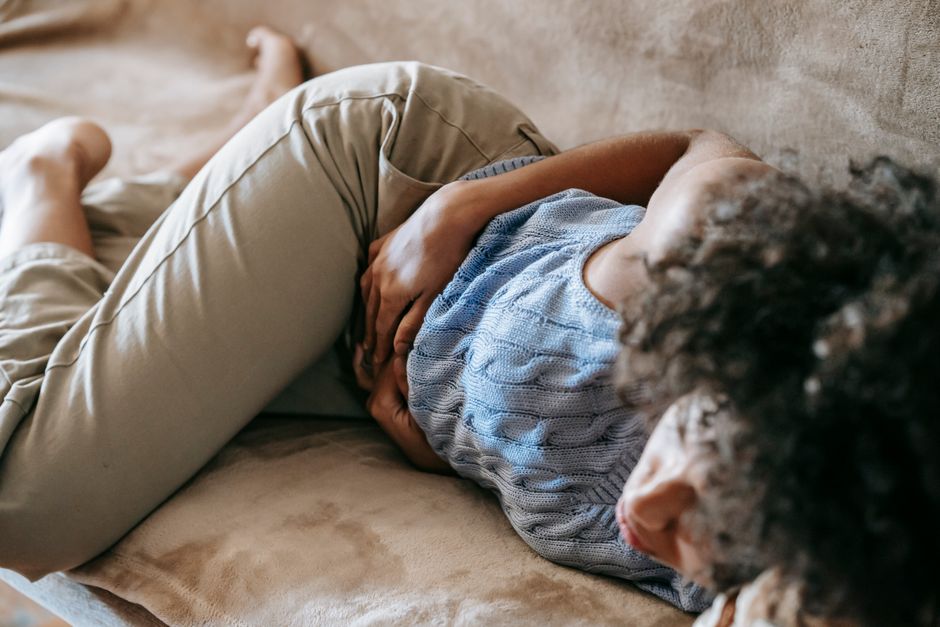
Period cramps happen when the muscular wall of the uterus contracts to help shed its lining. These contractions are triggered by hormone-like compounds called prostaglandins, which rise sharply just before bleeding starts. The result is the familiar ache, pressure, or throbbing in the lower belly — a sensation most people who menstruate know well.
For many, cramps are a few days of discomfort. For others, the pain is severe enough to interfere with school, work, and sleep. Understanding what is actually happening in the body makes it easier to separate what helps from what does not.
How Do Period Cramps Work? Causes And Relief
The uterus is a hollow organ made mostly of smooth muscle. Each month, its inner lining thickens in preparation for a possible pregnancy. When no pregnancy occurs, hormone levels drop, and that lining needs to leave the body. To do that, the uterus contracts.
The driver of these contractions is a group of compounds called prostaglandins. Levels of prostaglandins in the lining of the uterus rise around the time bleeding begins. Higher levels tend to produce stronger, more frequent contractions — and more pain. This is why the first day or two of a period is usually the most uncomfortable for most people.
Those contractions temporarily reduce blood flow to the muscle of the uterus. Reduced blood flow, in turn, is thought to contribute to the cramping sensation. The pain is not imaginary and it is not “just part of being a woman.” It has a clear physiological basis.
There is a detail many people do not realize: prostaglandin levels vary from person to person, and even from cycle to cycle in the same person. That is one reason two people with the same anatomy can have very different experiences of menstrual pain.
What Is the Difference Between Normal Cramps and Something More Serious?
Primary dysmenorrhea is the medical term for ordinary menstrual cramps that are not caused by another condition. It usually starts within a few years of a person’s first period and tends to follow a predictable pattern.
Secondary dysmenorrhea is cramping caused by an underlying condition. The pain may be different in character — often heavier, longer-lasting, or worsening over time. It can also begin later in life rather than in the teenage years.
Conditions that can cause secondary dysmenorrhea include endometriosis, uterine fibroids, and adenomyosis. Pelvic inflammatory disease and some structural abnormalities of the reproductive tract can also be involved. These are not rare, and they are frequently underdiagnosed.
Signs that cramping may need medical evaluation include:
- Pain that keeps getting worse cycle after cycle
- Pain that lasts much longer than the first few days of bleeding
- Bleeding that is unusually heavy or irregular
- Pain during sex or during bowel movements
- Cramping that does not respond to standard over-the-counter treatment
None of these signs automatically means something is wrong. But they are worth discussing with a clinician, because the conditions behind secondary dysmenorrhea often have effective management options.
What Actually Helps With Period Cramps?
Nonsteroidal anti-inflammatory drugs, or NSAIDs, are the most studied treatment for primary menstrual cramps. Drugs like ibuprofen and naproxen block the production of prostaglandins — the same compounds driving the contractions. Because they work on the cause rather than just masking pain, they tend to be more effective for cramps than acetaminophen.
Timing matters. NSAIDs appear to work best when started at the first sign of cramping or bleeding, rather than waiting for pain to peak. Anyone considering regular NSAID use should check with a clinician, since these drugs are not appropriate for everyone — particularly people with certain stomach, kidney, or heart conditions.
Heat is another approach with reasonable supporting evidence. A heating pad or warm bath relaxes the muscle and may reduce pain. Some research suggests continuous low-level heat can be about as helpful as an NSAID for some people, though the evidence is not uniform.
Other options that people use include:
- Regular physical activity, which some studies link to less menstrual pain
- Gentle movement like walking or stretching
- Relaxation techniques and adequate sleep
- Hormonal birth control, which can reduce prostaglandin production by thinning the uterine lining
Hormonal contraceptives are commonly prescribed for significant menstrual pain, and the mechanism is well understood. Whether they are the right choice depends on the individual and should be discussed with a clinician.
Does Diet or Exercise Really Make a Difference?
The evidence here is mixed and generally weaker than for NSAIDs or heat. Some studies suggest that diets higher in omega-3 fatty acids and lower in processed foods are associated with less menstrual pain, but these are largely observational and cannot prove cause and effect.
Exercise has a bit more support. Regular physical activity is associated with reduced menstrual pain in several studies, though the effect size varies and the reasons are not fully clear. It may involve improved blood flow, endorphin release, or simply better overall health.
Supplements like magnesium, vitamin B1, and vitamin E have been studied for menstrual cramps. Results are inconsistent. Some smaller trials show benefit; others do not. No clinical guidelines currently recommend these as first-line treatment, and dosing for menstrual pain is not well established. Anyone considering supplements should talk to a clinician first, especially if they take other medications or are pregnant or breastfeeding.
The honest position: lifestyle factors may help, but they are not a replacement for proven treatments when pain is significant.
When Should You See a Doctor About Cramps?
Most menstrual cramping is manageable and does not require medical attention. But some patterns deserve a conversation with a clinician.
See a doctor if pain is severe enough to interfere with daily activities, if it is getting worse over time, if it does not improve with NSAIDs or heat, or if it comes with heavy bleeding, fainting, fever, or unusual discharge. Pain that starts later in life — rather than in the teen years — is also worth evaluating.
There is no blood test or scan that diagnoses primary dysmenorrhea. It is generally identified by pattern and by ruling out other causes. Secondary causes may require pelvic examination, ultrasound, or other imaging.
Getting evaluated does not mean something is seriously wrong. It means you are giving yourself the chance to find out what is actually going on — and to access treatment that may work better than what you have tried so far.
What Makes Cramps Worse — And What Does Not
Several factors are associated with more intense menstrual cramps. Younger age at first period, heavier or longer bleeding, smoking, and a family history of painful periods all appear to increase risk in studies. Smoking in particular is linked to more severe cramping, possibly because of its effects on blood flow.
Things that do not cause cramps, despite common belief: cold drinks, certain foods, or “bad blood.” These are myths. Cramps are driven by prostaglandins and uterine contractions, not by temperature or diet in any direct, proven way.
Stress may play a role. Higher stress levels are associated with more reported menstrual pain, though the relationship is complex and likely involves both physical and psychological factors. Managing stress may help, but it is not a cure.
One clarification worth making: the severity of cramps is not a measure of how “strong” or “weak” someone is. It reflects biology — prostaglandin levels, uterine activity, and underlying conditions. Dismissing severe pain as a character issue is both inaccurate and unhelpful.
What About Pain That Does Not Respond to Treatment?
When standard treatments do not work, the next step is usually a more thorough evaluation. That may include imaging to look for fibroids, endometriosis, or other structural causes. Endometriosis in particular is often missed and can take years to diagnose.
For persistent primary dysmenorrhea, clinicians may consider hormonal options, prescription-strength NSAIDs, or other approaches. Some people find relief with physical therapy, particularly if pelvic floor tension is involved. Others may benefit from procedures for specific conditions.
What works for one person may not work for another. The goal is not to eliminate all discomfort — it is to reduce pain enough that it no longer controls your life.
Frequently Asked Questions
Why do period cramps hurt so much?
Cramps hurt because prostaglandins cause the uterus to contract strongly, temporarily reducing blood flow to the muscle. Higher prostaglandin levels generally mean more intense pain.
What is the fastest way to relieve period cramps?
NSAIDs like ibuprofen are the most studied option and work best when taken early, at the first sign of cramping. Heat applied to the lower belly can also help and has reasonable supporting evidence.
Can period cramps be a sign of something serious?
Most cramps are not dangerous, but pain that worsens over time, lasts unusually long, or does not respond to treatment may signal conditions like endometriosis or fibroids. These are worth evaluating with a clinician.
Do period cramps get worse with age?
Primary cramps often improve with age or after pregnancy, but pain that starts later in life or gets progressively worse may point to a secondary cause. That pattern deserves medical evaluation.
