
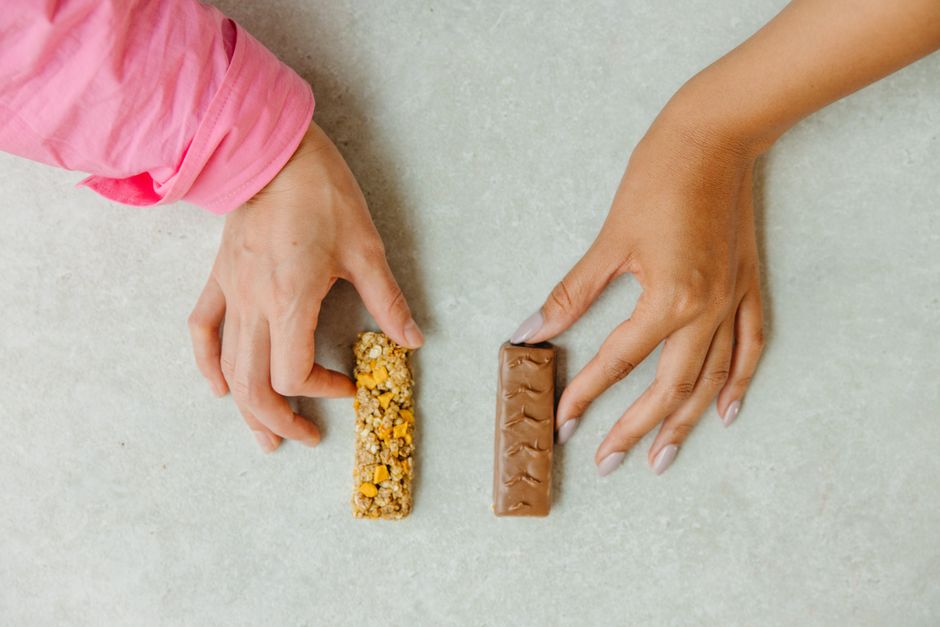
Chocolate starts as a bitter, pale seed inside a football-shaped pod that grows on the trunk of a tropical tree. Turning that seed into a smooth brown bar takes a chain of steps: harvest the pods, ferment and dry the seeds, roast them, crack off their shells, grind the nibs into a liquid, then mix, refine, and cool that liquid into the chocolate you eat.
Most people picture a factory, but the flavor is largely decided long before the factory. The single most important step is fermentation, which happens on farms within days of harvest. Get that wrong and no amount of roasting or refining can fix it.
Where Does Chocolate Actually Come From?
Chocolate comes from the seeds of the cacao tree, Theobroma cacao. The tree grows in a narrow band around the equator, roughly 20 degrees north and south of it, because it needs steady warmth, high humidity, and shade.
The pods do not hang from branches like apples. They grow directly out of the trunk and thick lower branches, a trait called cauliflory. Each pod holds 20 to 50 seeds packed in white, tangy pulp. The seeds themselves taste nothing like chocolate at this stage. They are bitter and astringent.
Three main varieties dominate global production. Forastero makes up the large majority of the world’s crop and is hardy and high-yielding. Criollo is rarer and prized for delicate flavor. Trinitario is a natural hybrid of the two and sits in between. These names describe plant genetics, not quality guarantees. A well-fermented Forastero can outperform a poorly handled Criollo.
How Are Cacao Pods Harvested and Opened?
Farmers cut ripe pods from the tree by hand, usually with a machete or a long-handled blade. Pod color is not a reliable ripeness signal across varieties. Pods can ripen to yellow, orange, red, or purple depending on the type, so growers rely on sound and feel as much as color.
Workers open the pods within a day or two of harvest. They split the husk with a machete or a wooden club and scoop out the seeds and pulp by hand. Care matters here. A blade that cuts into the seeds exposes them to mold and off-flavors.
The empty husks are usually left in the field as compost. The wet seeds and pulp go straight into fermentation boxes or piles. The clock is now running. Fresh cacao pulp begins to spoil quickly in tropical heat.
Why Is Fermentation the Most Important Step?
Fermentation is where chocolate flavor is born, and it is the step most often rushed. The seeds and pulp are piled into wooden boxes, baskets, or heaps and covered with banana leaves or burlap. They sit there for several days.
What happens is a sequence of microbial activity. Yeasts start first, feeding on the sugars in the pulp and producing alcohol. Bacteria follow, producing acids, mainly acetic acid. The pile heats up. Temperatures inside a well-managed fermentation can climb well above 100 degrees Fahrenheit.
That heat and acid do two things. They kill the seed embryo, so the seed can no longer sprout. And they trigger chemical reactions inside the seed that break down bitter compounds and build the aroma precursors that will later become chocolate flavor.
Fermentation typically runs about five to seven days, though the exact time depends on the variety, the climate, and the farmer’s judgment. Under-fermented beans taste harsh and astringent. Over-fermented beans can taste sour, hammy, or rotten. Neither problem can be corrected later.
Drying and Shipping
After fermentation, the beans are spread out in the sun to dry for several days, often on wooden decks or concrete patios. Drying brings moisture down to a level that prevents mold during storage and shipping. Beans are then bagged and sold, often through a network of collectors and exporters before reaching a chocolate maker.




How Do People Make Chocolate Step By Step in a Factory or Workshop?
This is the part most people mean when they ask how chocolate is made. Whether it happens in a small craft workshop or a large plant, the sequence is similar.
- Roasting. Beans are roasted to develop flavor and loosen the shells. Time and temperature vary widely by maker and bean type.
- Winnowing. The roasted beans are cracked, and the light shells are separated from the heavier nibs, usually by air.
- Grinding. The nibs are ground until they turn into a thick liquid called cocoa mass or chocolate liquor. Despite the name, it contains no alcohol. It is simply ground cacao.
- Mixing. For most eating chocolate, makers add sugar, cocoa butter, and often vanilla or lecithin. Milk powder is added for milk chocolate.
- Refining. Rollers or mills reduce the mixture until the particles are too small for the tongue to detect as grit.
- Conching. The chocolate is stirred and kneaded, sometimes for many hours, to smooth texture and mellow harsh flavors.
- Tempering. The chocolate is heated and cooled in a controlled pattern so the cocoa butter sets into a stable crystal form.
- Molding and cooling. The tempered chocolate is poured into molds and cooled until solid.
The word “chocolate liquor” trips people up constantly. It sounds like a drink, but it is just pure ground cacao, and it is the base of all chocolate.
What Do Conching and Tempering Actually Do?
Conching and tempering are the two steps that separate good chocolate from bad, and both are about texture and structure rather than flavor ingredients.
Conching is a long stirring and kneading process. It does several things at once. It drives off unwanted volatile acids, coats the solid particles in fat so the chocolate feels smooth rather than gritty, and lets flavors round out. Traditional conching can run for many hours, sometimes more than a day. Some makers conche far longer, though more time is not automatically better.
Tempering is the controlled heating and cooling of chocolate so the cocoa butter crystallizes into its most stable form. Get it right and the bar is glossy, snaps cleanly, and melts smoothly. Get it wrong and the chocolate looks dull, feels soft or grainy, and may develop pale streaks called bloom. Bloom is harmless to eat, but it signals that tempering failed.
This is a good place to clear up a persistent myth. White streaks on stored chocolate are usually fat bloom or sugar bloom, not mold. Mold on chocolate is rare and looks fuzzy, not chalky.
How Is Chocolate Different From Cocoa Powder?
Cocoa powder and chocolate come from the same ground cacao, but they diverge through pressing. When chocolate liquor is pressed under high pressure, much of the cocoa butter is squeezed out. The dry, compressed remainder is ground into cocoa powder. The extracted cocoa butter can be added back into other chocolate or sold separately.
This is why cocoa powder is low in fat and intensely flavored, while chocolate contains added cocoa butter and usually sugar. It also explains why “white chocolate” contains no cocoa solids at all. It is made from cocoa butter, sugar, and milk solids, which is why some regulators do not classify it as chocolate in the strict sense.
Does the Type of Chocolate Change the Steps?
The core steps stay the same. What changes is what gets added and in what proportion.
| Type | Main ingredients | Key difference in process |
|---|---|---|
| Dark | Cocoa mass, cocoa butter, sugar | Higher cocoa solids; no milk |
| Milk | Cocoa mass, cocoa butter, sugar, milk powder | Milk solids added before refining |
| White | Cocoa butter, sugar, milk solids | No cocoa solids used |
There is no single legal definition of “dark chocolate” that applies worldwide. Different countries set different minimum cocoa percentages, so a bar labeled dark in one market may not qualify in another. If cocoa content matters to you, read the percentage on the label rather than trusting the word “dark.”
How Long Does the Whole Process Take?
From pod to finished bar, the timeline is long. Fermentation takes about five to seven days, drying adds several more, and shipping and storage can add weeks or months. Roasting, grinding, and refining take hours. Conching alone can run from a few hours to more than a day depending on the maker.
So the honest answer is that a bar of chocolate can represent weeks or months from harvest, even though the final manufacturing steps take only a day or two. The farm work is where most of the time and most of the flavor decision-making happens.
Frequently Asked Questions
How long does it take to make chocolate from start to finish?
From harvest to finished bar, the process usually takes weeks to months, mostly because fermentation and drying take about one to two weeks and shipping adds more time. The final manufacturing steps like roasting and refining take only a day or two.
Why does chocolate need to be fermented?
Fermentation kills the seed embryo and triggers chemical changes that reduce bitterness and create the aroma compounds that become chocolate flavor. Without it, the seeds stay harsh and astringent no matter how they are roasted.
What is the white coating on old chocolate?
It is usually fat bloom or sugar bloom, a harmless change in how the cocoa butter or sugar has crystallized on the surface. It is not mold, and the chocolate is still safe to eat, though the texture may suffer.
Is white chocolate really chocolate?
White chocolate contains cocoa butter but no cocoa solids, which is why some countries do not legally classify it as chocolate. It is made from cocoa butter, sugar, and milk solids.
