
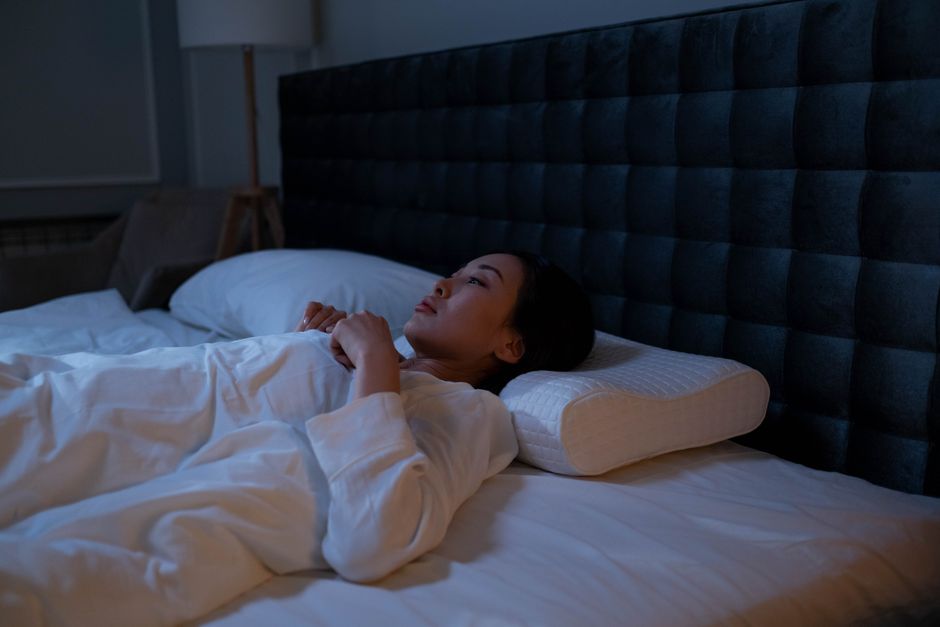
Insomnia usually starts with a trigger — a stressful event, a schedule change, an illness, a new medication — and then keeps going because the brain learns to associate the bed with being awake and anxious. The original trigger often fades, but the pattern it created does not. That gap between why insomnia began and why it continues is the single most useful thing to understand about it.
Doctors describe this as acute insomnia becoming chronic insomnia. Short-term sleeplessness is common and usually resolves. Chronic insomnia is different. It persists because of changes in behavior, thinking, and the body’s sleep-wake signaling that outlast whatever set it off in the first place.
How Do People Get Insomnia And Why It Persists?
Insomnia begins when something interferes with sleep and persists when the brain adapts to that interference in ways that keep it going.
Most people who develop chronic insomnia can point to an initial trigger. Common ones include a period of intense stress, a job change or shift work, a painful injury, a depressive or anxiety episode, a noisy sleep environment, or a medication that disrupts sleep. In many cases the trigger is temporary. The insomnia is not.
What happens next is the part most people do not expect. The mind starts to treat bedtime as a threat. You begin checking the clock. You calculate how many hours are left. You worry about how you will function tomorrow. That worry raises physiological arousal — heart rate, cortisol, alertness — at exactly the moment your body needs to wind down. The bed becomes a place of frustration rather than rest.
Over time, this creates a conditioned response. The brain learns that the bed means wakefulness and worry. Sleep itself becomes effortful. This is the core mechanism behind what clinicians call psychophysiological insomnia, and it explains why so many people sleep better away from home — in a hotel, on a couch — than in their own bed.
The persistence is not a character flaw or a lack of willpower. It is a learned pattern, and learned patterns can be unlearned, though usually not by trying harder to sleep.
What Are the Most Common Causes of Insomnia?
The causes of insomnia fall into a few broad categories, and most people have more than one operating at once.
Stress and life events are the most common triggers. Worry, grief, job loss, relationship problems, and major transitions all activate the body’s stress response, which is directly opposed to sleep.
Mental health conditions are tightly linked to insomnia. Anxiety and depression are among the strongest associations. The relationship runs both ways — poor sleep can worsen mood, and low mood can disrupt sleep.
Medical conditions contribute through pain, breathing problems, hormonal changes, or frequent nighttime urination. Chronic pain, acid reflux, asthma, and thyroid conditions are common examples.
Medications and substances matter more than many people realize. Some antidepressants, steroids, decongestants, and blood pressure medications can interfere with sleep. Caffeine has a long half-life — roughly five hours on average, longer in some people — so an afternoon coffee can still be active at bedtime. Alcohol helps people fall asleep but fragments sleep later in the night.
Sleep environment and schedule play a role too. Irregular bedtimes, late screen use, shift work, and a bedroom that is too warm, too bright, or too noisy all make sleep harder to initiate and maintain.
Why Does Insomnia Continue After the Original Cause Is Gone?
Insomnia persists because the behaviors and thought patterns that develop around it become self-sustaining, independent of whatever started it.
Several mechanisms keep the cycle running:
- Conditioned arousal. The bed becomes a cue for alertness rather than sleep.
- Clock-watching and sleep effort. Trying hard to sleep is counterproductive. Sleep is a passive process that retreats when pursued.
- Irregular sleep schedules. Sleeping in after a bad night or going to bed early “to catch up” disrupts the body’s internal clock and makes the next night harder.
- Daytime compensation. Napping, extra caffeine, and reduced activity can erode the sleep drive that builds naturally through the day.
- Anxiety about sleep itself. Fear of another bad night creates anticipatory arousal before bedtime.
This is why insomnia can outlast a stressful period by months or years. The original stressor is gone, but the habits and associations it created remain.
What Role Does the Body’s Sleep-Wake System Play?
Two internal systems govern sleep, and insomnia often involves disruption in both.
The first is sleep drive, sometimes called process S. A chemical called adenosine builds up in the brain the longer you are awake, creating pressure to sleep. It clears during sleep. Caffeine works by blocking adenosine receptors, which is why it delays sleepiness.
The second is the circadian rhythm, or process C. This is the body’s internal clock, regulated by light exposure and timed by structures deep in the brain. It controls when you feel alert and when you feel sleepy across the day.
Good sleep happens when these two systems are aligned — high sleep drive meeting the right point in the circadian cycle. Insomnia can develop when either system is disrupted. Shift work, travel across time zones, late-night light exposure, and irregular sleep schedules all disturb the circadian rhythm. Spending too long in bed or napping during the day reduces sleep drive.
Understanding this matters because it explains why “just go to bed earlier” often fails. If sleep drive is low and the circadian clock is not signaling sleep, lying in bed longer does not produce sleep. It produces frustration.
What Makes Some People More Vulnerable to Chronic Insomnia?
Not everyone who experiences a stressor develops chronic insomnia. Researchers describe a vulnerability model in which certain traits make some people more likely to cross from short-term to long-term insomnia.
These include a tendency toward anxiety or worry, a heightened stress response, and certain patterns of brain activity related to arousal. Some evidence suggests that people who are naturally more reactive to stress and more prone to rumination are at higher risk of insomnia becoming chronic.
Age also plays a role. Sleep architecture changes with age — deep sleep decreases and awakenings become more frequent. This does not mean older adults need less sleep; it means their sleep is more easily disrupted.
Women appear to be at higher risk at certain life stages, particularly around hormonal transitions such as menopause. The reasons are not fully understood and likely involve a mix of hormonal, psychological, and behavioral factors.
Genetics likely contribute as well, though the specific mechanisms are still being studied. The evidence here is suggestive rather than definitive.
How Is Chronic Insomnia Treated?
The best-studied treatment for chronic insomnia is cognitive behavioral therapy for insomnia, known as CBT-I. It is not a cure in the marketing sense, but it has the strongest evidence base of any approach.
CBT-I combines several strategies. Sleep restriction limits time in bed to match actual sleep time, which builds sleep drive. Stimulus control reassociates the bed with sleep by restricting it to sleep and intimacy only. Cognitive work addresses unhelpful beliefs about sleep. Relaxation training and sleep hygiene education round it out.
Research consistently shows CBT-I produces meaningful improvement in sleep for many people with chronic insomnia, and the benefits tend to last after treatment ends. It is typically delivered over several weeks by a trained clinician, though digital programs exist.
Sleeping medications are widely prescribed and can help in the short term. Their role in long-term management is more limited. Many carry risks of dependence, tolerance, and next-day drowsiness, and the evidence for sustained benefit beyond a few weeks is weaker than for CBT-I. Some clinicians use medication short-term alongside behavioral treatment. This is common practice, but it is not the same as saying medication is the preferred long-term solution.
Sleep hygiene — the familiar advice about dark rooms, consistent schedules, and avoiding screens — is reasonable but often oversold. On its own, it rarely resolves chronic insomnia. It works best as one part of a broader behavioral approach.
When Should Someone Seek Help for Insomnia?
Anyone whose sleep problems last for weeks, affect daytime functioning, or cause distress should consider talking to a clinician.
Insomnia is diagnosed clinically. There is no blood test for it. A doctor will typically ask about sleep patterns, daytime symptoms, medical history, medications, and mood. In some cases a sleep study may be recommended to rule out other conditions such as sleep apnea, which can mimic or worsen insomnia.
Seek help sooner if insomnia comes with loud snoring, gasping during sleep, restless legs, or significant daytime sleepiness despite adequate time in bed. These can point to a separate sleep disorder that needs different treatment.
Insomnia is common, treatable, and worth taking seriously. It is not something to simply push through indefinitely.
Frequently Asked Questions
Does insomnia go away on its own?
Short-term insomnia often resolves once the trigger passes. Chronic insomnia, defined as symptoms occurring at least three nights a week for three months or longer, usually needs active treatment rather than time alone.
Is insomnia a mental health condition?
Insomnia is classified as a sleep disorder, not a mental health condition, though it is closely linked to anxiety and depression. The relationship runs both ways, which is why clinicians often assess mood alongside sleep.
Can you die from insomnia?
Fatal familial insomnia is an extremely rare genetic disease that is distinct from ordinary insomnia and can be fatal. Common insomnia does not cause death, though chronic poor sleep is associated with other health risks.
Why do I sleep better away from home?
Sleeping in a new place removes the conditioned association between your own bed and wakefulness. This is a common sign of psychophysiological insomnia, where the bed itself has become a cue for alertness.
