

Every living thing on Earth is a solution to a problem. A cactus solves the problem of dry heat. A polar bear solves the problem of extreme cold. A deep-sea fish solves the problem of crushing pressure and total darkness. Adaptation is the process that produced these solutions. It works through natural selection acting on random genetic variation over many generations. Organisms that carry traits better suited to their surroundings tend to survive and reproduce more, so those traits become more common in the population over time. No planner, no goal, no forward-looking design — just variation, inheritance, and differential survival repeated across deep time.
How Do Organisms Adapt To Their Environment?
Adaptation happens through natural selection. Individuals in a population vary in their traits because of random genetic mutations and recombination. Some of those variations give an edge in a particular environment — better camouflage, more efficient water use, a stronger immune response. Those individuals leave more offspring, and the genes behind the useful traits spread. Over generations, the population becomes better matched to its surroundings.
The key point that trips people up: individual organisms do not adapt during their lifetime in an evolutionary sense. A person who moves to high altitude does not evolve larger lungs. Their body adjusts — breathing rate rises, red blood cell production increases — but those changes are not passed to their children. Evolutionary adaptation is a population-level process measured in generations, not a personal one measured in weeks.
That said, many organisms do adjust within their lifetime through a separate process called acclimation or phenotypic plasticity. A plant grown in shade develops broader, thinner leaves than the same species grown in full sun. This flexibility is real and important, but it is not the same as genetic adaptation. Keeping these two ideas separate makes the rest of the topic much clearer.
What Are The Main Types Of Adaptation?
Biologists usually sort adaptations into three broad categories based on what they do. Most real-world examples blend two or more.
- Structural (anatomical) adaptations are physical features. The thick blubber layer of a seal, the long neck of a giraffe, the waxy coating on a desert plant’s leaves. These are body parts shaped by selection.
- Physiological adaptations are internal processes. The ability of a camel’s kidneys to concentrate urine and conserve water. The antifreeze proteins some fish produce to survive water below freezing. The way a hibernating mammal drops its body temperature and metabolic rate.
- Behavioral adaptations are actions. Migration, burrowing, nocturnal activity to avoid daytime heat, cooperative hunting. Behavior is often the fastest way an animal can respond to a changing environment within its own lifetime.
One clarification that helps: behavioral adaptations can be either genetically wired or learned. A bird migrating for the first time on an instinct it never learned is a genetic behavioral adaptation. A chimpanzee learning to use a stick to fish for termites is a learned behavior. Both can improve survival, but only the genetically based one is passed through genes.
How Do Animals Adapt To Extreme Environments?
Extreme environments are where adaptation becomes easiest to see, because the pressure is so strong and the solutions so specific.
Cold. Animals in polar regions tend to be large and compact — a pattern called Bergmann’s rule — because a lower surface-area-to-volume ratio loses heat more slowly. They grow thick fur or blubber, and many have countercurrent blood flow in their limbs, where warm arterial blood leaving the body warms the cold venous blood returning from the extremities. This limits heat loss from the feet and legs.
Heat and drought. Desert animals are often small, nocturnal, and highly efficient with water. The kangaroo rat, for example, can obtain most of its water from the seeds it eats and produces very concentrated urine. Many desert plants open their pores at night instead of during the day, taking in carbon dioxide in the cool dark and storing it for daytime photosynthesis — a strategy that cuts water loss dramatically.
High altitude. At altitude, the air holds less oxygen. Populations that have lived at high elevation for many generations show physiological differences — for instance, some Andean populations have larger lung capacity and higher red blood cell counts, while some Tibetan populations maintain relatively normal red blood cell counts and instead show differences in how oxygen is used at the tissue level. These are distinct evolutionary solutions to the same problem.
Deep water and darkness. Deep-sea organisms face crushing pressure, cold, and no sunlight. Adaptations include bodies without gas-filled spaces that would collapse, slow metabolisms, and bioluminescence — light produced by chemical reactions — used for finding prey, attracting mates, or confusing predators.




How Do Plants Adapt To Their Environment?
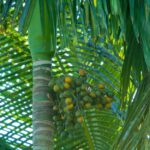
Plants cannot move to escape a problem, so their adaptations are largely structural and physiological. This makes them especially clear examples.
Desert plants, known as xerophytes, reduce water loss in several ways: thick waxy cuticles that limit evaporation, leaves reduced to spines (as in cacti) so the stem does the photosynthesis, and deep or widespread root systems. Some store water in swollen tissues. Some close their pores during the hottest part of the day.
Plants in shaded environments do the opposite. They tend to have broad, thin leaves with a large surface area to capture what little light reaches the forest floor. Plants in bright, dry environments tend to have smaller, thicker leaves. The same species can show both patterns depending on where it grows, which is a good demonstration of plasticity — adjusting within a lifetime rather than across generations.
Some plants have adapted to nutrient-poor soil by becoming carnivorous. Pitcher plants and sundews trap and digest insects to obtain nitrogen that the soil does not supply. This is not a curiosity — it is a genuine adaptation to a specific environmental limitation.
What Is The Difference Between Adaptation And Acclimation?
This distinction matters more than most people realize, and it is where a lot of confusion starts.
Adaptation is genetic and evolutionary. It happens across generations in a population. It is inherited.
Acclimation (sometimes called acclimatization) is a reversible adjustment within an individual’s lifetime. It is not inherited. It can happen in days to weeks.
Concrete examples help. When a lowland resident spends time at high altitude, their body increases red blood cell production and breathing rate. That is acclimation, and it reverses when they return to sea level. When a population has lived at high altitude for thousands of years and shows genetic differences in how it handles low oxygen, that is adaptation. Both are real. They are not the same thing.
Acclimation has limits. An individual can adjust within a range, but that range is set by their genes. Push beyond it and the adjustment fails. This is part of why some species can cope with a shifting environment and others cannot.
Can Organisms Adapt Fast Enough To Environmental Change?
This is the question with real stakes, and the honest answer is: sometimes, and it depends heavily on the species and the rate of change.
Adaptation requires three things: genetic variation to work with, enough generations to act on it, and a stable enough environment for the useful traits to actually help. When change is slow, populations can track it. When change is fast — faster than a species can reproduce and spread new traits — adaptation cannot keep pace.
Some organisms adapt remarkably quickly. Bacteria evolve antibiotic resistance in a matter of years because their generations are measured in hours. Some insects develop resistance to pesticides within a few seasons. Small, fast-reproducing organisms with large populations have more raw variation and more generations per unit of time, which speeds up the process.
Large, slow-reproducing animals face a harder problem. A species with a long generation time has fewer chances to accumulate helpful mutations before conditions shift. When the environment changes faster than the species can respond, populations decline. Migration to more suitable habitat is sometimes an option, but it requires a route and a destination that exists.
There is a common misconception worth naming directly: that animals “adapt” to pollution, habitat loss, or climate change the way they adapt to cold or altitude. Some can, given time and genetic variation. Many cannot, and the evidence does not support the idea that species will simply adjust to whatever we do to their environment. Extinction is what happens when they cannot.
Why Does Adaptation Matter For Human Health?
Adaptation is not just a biology-class topic. It shapes human health in ways that show up in medicine.
Human populations have adapted to local conditions over thousands of years, and some of those adaptations carry trade-offs. Sickle cell trait is the clearest example. Carrying one copy of the sickle cell gene provides meaningful protection against severe malaria. Carrying two copies causes sickle cell disease. The trait persisted in malaria-endemic regions because the protection outweighed the cost — a textbook case of adaptation with a real health price.
Lactase persistence — the ability to digest milk sugar into adulthood — is another. In populations with a long history of dairy farming, a genetic variant that keeps lactase production switched on in adults became common. In populations without that history, it did not. This is why lactose intolerance is far more common in some parts of the world than others.
The same principle applies to antibiotic resistance. Every course of antibiotics is a selection pressure. Bacteria that survive treatment pass on resistance. This is adaptation in real time, and it is why clinicians emphasize using antibiotics only when they are genuinely needed and completing prescribed courses as directed.
Frequently Asked Questions
How do organisms adapt to their environment?
Organisms adapt through natural selection acting on genetic variation over many generations. Individuals with traits better suited to their surroundings tend to survive and reproduce more, so those traits become more common in the population.
What is the difference between adaptation and acclimation?
Adaptation is a genetic change across generations in a population, while acclimation is a reversible adjustment within a single organism’s lifetime. Acclimation is not inherited and reverses when conditions change back.
Can animals adapt to climate change fast enough?
Some fast-reproducing species with large populations can adapt to gradual change, but many cannot keep pace with rapid shifts. Species with long generation times and limited genetic variation face the greatest risk of decline.
What are examples of behavioral adaptations?
Migration, burrowing, nocturnal activity to avoid heat, and cooperative hunting are common behavioral adaptations. Some are genetically wired instincts, while others are learned within an animal’s lifetime.
