
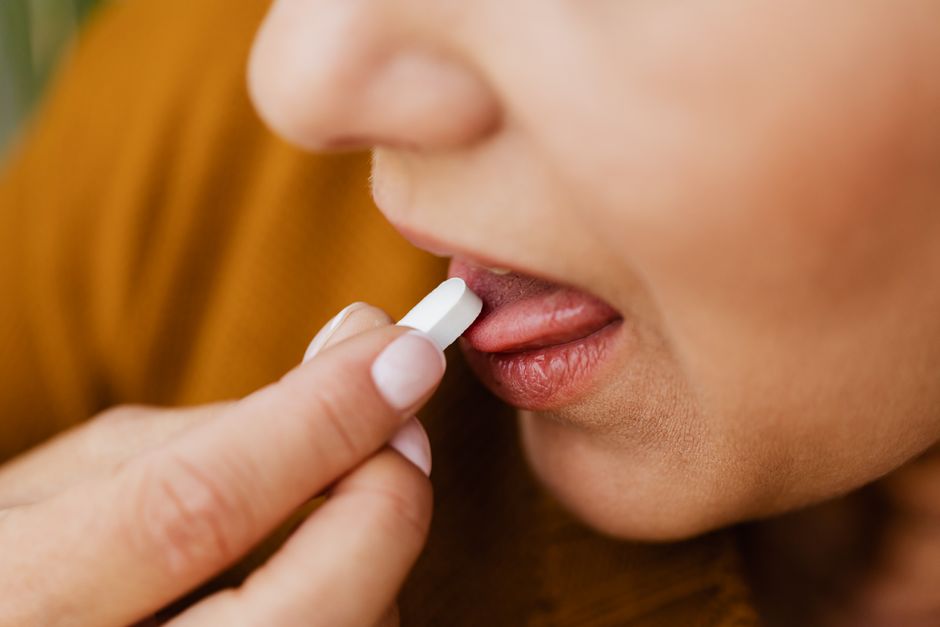
Oral peptides are short chains of amino acids taken by mouth, usually as capsules, powders, or liquids. How well they work depends almost entirely on one thing: whether the peptide survives digestion and reaches the bloodstream intact. Most do not. That single fact separates the peptides with real clinical evidence behind them from the ones sold with impressive-sounding claims and very little to back them up.
What Are Oral Peptides?
Peptides are chains of amino acids linked together. When the chain is short — roughly under 50 amino acids — it is generally called a peptide rather than a protein. Your body makes thousands of them. Insulin, glucagon, and many hormones that regulate appetite, blood pressure, and tissue repair are peptides.
The peptides sold as oral supplements are usually synthetic versions of naturally occurring compounds. Some are fragments of larger proteins. Others are copies of signaling molecules found in the gut, brain, or connective tissue. They are marketed for goals like skin health, joint comfort, sleep, weight management, and recovery after exercise.
It helps to separate two very different categories:
- Prescription peptide drugs — regulated, tested in clinical trials, and approved for specific medical conditions.
- Over-the-counter peptide supplements — sold without a prescription, generally not held to the same evidence standard, and often not required to prove they work.
That distinction matters more than any individual product claim. A peptide with approval for a medical condition is not the same product as a capsule on a shelf with a similar name.
How Do Oral Peptides Work And Are They Effective?
For a peptide to work after you swallow it, it has to survive the digestive tract and enter the bloodstream in a form that still functions. That is a tall order, and it is where most oral peptides fail.
The stomach is acidic and full of protein-digesting enzymes. The small intestine adds more enzymes that break peptide bonds. From a digestive standpoint, a peptide looks like food. The system is built to dismantle it into individual amino acids, which are then absorbed — but no longer as the original peptide.
Even if a peptide survives enzyme breakdown, it faces a second barrier: the cells lining the gut. Large, water-soluble molecules cross this barrier poorly. Peptides are generally large and water-soluble. So the fraction that reaches the bloodstream intact is often very small.
This is why so many peptides are given by injection. An injection bypasses digestion entirely and delivers the full dose into circulation. That is not a marketing choice — it reflects a real biological obstacle.
There are exceptions. Some small peptides and certain modified peptides can cross the gut lining, and researchers have developed delivery strategies to improve absorption. But these are specific, engineered cases. They do not mean oral peptides in general are well absorbed.
So are they effective? It depends on the peptide.
- Some oral peptide drugs have solid clinical evidence for specific conditions, often because they were designed or formulated to overcome the absorption problem.
- Many oral peptide supplements sold for general wellness have little or no human trial evidence showing they reach the bloodstream at meaningful levels or produce the claimed effects.
The honest position: effectiveness is not a property of “oral peptides” as a group. It is a property of each specific molecule, its dose, its formulation, and the condition being treated.
Why Is Absorption Such a Big Problem?
Bioavailability is the term for how much of a substance actually reaches circulation in an active form. For most oral peptides, bioavailability is low — often a small fraction of the dose, and sometimes effectively negligible.
Three barriers stack up against a swallowed peptide:
- Acid and enzymes in the stomach break peptide bonds.
- Enzymes in the intestine continue the breakdown.
- The gut wall blocks large molecules from passing into the blood.
There is also a first-pass effect. Blood from the gut travels to the liver before reaching the rest of the body, and the liver can further break down whatever survived. A peptide that makes it past the gut may still be cleared before it can act.
Researchers have tried several ways around this. Adding chemical modifications, using absorption enhancers, or packaging peptides in protective carriers can improve delivery in some cases. These approaches are real and studied, but they are specific to particular products. They do not transfer automatically to every peptide on the market.
One clarification worth making: a supplement label that lists a peptide does not tell you how much reaches your blood. Without absorption data, the dose on the label is not the dose your body receives.




What Does the Evidence Actually Show?
The evidence is uneven, and it splits cleanly along the prescription-versus-supplement line.
For prescription peptide drugs, there is a regulated pathway. Companies must show the drug is absorbed, reaches target levels, and produces measurable effects in trials. Some oral peptide drugs have cleared that bar for specific uses. This does not mean every oral peptide drug works for everything — it means the ones that are approved have data supporting their approved use.
For over-the-counter peptide supplements, the picture is different. Many are sold under rules that do not require proof of effectiveness before marketing. Some have small studies behind them. Many have none in humans. A few have studies that measured lab markers rather than real health outcomes, which makes it hard to say whether the change matters to a person.
When you see a claim, it helps to ask three questions:
- Was this tested in humans, or only in cells or animals?
- Did the study measure a real health outcome, or only a lab value?
- Did the study use the same dose and form as the product being sold?
If the answer to any of these is unclear, the claim is not established. That is not cynicism — it is just how evidence works.
Are Oral Peptides Safe?
Safety depends on the specific peptide, the dose, and the person taking it. There is no single answer for the whole category.
Prescription peptide drugs go through safety review before approval, and their known risks are documented. Over-the-counter peptide supplements are not held to the same standard. That means the safety profile of many of them is not well characterized.
A few general points apply:
- Because absorption is often poor, some oral peptides may pass through with limited effect — but “limited effect” is not the same as “no risk.”
- Contamination and mislabeling are documented problems in the supplement market, so what is in the capsule is not always what the label says.
- Peptides that do get absorbed can have biological activity, and activity can carry side effects.
People who are pregnant or breastfeeding, people taking prescription medications, and people with chronic health conditions should be especially cautious. For these groups, there is often no reliable dosing or safety data for a given oral peptide. In that situation, the honest statement is that the data are lacking — not that the product is safe.
Anyone considering a peptide product for a medical purpose should talk with a clinician rather than rely on marketing.
What Should You Look For in a Product?
Start with the evidence, not the label. A well-formulated product with no human data is still an unproven product.
Practical steps:
- Check whether the peptide has been studied in humans for the specific goal you have in mind.
- Look for whether the study measured a real outcome, not just a marker.
- Be skeptical of claims that a peptide “supports” many different systems at once — broad claims often signal thin evidence.
- Remember that injection and oral forms are not interchangeable; results from one do not automatically apply to the other.
If a product cannot point to human evidence for its specific claim, the reasonable conclusion is that the claim is unproven. That is a factual statement, not a judgment about any one brand.
Frequently Asked Questions
Do oral peptides actually get absorbed?
Most oral peptides are broken down by digestion and absorbed poorly, so only a small fraction reaches the bloodstream intact. Some specially designed or modified peptides absorb better, but that does not apply to oral peptides as a whole.
Are oral peptides as effective as injectable peptides?
Generally no, because injections bypass digestion and deliver the full dose into circulation. Oral forms face acid, enzymes, and the gut wall, which reduces how much active peptide reaches the blood.
Can oral peptides help with weight loss or skin?
Some oral peptide drugs have evidence for specific medical uses, but most over-the-counter peptide supplements sold for weight or skin claims lack human trials proving they work. Effectiveness depends on the exact peptide and formulation, not the category.
Are oral peptide supplements safe to take?
Safety varies by product, and over-the-counter peptide supplements are not required to prove effectiveness or meet the same safety standards as prescription drugs. People who are pregnant, breastfeeding, or taking medications should check with a clinician first.
