
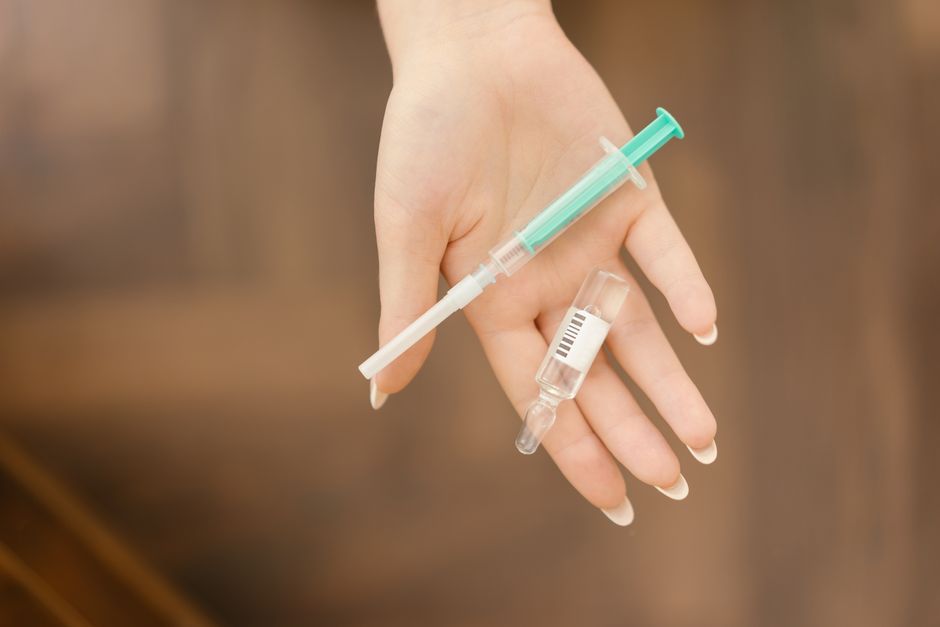
Most vaccines go into your arm. A nasal vaccine goes into your nose, and that difference changes how your immune system responds. Nasal vaccines deliver weakened or inactivated pathogens, or pieces of them, directly onto the mucosal lining inside the nasal cavity. That lining is packed with immune tissue that can mount a defense at the exact spot where many respiratory viruses first enter the body.
The idea is straightforward. If a virus like influenza or SARS-CoV-2 enters through the nose, then training the immune system at that entry point could stop the infection earlier than an injected vaccine might. Whether that theoretical advantage translates into meaningfully better protection in the real world is a question researchers are still working through.
How Do Nasal Vaccines Work to Trigger an Immune Response?
The nasal cavity is lined with mucosa, a moist layer of tissue that contains specialized immune structures. When a nasal vaccine is sprayed or inhaled, it contacts what immunologists call mucosa-associated lymphoid tissue, or MALT. This tissue is designed to sample whatever enters through the airway and decide whether it poses a threat.
When the vaccine antigens reach that tissue, immune cells called dendritic cells capture them and present them to T cells and B cells. This sets off a chain of events that produces two key outcomes: antibodies in the blood (systemic immunity) and antibodies on mucosal surfaces (local immunity).
The mucosal antibodies are mostly a type called secretory IgA. These antibodies sit on the surface of the nasal lining and can neutralize viruses before they get a chance to infect cells. Injected vaccines generally produce strong systemic immunity but trigger a weaker mucosal antibody response. That gap is one reason scientists have pursued nasal delivery for respiratory pathogens.
The nasal route also stimulates tissue-resident memory T cells. These are immune cells that stay in the nasal lining long after vaccination and can respond quickly if the same pathogen shows up again. Whether this translates into longer-lasting protection compared to injected vaccines is not yet established.
What Nasal Vaccines Are Currently Available?
Nasal vaccine availability varies by country, and the list is short. The most widely used nasal vaccine globally is a live attenuated influenza vaccine delivered as a nasal spray. It has been used in the United States and other countries for years, though its recommendation status has shifted over time based on effectiveness data in different seasons and age groups.
In late 2022, China and India each authorized a nasal spray COVID-19 vaccine. These were developed independently and use different platforms. As of my knowledge, neither has received authorization from the U.S. Food and Drug Administration or the European Medicines Agency. Several other nasal COVID-19 vaccine candidates have been in clinical trials worldwide, but results have been mixed.
Beyond influenza and COVID-19, most nasal vaccine candidates are still in preclinical or early clinical stages. This includes efforts targeting respiratory syncytial virus, pertussis, and other respiratory pathogens. None of these have reached widespread clinical use.
It is worth noting that nasal vaccines are not interchangeable with injected versions of the same vaccine. Even when both exist for the same pathogen, the immune response they generate differs in important ways.
How Does Nasal Delivery Differ From Injected Vaccines?
The main difference is where the immune response is strongest. Injected vaccines deposit antigen into muscle tissue. Immune cells in the muscle and nearby lymph nodes respond, producing systemic antibodies that circulate in the blood. This is highly effective at preventing severe disease.
But systemic antibodies do not always reach the mucosal surfaces of the nose and upper airway in high enough concentrations to block infection at the point of entry. A person with strong blood antibody levels can still get infected in the nasal lining, though the infection may be milder or shorter.
Nasal vaccines aim to close that gap by producing local secretory IgA on the nasal surface. In theory, this could reduce both infection and transmission. In practice, the evidence for reduced transmission from nasal vaccines is limited. Some animal studies have shown reduced viral shedding after nasal vaccination, but human data are sparse.
Another difference is practical. Nasal sprays do not require needles, which could make vaccination easier for people who fear injections. They may also be simpler to administer in mass vaccination campaigns. These are logistical advantages, not necessarily immunological ones.





What Are the Potential Advantages of Nasal Vaccines?
Several potential advantages have been proposed, though not all are confirmed by large human trials.
- Local immunity at the site of entry: Nasal vaccines produce secretory IgA on the mucosal surface, which injected vaccines do not do as effectively. This is well established in immunology.
- Needle-free administration: This is a practical benefit. It may improve vaccine uptake in people who avoid injections.
- Easier storage and transport (for some formulations): Some nasal vaccine platforms may be more stable at room temperature than certain injected vaccines, though this depends entirely on the specific product.
- Potential to reduce transmission: This is the most debated claim. Some studies suggest nasal vaccines may reduce viral shedding, but human data showing reduced transmission are limited.
The transmission question matters because it is often the headline claim in news coverage. The honest position is that while the mechanism is plausible, no large human trial has yet confirmed that nasal vaccines reduce transmission of a respiratory virus in a real-world population.
What Are the Limitations and Unknowns?
Nasal vaccines face several challenges that injected vaccines do not.
The nasal environment is hostile to foreign particles. The nose filters, traps, and clears material constantly. A vaccine must survive that clearance and reach the immune tissue in sufficient quantity. This is one reason nasal vaccine development has been slow.
Reproducing consistent immune responses is another challenge. The amount of vaccine that reaches the target tissue can vary between people based on nasal anatomy, mucus thickness, and how the spray is administered. This variability makes it harder to standardize dosing.
Live attenuated nasal vaccines, like the influenza spray, cannot be given to certain groups. This includes people with severely weakened immune systems, pregnant women in some jurisdictions, and some children with underlying conditions. The live virus in the vaccine is weakened but not completely harmless in these populations. Guidance varies by country and by product, so specific eligibility should be checked against current local recommendations.
Duration of protection is also uncertain. For the nasal influenza vaccine, studies have shown varying effectiveness across seasons. Some research suggests that repeated nasal vaccination over consecutive years may reduce effectiveness, though the evidence is not fully consistent. This is one reason some countries have alternated between nasal and injected influenza vaccines.
For nasal COVID-19 vaccines, the picture is even less clear. The vaccines authorized in China and India have published limited Phase 3 data. Independent replication and long-term follow-up are still needed.
Are Nasal Vaccines Better Than Injected Vaccines?
No. The evidence does not support a blanket claim that nasal vaccines are better. They are different, and each route has strengths and weaknesses.
Injected vaccines have a much longer track record and more extensive safety and effectiveness data across many pathogens. For most diseases, injected vaccines remain the standard of care.
Nasal vaccines offer a theoretical advantage for respiratory pathogens because they target the site of entry. But that advantage has not been consistently demonstrated in large human trials for most pathogens. The nasal influenza vaccine, for example, has shown effectiveness that varies by season and by age group, sometimes performing comparably to injected versions and sometimes not.
The most accurate statement is that nasal vaccines are a promising approach for respiratory infections, but their clinical superiority over injected vaccines is not established. Research is ongoing.
What Does the Future Hold for Nasal Vaccines?
Several research directions are active. One is the development of nasal vaccines that use viral vectors, proteins, or mRNA delivered through the nose. These approaches aim to produce stronger and more consistent mucosal immune responses than current live attenuated sprays.
Another focus is combining nasal and injected vaccines in a prime-boost strategy. The idea is to give an injected vaccine first to build systemic immunity, then follow with a nasal booster to add mucosal protection. Some early studies suggest this approach may produce broader immunity, but large human trials are needed.
Researchers are also working on thermostable nasal formulations that do not require refrigeration. If successful, these could simplify distribution in areas with limited cold chain infrastructure.
The field is moving, but progress is slower than headlines sometimes suggest. Vaccine development typically takes years, and nasal vaccines face specific technical hurdles that injected vaccines do not. The honest expectation is that nasal vaccines will become an important tool for some respiratory pathogens, but they are unlikely to replace injected vaccines entirely.
Frequently Asked Questions
How do nasal vaccines work in simple terms?
They spray weakened or inactivated pathogens onto the nasal lining, where immune tissue produces antibodies right at the site where viruses often enter. This creates local immunity on the mucosal surface in addition to systemic immunity in the blood.
Are nasal vaccines as effective as shots?
For most pathogens, the evidence does not show that nasal vaccines are more effective than injected vaccines, and in some cases they are less consistent. The nasal influenza vaccine has shown effectiveness that varies by season and age group.
Can you get a nasal COVID-19 vaccine in the United States?
No. As of my knowledge, no nasal COVID-19 vaccine has been authorized by the U.S. Food and Drug Administration. Nasal COVID-19 vaccines have been authorized in China and India, but not in the U.S. or Europe.
Who should not get a nasal vaccine?
Live attenuated nasal vaccines are generally not recommended for people with severely weakened immune systems or certain other high-risk groups. Specific eligibility depends on the product and local guidance, so check with a healthcare provider.
