
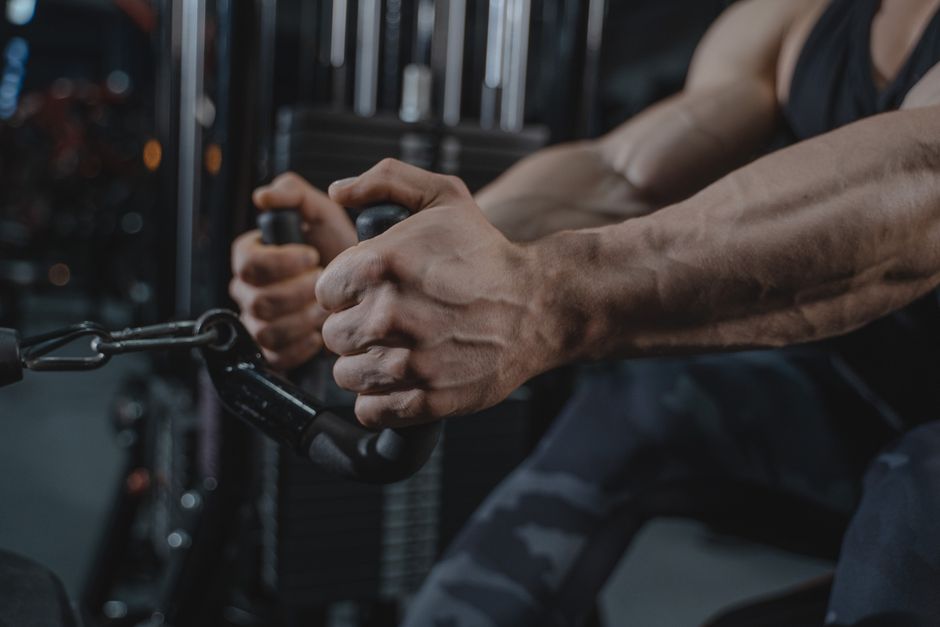
Every time you finish a hard workout, your muscles are damaged at the microscopic level. Repair begins within hours. Specialized cells called satellite cells activate, fuse with damaged muscle fibers, and donate new nuclei that let the fiber rebuild and grow stronger. The process peaks over the next one to three days and can continue for several days after unfamiliar or very intense exercise.
That damage is not a problem to fix. It is the signal that starts adaptation. Without it, muscle has little reason to change. Understanding how the repair process works tells you why rest days matter, why sleep is not optional, and why the food you eat after training shapes the result.
What Actually Happens Inside a Muscle After Exercise?
Mechanical loading during exercise creates tiny disruptions in the proteins that make up muscle fibers, particularly during movements that involve lengthening the muscle under load — like running downhill or lowering a weight slowly. These disruptions are often called microtears.
This damage triggers an inflammatory response. Immune cells, including neutrophils and later macrophages, move into the affected tissue. This inflammation is a normal part of repair, not a sign something has gone wrong. It helps clear damaged proteins and releases signals that recruit satellite cells.
Satellite cells are stem-like cells that sit quietly along the outside of muscle fibers. When activated, they multiply, and some fuse into existing fibers to donate new nuclei. A muscle fiber has many nuclei, and adding more increases its capacity to build protein. This is part of how a muscle gets larger and stronger over time.
The process is not fully understood in every detail. Researchers continue to study exactly how satellite cells are coordinated and how much they contribute to muscle growth in humans versus in animal models. What is well established is that the repair-and-rebuild sequence involves damage detection, immune signaling, satellite cell activity, and protein synthesis working together.
How Do Muscles Repair Themselves After Exercise? The Timeline
Repair starts quickly and follows a rough sequence. The exact timing varies by person, training history, and how hard the session was.
- Minutes to hours after exercise: Protein synthesis rises. The muscle begins producing new proteins to replace damaged ones.
- First 24 to 48 hours: Inflammation and immune cell activity are prominent. This overlaps with delayed onset muscle soreness, or DOMS, which typically peaks around 24 to 72 hours after unfamiliar or intense exercise.
- Several days: Satellite cell activity and protein remodeling continue. Full recovery from a demanding session often takes longer than people expect.
DOMS is worth a clarification. It is not simply the result of microtears. The soreness you feel a day or two later comes from a combination of mechanical damage and the inflammatory and nervous system response that follows. This is why soreness and actual muscle damage do not always match — you can have significant damage with little soreness, or soreness after a session that caused relatively little.
Recovery time is not fixed. A trained lifter may recover from a familiar session faster than someone new to that movement. The muscle adapts to repeated stress, which is why the same workout causes less soreness the second and third time.
Why Does Sleep Matter So Much for Muscle Repair?
Most of the hormonal and cellular work of repair happens while you sleep. Growth hormone is released in pulses during deep sleep, and this supports tissue repair and protein synthesis. Sleep is also when the nervous system recovers from training stress.
Research on sleep restriction and muscle recovery is still developing, but the direction is consistent. Studies have found that short sleep is associated with reduced muscle protein synthesis and poorer recovery markers after exercise. The evidence is not strong enough to give a precise number of hours that guarantees optimal repair for every person, but general health guidance for adults points to seven or more hours per night.
The practical point is simple. If you train hard and sleep five hours, you are limiting the conditions your body needs to rebuild. Nutrition and training get most of the attention. Sleep quietly does much of the work.
What Role Does Protein Play in Muscle Repair?
Muscle repair requires raw material. Dietary protein supplies the amino acids the body uses to build new muscle proteins. Without enough, the repair process is limited regardless of how well you train.
General guidance for active adults is roughly 1.2 to 2.0 grams of protein per kilogram of body weight per day, depending on training intensity and goals. For a 70 kg (about 154 pound) person, that is roughly 84 to 140 grams per day. These ranges come from established sports nutrition position stands, though individual needs vary.
Distribution matters too. Spreading protein across meals appears to support muscle protein synthesis better than eating most of it in one sitting. Some research suggests a serving of roughly 20 to 40 grams of high-quality protein per meal is a reasonable target for stimulating muscle protein synthesis in adults, though the optimal amount depends on body size, age, and the type of protein.
Protein timing is less critical than total intake. The idea of a narrow “anabolic window” right after training has been overstated in popular fitness culture. Eating protein within a few hours of training is reasonable, but total daily intake matters more than precise timing for most people.
Does Inflammation Help or Hurt Recovery?
Inflammation is part of repair. The immune response clears damaged tissue and sends signals that drive rebuilding. Blocking it completely is not the goal.
This is where common habits get interesting. Many people take anti-inflammatory pain relievers after hard training to reduce soreness. Some evidence suggests that routinely blunting the inflammatory response with certain medications may slightly dampen some training adaptations, though the research is mixed and the effect appears modest. This does not mean these medications are harmful for occasional use. It means that reaching for them after every session as a recovery strategy is not clearly supported by the evidence.
Similarly, ice baths and cold water immersion are popular for recovery. Some studies suggest cold immersion can reduce soreness, but other research indicates it may blunt some of the muscle-building signals if used immediately after strength training. The evidence is mixed. If your goal is building muscle, some researchers suggest saving cold immersion for times when recovery from soreness matters more than maximizing growth, such as before a competition.
What Slows Muscle Repair Down?
Several factors can get in the way of the repair process.
- Not enough total calories. Repair costs energy. Eating too little limits the raw material and fuel available for rebuilding.
- Too little protein. Amino acids are the building blocks. Low intake caps the process.
- Poor sleep. Recovery hormones and protein synthesis depend on adequate rest.
- Training the same muscle hard again before it recovers. Repeated damage without repair time can lead to accumulated fatigue and reduced performance.
- Alcohol. Heavy drinking is associated with impaired muscle protein synthesis and slower recovery. The occasional drink is a different question from regular heavy intake.
- Age. Muscle repair and the response to protein both tend to decline with age. Older adults may need more protein per meal to get the same muscle-building response, a concept sometimes called anabolic resistance.
None of these is a reason to panic over one bad night or one low-protein day. The repair system responds to patterns over time. Consistent sleep, adequate food, and sensible spacing of hard sessions on the same muscle group are what matter.
Do You Need Rest Days for Muscles to Repair?
Yes, in the sense that the same muscle group needs time between hard sessions. The general recommendation in strength training is to allow roughly 48 hours before training the same muscle group intensely again, though this varies with training experience, intensity, and how well you recover.
Rest does not have to mean doing nothing. Light activity, walking, or training a different muscle group can support recovery without adding stress to tissue that is still repairing. Some research suggests low-intensity movement may help reduce soreness, though the effect is modest.
The key is separating hard stimulus from recovery. Muscle grows during the repair phase, not during the workout itself. Training is the signal. Recovery is where the adaptation happens. Skipping rest does not speed progress. It usually slows it.
Frequently Asked Questions
How long does it take for muscles to repair after exercise?
Most muscle repair from a demanding session takes several days, with the most active rebuilding in the first 24 to 72 hours. Full recovery time depends on training intensity, experience, sleep, and nutrition.
Does muscle soreness mean the muscle is repairing?
Soreness is linked to the inflammatory and nervous system response that follows exercise, not a direct measure of repair. You can have effective repair with little soreness.
What should I eat after a workout to help muscles repair?
Protein is the priority, ideally as part of your total daily intake spread across meals. Carbohydrates help replenish energy stores, and total calories need to be adequate for repair to proceed.
Can I train the same muscle two days in a row?
It depends on intensity and your recovery, but general guidance is to allow about 48 hours before training the same muscle group hard again. Light activity is fine and may support recovery.
