
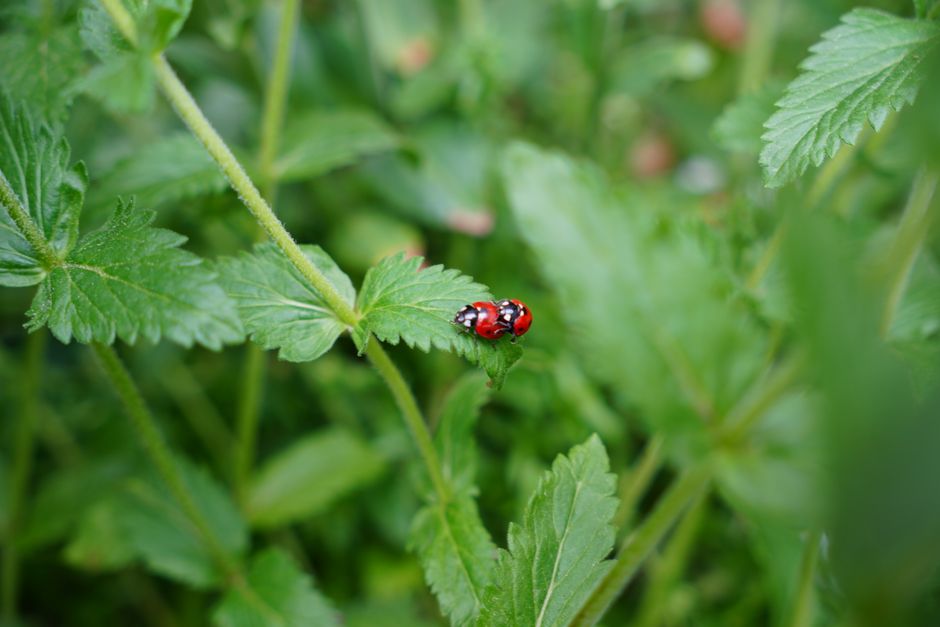
Ladybugs reproduce through a complete metamorphosis, meaning they pass through four distinct stages: egg, larva, pupa, and adult. The entire process, from egg to adult, typically takes three to seven weeks depending on the species and environmental conditions. Adult ladybugs mate in spring after emerging from winter dormancy, and females lay clusters of small yellow eggs on leaves near colonies of aphids or other prey so the hatching larvae have an immediate food source.
How Do Ladybugs Mate?
Ladybugs mate in the spring when temperatures warm and food becomes available. Males locate females by detecting pheromones — chemical signals that females release into the air.
Mating can last anywhere from 30 minutes to over two hours. During this time, the male remains attached to the female’s back. Some species of ladybugs can store sperm for months, allowing females to fertilize eggs long after a single mating event.
One notable fact: female ladybugs can lay fertile eggs even if they mate only once early in the season. This is because they hold the sperm in a special storage organ called a spermatheca.
Where Do Ladybugs Lay Their Eggs?
Female ladybugs are careful about where they place their eggs. They choose locations close to their future offspring’s food source — almost always colonies of aphids, scale insects, or mites.
Eggs are laid in clusters of 10 to 50 on the underside of leaves. This protects them from direct sunlight and some predators. A single female can lay anywhere from 200 to over 1,000 eggs in her lifetime, though she deposits them in small batches over several weeks.
The choice of location matters. If a female lays eggs too far from prey, the larvae will starve. If she lays them in direct sun, the eggs may dry out. Studies have shown that females can detect the presence of aphids and adjust their egg-laying sites accordingly.
What Do Ladybug Eggs Look Like?
Ladybug eggs are small — roughly 1 millimeter long. They are oval-shaped and typically yellow or orange. As the eggs mature, they may darken just before hatching.
The color serves a purpose. The bright yellow-orange hue warns some predators that the eggs may be distasteful. Ladybugs produce defensive chemicals called alkaloids that make them unpalatable to many predators, and this protection extends to their eggs.
Eggs typically hatch within three to five days in warm weather. Cooler temperatures can slow development significantly.





What Happens After the Eggs Hatch?
Ladybug larvae do not look anything like adult ladybugs. They resemble tiny alligators or spiny dark caterpillars. Each larva has six legs and an elongated body marked with orange or yellow spots.
Larvae are voracious predators. They immediately begin hunting aphids and other soft-bodied insects. A single larva can consume hundreds of aphids during its development. This is why ladybug larvae are considered valuable biological pest control agents.
Larvae molt — shed their exoskeleton — four times as they grow. Each stage between molts is called an instar. The entire larval period lasts roughly two to three weeks.
One common misconception: people often mistake ladybug larvae for pests and kill them. They are not pests. They are juvenile ladybugs doing exactly what adult ladybugs do — eating plant-damaging insects.
How Does the Ladybug Pupal Stage Work?
After the fourth molt, the mature larva attaches itself to a leaf or stem using a glue-like substance from its abdomen. It then sheds its skin one final time to reveal the pupa.
The pupa is immobile and often resembles a small, rounded shell. It may be orange, black, or mottled with spots. During this stage, the insect’s body undergoes dramatic reorganization. Larval tissues break down and rebuild into adult structures — wings, hardened wing covers, antennae, and reproductive organs.
The pupal stage lasts approximately five to seven days. When development is complete, the adult ladybug splits the pupal case open and emerges.
What Happens When the Adult Ladybug Emerges?
Newly emerged adult ladybugs are soft and pale. Their wing covers — the hard shells called elytra — are often yellow or cream-colored at first. The familiar red or orange color develops over the next several hours as the shell hardens and darkens.
The spots also appear gradually. Contrary to popular belief, the number of spots does not indicate the ladybug’s age. Spot patterns are determined by species and genetics, not by how long the insect has lived.
New adults do not fly immediately. They spend the first day or two hardening their exoskeleton and building up energy reserves. They then begin feeding and searching for mates.
How Many Generations Occur Each Year?
Most ladybug species produce one to three generations per year, depending on climate and food availability. Warmer regions with longer growing seasons support more generations.
In cooler climates, ladybugs typically produce one or two generations before temperatures drop. In mild climates with abundant prey, some species can reproduce continuously throughout the year.
As autumn approaches and day length shortens, the final generation of adults seeks shelter for winter. They enter a state called diapause — a form of insect dormancy. Ladybugs often gather in large groups in protected locations such as under bark, inside rock crevices, or in buildings. This aggregation behavior helps them conserve warmth and moisture.
Ladybugs do not reproduce during diapause. Mating resumes in spring when temperatures rise and food becomes available again.
Why Do Ladybug Populations Fluctuate?
Ladybug populations naturally rise and fall with their prey. Years with heavy aphid infestations often produce large ladybug populations the following season. Years with few aphids lead to reduced ladybug numbers.
Several factors influence ladybug reproduction success:
- Temperature — cold springs delay mating and egg laying
- Food availability — females produce fewer eggs when prey is scarce
- Predators — birds, parasitic wasps, and spiders consume ladybugs at various life stages
- Pesticide use — many insecticides kill ladybug larvae and adults along with target pests
Some research suggests that certain parasitic wasps lay eggs inside ladybug larvae. The wasp larvae consume the ladybug from within, killing it before it can reach adulthood. This natural predation can significantly impact local ladybug populations.
How Long Do Ladybugs Live?
Most ladybug species live for several months to a year. The lifespan depends heavily on species, climate, and food availability.
Ladybugs that emerge late in the season may live through winter and reproduce the following spring. Those that emerge early in the season may live long enough to produce two generations.
In captivity, some ladybugs have lived up to two years. In the wild, most do not survive that long due to predators, disease, and environmental stress.
Frequently Asked Questions
How long does the ladybug life cycle take?
The complete life cycle from egg to adult typically takes three to seven weeks. Temperature and food availability are the main factors affecting speed of development.
Do ladybugs lay eggs on plants?
Yes, females lay eggs on the undersides of leaves, usually near aphid colonies. This ensures the larvae have food immediately after hatching.
What do baby ladybugs look like?
Ladybug larvae look like tiny dark alligators with orange or yellow markings. They do not resemble adult ladybugs at all.
How many eggs does a ladybug lay at once?
Females lay eggs in clusters of 10 to 50 at a time. Over her lifetime, a single female can lay 200 to over 1,000 eggs.
