
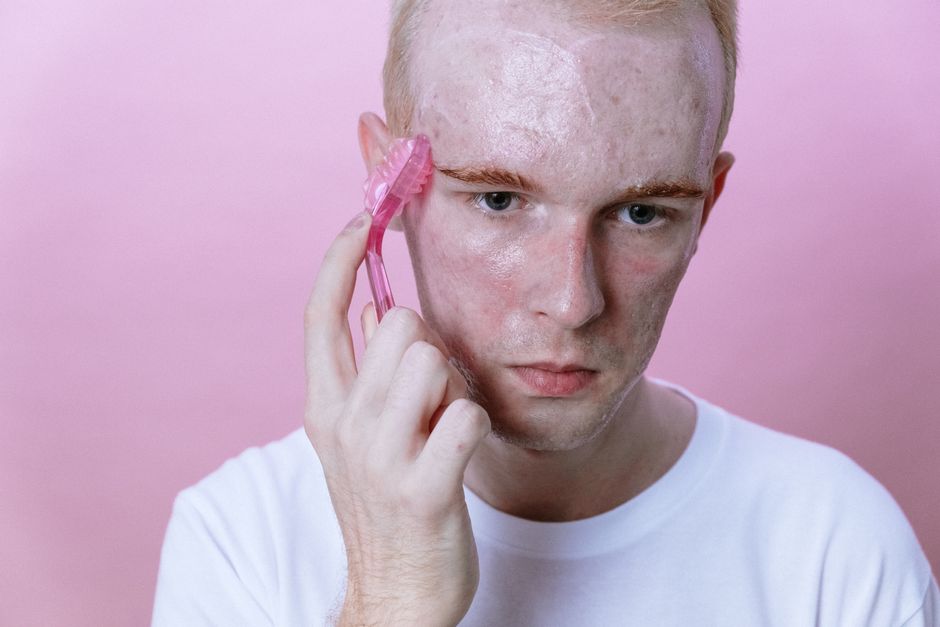
You can usually tell hormonal acne from bacterial acne by where it shows up, when it shows up, and what it looks like. Hormonal acne tends to cluster along the jawline, chin, and lower cheeks, flares around your period or other hormonal shifts, and often appears as deep, tender bumps. Bacterial acne more often involves inflamed papules and pustules — the classic red bumps and whiteheads — scattered across the face, chest, or back, sometimes triggered by pore-clogging products, sweat, or friction. The two are not mutually exclusive. Most acne involves the same bacterium, Cutibacterium acnes, so “bacterial” is a loose label rather than a separate disease.
How Do I Know If My Acne Is Hormonal Or Bacterial?
Pattern and timing are the strongest clues. Hormonal acne follows a predictable rhythm tied to your cycle or other hormonal changes. Bacterial-driven breakouts are less tied to a calendar and more tied to what touches your skin and how clogged your pores become.
Acne starts the same way in almost everyone. A pore becomes blocked by dead skin cells and sebum, the oil your skin produces. Once blocked, the pore becomes a low-oxygen environment where C. acnes — a bacterium that lives on normal skin — multiplies. The immune system responds with inflammation, which is what you see as redness, swelling, and pus.
That means the bacterium is almost always involved. The real question is what is driving the blockage and inflammation in the first place. Hormones are one driver. Skincare habits, friction, sweat, and genetics are others. Calling acne “bacterial” versus “hormonal” describes the trigger, not two different infections.
What Does Hormonal Acne Look Like Compared To Bacterial Acne?
Hormonal acne tends to be deeper and more nodular. Bacterial acne tends to be more superficial and more varied in appearance.
Hormonal breakouts often show up as tender, deep-seated bumps under the skin that take longer to surface and are more likely to leave marks. They cluster in a U-shape along the jaw and chin. Bacterial breakouts are more likely to include classic whiteheads and inflamed red papules, and they can appear anywhere — forehead, cheeks, chest, and back included.
Here is a comparison of the patterns people most often notice:
| Feature | Hormonal pattern | Bacterial/inflammatory pattern |
|---|---|---|
| Typical location | Jawline, chin, lower cheeks, neck | Forehead, cheeks, chest, back |
| Timing | Cyclical, tied to hormonal shifts | Less predictable, tied to triggers |
| Lesion type | Deep, tender bumps and nodules | Whiteheads, red papules, pustules |
| Common triggers | Menstrual cycle, puberty, PCOS, stopping birth control | Clogged pores, sweat, friction, comedogenic products |
One non-obvious point: adult women with persistent jawline acne are often assumed to have a hormonal disorder, but most do not. Research suggests many women with this pattern have normal hormone levels. The pattern is a clue, not a diagnosis.
Does Acne That Flares Around Your Period Mean It’s Hormonal?
A breakout that reliably arrives a week or so before your period is a strong sign of hormonal influence. This is one of the most consistent patterns in acne research.
In the days before menstruation, estrogen and progesterone drop while androgens stay relatively steady. Sebum production rises, pores become more easily blocked, and inflammation increases. The result is a premenstrual flare in the same spots each cycle.
The key word is reliable. If your breakouts track your cycle month after month, hormonal influence is likely. If breakouts appear randomly and don’t follow any rhythm, other triggers are more likely to be the main driver.
Tracking your breakouts for two or three cycles is genuinely useful. Note the date, the location, and the type of lesion. A pattern that repeats is far more informative than a single bad week.
What Triggers Bacterial Acne If It Isn’t Hormones?
Bacterial-type breakouts are driven by pore blockage and the inflammation that follows. Anything that clogs pores, traps sweat, or disrupts the skin barrier can contribute.
- Comedogenic products. Heavy creams, some oils, and certain cosmetics can block pores.
- Sweat and occlusion. Tight clothing, hats, and equipment straps trap sweat and friction against the skin.
- Not removing makeup or sunscreen fully. Leftover product contributes to blockage.
- Over-scrubbing. Harsh cleansing damages the skin barrier and increases irritation.
- Picking and squeezing. This pushes bacteria and inflammation deeper and raises the risk of scarring.
Diet is often blamed. The evidence here is real but modest. Some studies suggest high-glycemic diets and possibly dairy are associated with more acne, but the findings are not consistent enough to make firm dietary recommendations for everyone. No single food causes acne in all people.
When Should You See a Doctor About Acne?
See a doctor if acne is deep and painful, is leaving scars or dark marks, or is not improving after several months of consistent over-the-counter treatment. These are signs that self-care alone may not be enough.
Certain signs point more specifically toward a hormonal cause that deserves medical evaluation:
- Acne that appears suddenly in adulthood, especially along the jaw
- Irregular or absent periods
- Excess facial or body hair, or thinning scalp hair
- Acne that worsens after stopping hormonal birth control
A combination of these features can suggest a condition such as polycystic ovary syndrome (PCOS), though only a clinician can diagnose it. Acne alone, without other signs, is rarely enough to point to a hormonal disorder.
For severe nodular acne or acne that is scarring, dermatologists may consider prescription treatments. Which option fits depends on your history, and that is a conversation for a clinician, not a general article.
Can You Have Both Hormonal And Bacterial Acne At The Same Time?
Yes — and most people do. Hormones influence how much oil your skin produces and how easily pores block, and blocked pores are exactly what allows C. acnes to multiply and trigger inflammation.
This is why the hormonal-versus-bacterial framing can mislead. Hormonal changes set the stage. Bacteria and inflammation follow. A breakout that starts as a hormonal trigger still involves the same inflammatory process as any other acne.
That overlap matters for treatment. Products that address blockage and inflammation — such as salicylic acid, benzoyl peroxide, and retinoids — work on the shared mechanism. When acne is strongly hormonal, those topical approaches may help but often don’t fully control it, and clinicians sometimes add treatments that act on hormones. That decision requires medical guidance.
What Actually Helps Regardless Of The Type?
The basics of acne care are the same whether the trigger is hormonal or bacterial. Gentle, consistent care reduces blockage and inflammation without damaging the skin barrier.
Wash your face twice daily with a mild cleanser and avoid scrubbing. Use non-comedogenic moisturizer and sunscreen. Don’t pick. Change pillowcases and clean items that touch your face regularly. These steps won’t cure acne, but they reduce the conditions that make it worse.
Be patient with any product. Acne treatments typically take several weeks to show clear improvement, and stopping early is one of the most common reasons people conclude “nothing works.”
One honest note: no product or routine is guaranteed to clear acne for everyone. Response varies, and persistent or scarring acne is a legitimate reason to see a dermatologist rather than keep cycling through products.
Frequently Asked Questions
How can I tell if my acne is hormonal or bacterial?
Look at location and timing — hormonal acne clusters on the jaw and chin and flares with your cycle, while bacterial-type acne is more scattered and tied to clogged pores. The two often overlap, since most acne involves skin bacteria either way.
Does hormonal acne go away on its own?
It often improves when the underlying hormonal shift settles, such as after puberty or when a cycle stabilizes. Persistent adult hormonal acne frequently needs medical treatment and does not always resolve without help.
Is jawline acne always hormonal?
No. Jawline acne is a common hormonal pattern, but many women with it have normal hormone levels. Location alone is a clue, not proof.
Can a blood test tell me if my acne is hormonal?
Hormone testing is sometimes used when other signs like irregular periods or excess hair are present. For acne alone, testing is often normal and not routinely needed, so a clinician decides whether it adds useful information.
