
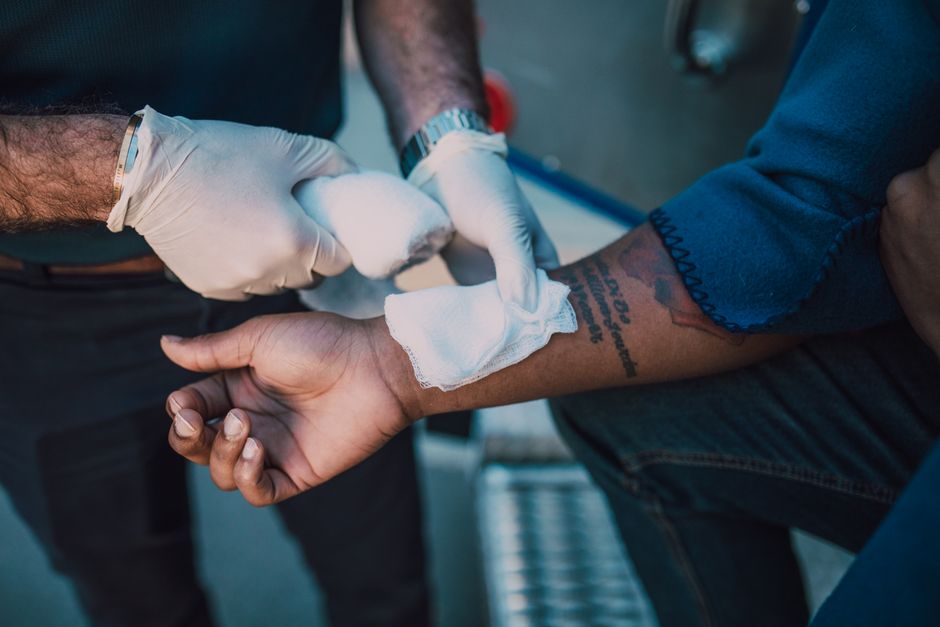
A hydrocolloid bandage is a sticky, flexible dressing that seals a wound and holds in the fluid your body produces to heal it. That trapped fluid forms a soft gel over the wound, keeping it moist and protected while new skin grows underneath. Unlike a plain gauze pad, which mainly covers a wound, a hydrocolloid dressing actively shapes the healing environment.
How Do Hydrocolloid Bandages Work To Heal Wounds?
The dressing works through a simple physical process. The outer layer is a waterproof film. The inner layer is a gel-forming material, usually made of substances like pectin, gelatin, or carboxymethylcellulose.
When you place the bandage over a wound, it sticks to the healthy skin around the edges. The wound itself keeps releasing a small amount of fluid, called exudate. The inner layer absorbs some of this fluid and swells into a gel. That gel fills the space between the wound and the dressing.
This does two things. First, it keeps the wound surface moist. Second, it forms a seal that keeps out water, bacteria, and outside irritants. The bandage stays in place until the gel reaches the edges, and then it lifts off on its own.
Moist wound healing is not a marketing idea. It is a well-established principle in wound care. Research going back decades has shown that wounds kept in a moist, sealed environment tend to heal faster and with less scarring than wounds left to dry out and form a hard scab. A scab is essentially a dry crust. Moist healing avoids that crust and lets skin cells migrate across the surface more easily.
What Is Happening Underneath the Bandage?
Several things happen at once under a sealed hydrocolloid dressing.
New skin cells, called keratinocytes, move across the moist wound bed. They travel more easily over a damp surface than over a dry scab. Blood vessels and connective tissue rebuild underneath. The gel layer keeps the surface from drying and cracking, which would otherwise slow this process down.
The seal also blocks outside contamination. A hydrocolloid dressing is waterproof, so you can wash your hands or shower without the wound getting soaked. That said, the seal is not sterile once you open the package, and it is not a substitute for cleaning a wound properly before you apply it.
One detail people often get wrong: the white, cloudy gel that forms under the bandage is not pus. It is the dressing material mixing with normal wound fluid. It can look alarming the first time you see it. It does not mean the wound is infected.
What Types of Wounds Do Hydrocolloid Bandages Help With?
Hydrocolloid dressings are best suited to shallow wounds with light to moderate fluid. Common uses include:
- Blisters, especially on the feet and heels
- Minor cuts and scrapes
- Small superficial burns
- Pressure sores that are not deep or heavily draining
- Skin tears in older adults
They are also widely used to cover acne lesions, though the evidence for that use is different from the evidence for wound healing. More on that below.
They are not the right choice for every wound. A hydrocolloid dressing should not be used on wounds that are infected, heavily draining, or deep enough to involve muscle, tendon, or bone. It should not go on wounds with visible signs of infection, such as spreading redness, warmth, or thick pus. In those cases a clinician needs to assess the wound, and a different type of dressing or treatment is usually needed.
Hydrocolloid vs. Standard Bandages and Gauze
The difference comes down to moisture control and the seal.
| Feature | Hydrocolloid | Gauze or standard adhesive bandage |
|---|---|---|
| Wound moisture | Kept moist by trapped fluid | Often dries out |
| Waterproof seal | Yes | Usually no |
| Fluid handling | Absorbs light to moderate fluid into a gel | Absorbs fluid but can stick to the wound |
| Wear time | Can stay on for several days | Usually changed daily |
| Best for | Shallow, lightly draining wounds | Fresh wounds that need frequent checking |
Gauze still has a role. For a wound that needs to be watched closely, or one that is draining heavily, gauze lets you check and change it often. A hydrocolloid is designed to stay put, which is convenient but also means you are not looking at the wound as often.
Do Hydrocolloid Bandages Actually Help With Acne?
This is where the marketing runs ahead of the evidence.
Hydrocolloid patches are sold widely as acne treatments. The original idea is that the patch absorbs fluid and keeps you from picking at a pimple. That part is reasonable. A patch that covers a blemish can reduce the urge to squeeze it, and squeezing is what often makes acne worse and leads to scarring.
What the patches do not do is treat the underlying cause of acne. Acne comes from blocked pores, excess oil, and bacteria, along with inflammation. A hydrocolloid patch does not address any of those. Some patches add ingredients like salicylic acid or niacinamide, and those ingredients have their own evidence base, but the hydrocolloid material itself is not an acne medication.
So the honest position is this: a hydrocolloid patch may help a pimple heal by protecting it and keeping your hands off it. It is not a treatment for acne as a condition. No large trials confirm that hydrocolloid alone clears acne.
How Do You Use One Correctly?
How you apply it matters as much as the dressing itself.
Clean the wound first. Rinse it with water, and use a mild soap around the edges if needed. Pat the surrounding skin dry. The bandage needs dry, intact skin to stick to. If the skin around the wound is wet or oily, the seal will fail.
Pick a dressing larger than the wound. It should overlap healthy skin on all sides by a comfortable margin. Do not stretch it tight over the wound. Press down firmly around the edges to seal it.
Leave it in place. A hydrocolloid dressing is designed to stay on for several days, not to be changed daily. Changing it too often defeats the purpose, because you keep disrupting the moist environment. When the gel reaches the edge of the dressing, or when it starts to lift, it is time to remove it. Peel it back gently, in the direction of hair growth, to avoid tearing the skin.
If fluid leaks past the edges, or the dressing will not stay sealed, it is too small or the wound is draining too much for this type of dressing.
When Should You Not Use One?
Skip a hydrocolloid dressing and get medical care if you see signs of infection. These include spreading redness, increasing pain, warmth around the wound, swelling, or thick or foul-smelling drainage. A fever with a wound is also a reason to seek care.
Do not use one on a wound that is deep, that will not stop bleeding, or that came from a bite or a dirty object. Those wounds may need cleaning, stitches, or a tetanus shot, and covering them with a sealed dressing can trap problems underneath.
People with diabetes or poor circulation should be cautious with any wound on the feet or legs. A wound that seems minor can become serious quickly in those situations. It is reasonable to have a clinician look at it rather than managing it at home.
Frequently Asked Questions
How long should you leave a hydrocolloid bandage on?
A hydrocolloid dressing can usually stay in place for several days, and it should be left alone until the gel reaches the edges or it starts to lift. Changing it too often disrupts the moist environment it is meant to create.
Is the white gel under a hydrocolloid bandage pus?
No, the cloudy gel is the dressing material mixing with normal wound fluid, not pus. Signs of true infection include spreading redness, increasing pain, warmth, or thick drainage.
Can hydrocolloid bandages heal acne?
A hydrocolloid patch may help a pimple by protecting it and keeping you from picking at it, but the material itself does not treat the causes of acne. No large trials confirm that hydrocolloid alone clears acne.
Can you shower with a hydrocolloid bandage on?
Yes, the outer layer is waterproof, so brief contact with water during a shower is generally fine. If the edges lift or water gets under the seal, replace the dressing.
