
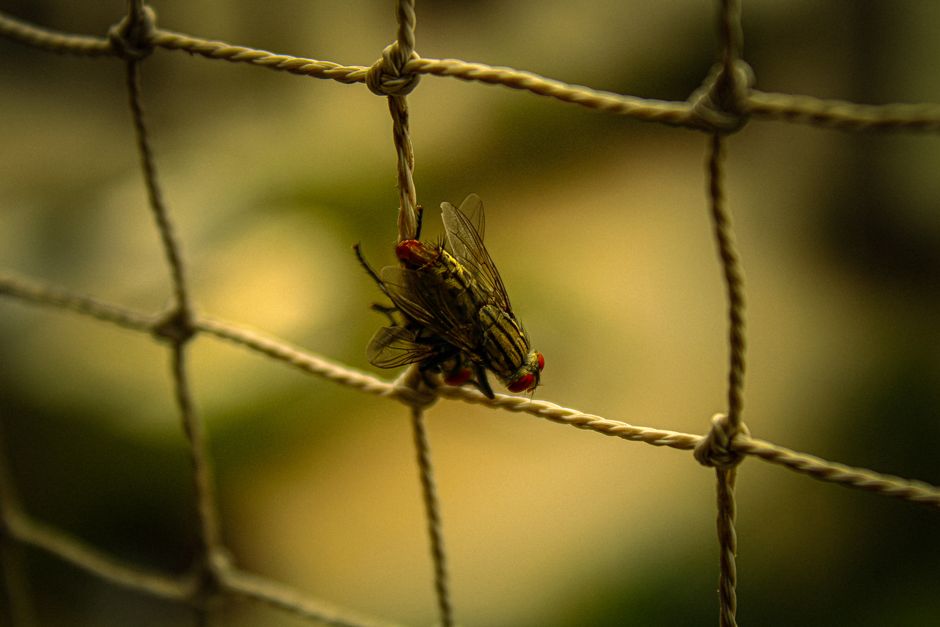
Flies get into a house through openings as small as a pencil lead, and most of them walk in rather than fly in. The single most common entry point is a gap around a door — especially a sliding glass door or a door with a worn sweep. From there, the list runs through windows without screens, attic vents, dryer vents, chimney flues, and cracks around utility pipes. A smaller number hitchhike indoors on people, pets, groceries, or houseplants, or emerge from eggs laid in damp organic material already inside the home.
None of this is random. Flies follow odor gradients toward food, moisture, and warmth, and they exploit the easiest available gap. Understanding the sequence — where they come from, how they find the opening, and why some homes get far more than others — makes the problem far more solvable than swatting at whatever lands on the counter.
How Do Flies Get In The House Step by Step?
The process follows a predictable chain, and breaking any link in it reduces how many flies you see indoors.
Step 1: A source population exists nearby. Common house flies rarely travel far from where they developed. Garbage bins, pet waste, compost piles, rotting fruit, grass clippings, and animal manure all support fly larvae. If any of these sit within a short distance of your home, you have a resident population to deal with. Distance matters less than people assume — flies are capable of traveling farther than most homeowners realize when a food source pulls them.
Step 2: The fly detects a cue. Flies locate buildings largely by smell. Decaying organic matter, garbage, pet food, and fermenting liquids release volatile compounds that flies detect with their antennae. Warmth also draws them. A house that is warmer than the outside air, or that vents cooking and garbage odors outward, becomes more attractive than a neighboring house that does not.
Step 3: The fly approaches the building envelope. Most flies arrive at ground level or near it. They tend to follow walls, edges, and shadows rather than crossing open space. This is why entry points cluster around doors, garage openings, and the base of exterior walls.
Step 4: The fly finds a gap. This is the step that decides whether you have a fly problem. Common house flies can pass through openings of roughly a quarter inch. That is about the width of a pencil. A door left open for a few seconds, a torn window screen, or a gap under a garage door is enough.
Step 5: The fly enters and stays. Once inside, flies find food and shelter. A kitchen with accessible garbage, ripe fruit on a counter, or a pet bowl left out gives them a reason to remain and reproduce. Flies that enter and find nothing tend to leave or die within a few days. Flies that enter and find resources establish a population.
What Are the Most Common Entry Points?
Doors account for the largest share of fly entries in most homes, and the reason is simple: doors are the largest openings people use every day.
- Doors without a proper sweep. A gap under an exterior door is an open invitation. Sliding glass doors are a frequent offender because the track and seal wear out.
- Windows without screens. An open window with no screen is a direct route. So is a screen with a tear or a hole at the frame.
- Garage doors. Even a closed garage door often leaves a gap along the bottom or sides. A garage connected to the house then becomes a staging area.
- Attic and crawl space vents. Vents are intentionally open to the outside. If the screening behind them is damaged, they become entry points.
- Dryer and bathroom exhaust vents. The exterior flap can stick open, especially when lint or debris builds up.
- Chimneys. An uncapped chimney or one with a damaged damper allows entry.
- Utility penetrations. Gaps around pipes, cables, and air conditioning lines where they pass through the wall are often sealed poorly or not at all.
- Cracks in the foundation or siding. Small openings around the base of a home let in flies and other pests.
Most of these are inexpensive to fix. Weatherstripping, door sweeps, screen patches, and a tube of exterior sealant cover the majority of cases.
Do Flies Walk In or Fly In?
Most flies walk in. This surprises people, because flies are obviously capable of flight.
Flies tend to land near a gap and then crawl through it. A house fly can walk through an opening far narrower than it could fly through, because flying requires clearance for the wings. This is why a door that looks closed can still let flies in — if there is a gap at the bottom, they will find it on foot.
The practical consequence is that sealing matters more than chasing. A fly that walks in through a door gap will keep coming back as long as the gap exists. Swatting the fly solves nothing.





Why Do Some Homes Get More Flies Than Others?
Fly pressure is not evenly distributed, and the differences usually come down to a few factors.
Nearby breeding sites. A home next to a farm, a restaurant dumpster, or a neighbor who leaves garbage out will see more flies. So will a home with a compost pile close to the door or a pet waste area that is not cleaned regularly.
Indoor food and moisture. Open garbage, unrinsed recycling, ripe fruit, spilled pet food, and standing water all sustain flies once they are inside. A kitchen that stays dry and covered gives flies little reason to stay.
Building age and condition. Older homes tend to have more gaps, worn weatherstripping, and settling cracks. That is not a judgment on the house — it is simply more openings to seal.
Time of year. Fly populations rise in warm months, when development from egg to adult happens faster. In cooler weather, activity drops sharply in most parts of the United States.
Neighboring activity. Construction, landscaping, and nearby animal operations can temporarily raise fly numbers for everyone on the block.
Can Flies Come From Inside the House?
Yes, and this is where many people misdiagnose the problem.
Some flies do not enter from outside at all. They complete their life cycle indoors, emerging from eggs or larvae already present. The most common example is the small fly that breeds in drains, often called a drain fly or moth fly. These develop in the organic film that builds up inside sink, shower, and floor drains. Sealing every exterior gap will not touch them, because the source is the drain itself.
Fruit flies are another example. They frequently arrive as eggs or larvae on produce brought home from the store, then emerge days later in the kitchen. What looks like an infestation appearing out of nowhere is often a batch of eggs that came in on a banana or a tomato.
Other flies breed in damp organic material indoors — a neglected trash bin, a recycling container with residue, a mop head that never dries, or a slow leak under a sink. If flies keep appearing despite sealed doors and windows, the source is likely inside.
The distinction matters for how you respond. Outdoor entry calls for sealing and exclusion. Indoor breeding calls for finding and removing the source.
How Do You Keep Flies Out?
Exclusion is the most reliable approach, and it works on the entry step rather than the fly.
Start with doors and windows, since they account for most entries.
- Install or replace door sweeps on every exterior door, including the door between the garage and the house.
- Check weatherstripping around door frames and replace it where it is compressed or torn.
- Repair or replace torn window screens, and confirm screens fit tightly in the frame.
- Keep doors closed when not in use, and avoid propping them open during warm months.
Then address the smaller openings.
- Seal gaps around pipes, cables, and utility lines where they enter the wall.
- Check attic, crawl space, and exhaust vents for intact screening.
- Confirm the exterior flap on the dryer vent closes fully.
- Cap the chimney if it is not already capped.
Finally, reduce what attracts flies in the first place. Keep garbage in closed containers and take it out regularly. Rinse recycling. Clean up pet waste promptly. Store fruit in the refrigerator during fly season. Fix leaks and dry out damp areas.
Traps and insecticides can reduce adult fly numbers, and some work well in specific settings. They do not fix an entry problem. If flies keep arriving through an open gap, traps will keep filling.
Frequently Asked Questions
How small a gap can a fly get through?
A common house fly can pass through an opening of roughly a quarter inch, about the width of a pencil. Because flies often walk through gaps rather than fly, a door that looks closed can still let them in.
Why do I suddenly have a lot of flies in my house?
A sudden increase usually means either a nearby breeding source or an indoor one that just matured. Check for garbage, ripe produce, damp organic material, or a drain with buildup before assuming they came from outside.
Do flies come up through drains?
Some small flies do breed in the organic film inside drains, and those are a different problem from house flies entering from outside. Cleaning the drain and removing the buildup addresses the source.
Does sealing doors and windows actually stop flies?
Sealing exterior gaps is the most effective single step for flies coming from outside, because it targets the entry point. It will not help if flies are breeding indoors, so identify the source first.
