
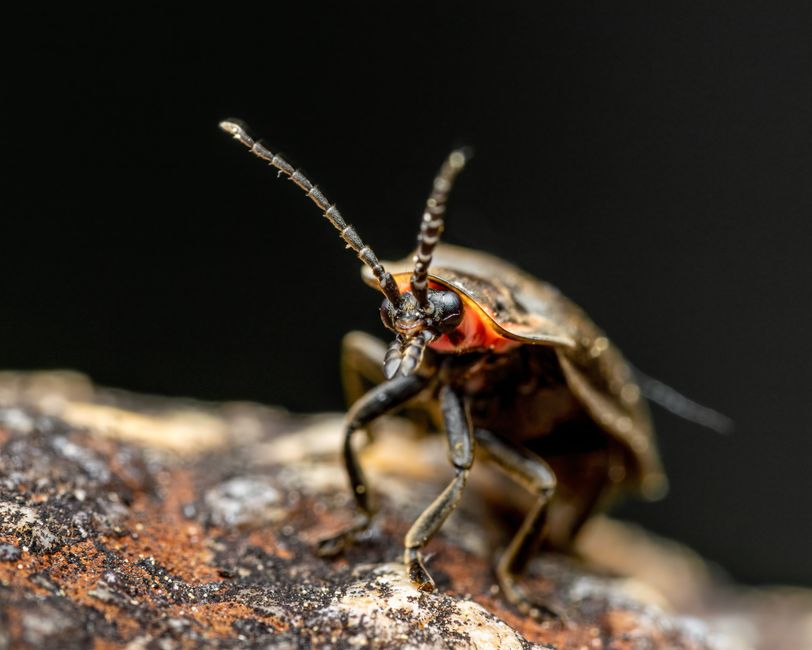
Fireflies reproduce through a fascinating process that begins with a silent chemical conversation of light. Males fly and flash their species-specific patterns, females respond from the ground or vegetation, and after mating, the female lays eggs that hatch into glowing larvae. The entire journey from courtship to larva takes weeks, and the larvae themselves may live for months or even years before becoming adults.
How Do Fireflies Reproduce From Mating To Larvae?
Firefly reproduction starts with the light signal. Each firefly species has its own flash pattern — a code of blinks, pauses, and durations that males use to announce themselves. A female of the same species recognizes that pattern and replies with her own flash, usually from a perch on grass or low vegetation.
When the male sees her response, he flies toward her. They exchange flashes as he approaches. If the female is receptive, mating happens. The pair may stay connected for over an hour. Some species mate at night, while others are active during the day and rely on chemical scents rather than light to find each other.
Not all fireflies use light to find mates. Some daytime-active species have lost their ability to glow entirely and depend on pheromones — chemical signals carried through the air. These species tend to have smaller eyes and larger antennae, which help them detect scent.
After mating, the female stores the male’s sperm and uses it to fertilize her eggs. She chooses a moist, protected spot to lay them — under leaf litter, in damp soil, or on moss near the ground. The eggs are small, pale, and laid in clusters. Depending on the species and temperature, they hatch within a few weeks.
What Do Firefly Eggs Look Like?
Firefly eggs are tiny — typically about one millimeter in diameter. They are round or slightly oval and range in color from pale yellow to light brown. As the embryos develop, the eggs may darken.
One remarkable detail: firefly eggs can glow. The larvae inside produce a faint light that can sometimes be seen through the egg shell. Scientists believe this glow may warn predators that the eggs contain toxic or distasteful chemicals. Fireflies produce lucibufagins, defensive steroids that make them unpalatable to many predators.
The eggs need moisture to survive. If the environment dries out, the eggs may fail to develop. This is one reason fireflies are so closely tied to damp habitats — meadows near streams, marsh edges, and wooded areas with moist leaf litter.
What Happens When Firefly Eggs Hatch?
When the eggs hatch, tiny larvae emerge. These larvae look nothing like adult fireflies. They are elongated, segmented, and somewhat flattened, with distinct armor-like plates. They have six legs and often small, light-producing organs on their abdomen.
Firefly larvae are sometimes called glowworms, though that name also applies to other insects. The larvae glow too — usually a steady, dim light rather than the flashing pattern of adults. This glow may serve as a warning to predators.
Newly hatched larvae are voracious predators. They feed on small snails, slugs, earthworms, and other soft-bodied invertebrates. They inject digestive enzymes into their prey to liquefy the tissues, then suck up the liquid meal. This feeding stage is critical — larvae must build enough energy reserves to survive until they pupate.





How Long Do Firefly Larvae Live?
This is where the firefly life cycle surprises most people. The larval stage is the longest part of a firefly’s life. Depending on the species, larvae may feed and grow for several months to two years before they are ready to become adults.
In colder regions, larvae overwinter underground or under bark, entering a state of slowed development called diapause. They resume activity in spring when temperatures warm and prey becomes available. In warmer climates, larvae may develop faster, but even then, the larval stage typically lasts many months.
During this time, larvae molt through several growth stages, called instars. Each molt allows them to grow larger. They shed their outer skin, and the new skin underneath is soft at first before hardening.
Most people only notice adult fireflies during their brief summer display. But the adults are actually the shortest-lived stage of the entire life cycle. For many species, the adult stage lasts only a few weeks — just long enough to find a mate and reproduce.
What Happens When Larvae Pupate?
When a larva has grown enough, it builds a small chamber in the soil or under debris. Inside this chamber, it transforms into a pupa — the resting stage between larva and adult. The pupa does not feed. Its body breaks down and reorganizes into the adult form.
This transformation takes one to several weeks, depending on species and temperature. The pupa may glow faintly, which scientists believe may deter predators during this vulnerable stage.
When the adult emerges, its wings are soft and pale. It must wait for them to harden and darken before flying. Once ready, the adult’s only job is reproduction. Adults of many species feed little or not at all. Some take nectar or pollen, but many survive on energy stored during the larval stage.
Why Do Fireflies Flash?
The flash is primarily a mating signal, but it is more complex than simple attraction. In some species, the male’s flash pattern tells the female he is the same species. If a male flashes the wrong pattern, the female will not respond. This prevents wasted mating attempts between different species that share the same habitat.
Some firefly species use deception. Females of the genus Photuris mimic the flash patterns of other species to attract males — then eat them. This behavior is called aggressive mimicry. The female gains both a meal and defensive chemicals from her prey, which she uses to protect her own eggs.
Not all flashing is about mating. Larvae glow to warn predators. Adults may also flash when disturbed. But the bright, rhythmic displays seen on summer evenings are almost always courtship signals.
How Many Eggs Does a Female Firefly Lay?
Females typically lay dozens to over a hundred eggs in their short adult life. The exact number varies by species, body size, and how much energy the female has stored. Larger females generally produce more eggs.
After laying her eggs, the female’s role in reproduction is complete. Many females die shortly after. Males may mate with multiple females, but the energy cost of producing eggs means females are more limited in how many times they can reproduce.
What Threatens Firefly Reproduction?
Firefly populations face several pressures that disrupt their ability to reproduce. Light pollution is a major concern. Artificial light from street lamps, buildings, and car headlights can drown out the flash signals between males and females. When males cannot see female responses, mating does not happen.
Habitat loss also harms fireflies. Because females lay eggs in moist soil and leaf litter, and larvae need damp environments with plenty of prey, development and landscaping that removes these habitats reduce firefly numbers. Pesticides, especially broad-spectrum insecticides, kill larvae and adults alike.
Climate patterns matter too. Extended droughts dry out the soil where eggs and larvae live. Unusually warm winters can disrupt the timing of emergence, causing adults to appear before conditions are ideal.
There is no single cause of firefly decline, and different species face different pressures. But the common thread is that fireflies need moist, undisturbed habitats to complete their life cycle.
How Can You Support Firefly Reproduction?
Simple habitat choices can make a real difference. Leaving leaf litter in place provides cover for larvae and maintains soil moisture. Reducing outdoor lighting during firefly season — or using motion sensors and warm-toned bulbs — helps preserve the flash signals that fireflies rely on.
Avoiding pesticides near firefly habitats protects both larvae and adults. Planting native grasses and flowers supports the snails and other prey that larvae eat. Even a small, damp, unmanicured corner of a yard can provide what fireflies need.
These actions do not guarantee fireflies will appear, but they remove the barriers that prevent reproduction. Fireflies are not demanding insects. They need moisture, darkness, and prey. Where those three things exist, fireflies can complete the journey from egg to larva to adult.
Frequently Asked Questions
How long does it take for firefly eggs to hatch?
Firefly eggs typically hatch within two to four weeks, depending on temperature and moisture. Warmer conditions speed up development, while cooler or drier conditions slow it down.
Do firefly larvae glow?
Yes, firefly larvae produce a steady glow from light organs on their abdomen. This glow likely warns predators that the larvae contain defensive chemicals.
How long do fireflies live as larvae?
The larval stage is the longest part of a firefly’s life, lasting anywhere from several months to two years. Adults live only a few weeks.
Why do fireflies flash?
Flashing is primarily a mating signal that allows males and females of the same species to find each other. Some species also use light to warn predators or lure prey.
