
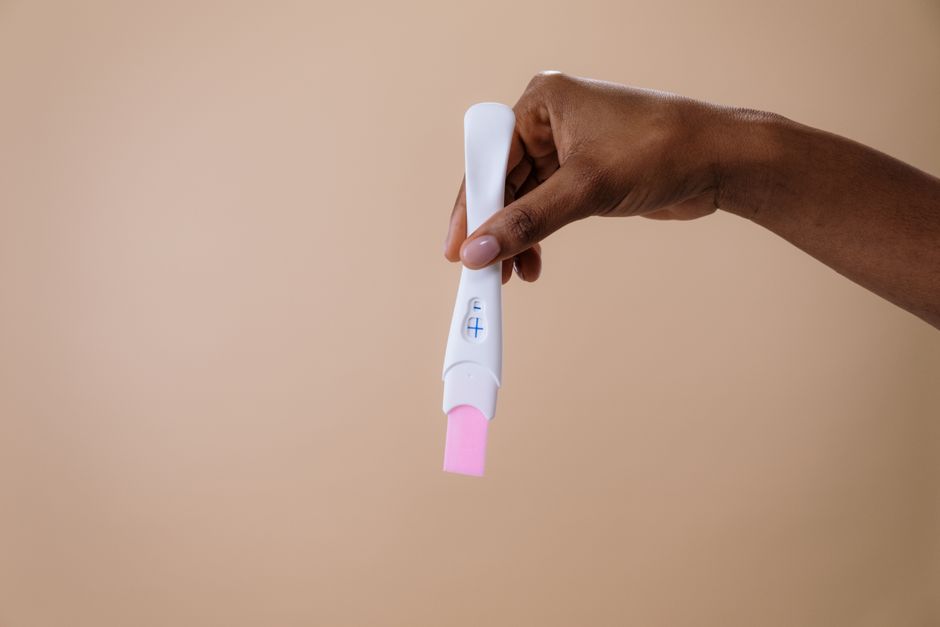
A pregnancy test is a small chemistry experiment you run at home. It looks for a hormone called human chorionic gonadotropin (hCG) in your urine, and if enough is there, a line or a plus sign appears. That is the whole idea. The rest is detail about how sensitive the test is, when hCG shows up, and why a faint line can mean almost anything.
hCG is made by cells that form the placenta after an embryo implants in the uterus. It enters your bloodstream first and your urine shortly after. Home tests are built to detect it at low levels, which is why they can give a positive result around the time of a missed period. Understanding the timing and the line itself helps you read the result correctly.
How Do Early Pregnancy Tests Work Lines Hcg?
Every home pregnancy test uses the same basic method: a strip of material coated with antibodies that bind to hCG. When urine flows across the strip, any hCG in the sample gets captured by the first set of antibodies. A second set carries a visible marker, usually a colored particle, and sticks to the captured hCG. Where that happens, a line forms.
The control line is the one that tells you the test worked. It appears because the strip is designed to catch the marker antibodies regardless of whether hCG is present. If no control line shows up, the test failed and the result means nothing. The test line only appears when hCG is present and gets captured in that specific zone.
This is why a test with a control line and no test line is a real negative, while a test with no lines at all is a broken test. It is also why timing and urine concentration matter. A very dilute sample can produce a faint or absent test line even when hCG is present.
What the Lines Actually Mean
On a standard two-line test, two lines mean positive and one line means negative. On a plus/minus test, a plus is positive and a minus is negative. Digital tests read the same chemistry and show the word “pregnant” or “not pregnant” instead of lines, which removes some of the guesswork about faint lines.
A faint test line is still a line. It means hCG was detected, just at a low level. Faint lines are most common very early, when hCG is still rising, or when urine is dilute. A faint line is not automatically a sign of a problem, and a strong line is not automatically a sign that everything is fine.
When Does hCG Show Up After Conception?
hCG becomes detectable in blood shortly after implantation, and in urine a bit later. Implantation itself usually happens about six to twelve days after fertilization, though the range varies. That timing is why testing too early is the most common reason for a false negative.
Blood tests can pick up hCG earlier than urine tests because they are more sensitive and measure the actual level. A quantitative blood test reports a number, while a qualitative one simply says whether hCG is present. Home urine tests are designed to detect hCG at the low levels seen around the time of a missed period, but they are not all equally sensitive.
In a typical pregnancy, hCG levels rise quickly in early pregnancy, roughly doubling every two to three days at first. That rapid rise is why a test that is negative one day can be positive a few days later. It is also why repeating a test after a few days is more informative than staring at a faint line.
Why Do Some Tests Show a Faint Line?
A faint line usually means a low level of hCG was detected. Early in pregnancy, levels are low by definition, so a faint result is expected. Dilute urine, such as after drinking a lot of water, can also make a line lighter than it would otherwise be.
There is a separate phenomenon worth knowing about: evaporation lines. If a test is read after the window of time stated in the instructions, a faint line can appear that is not a true positive. It forms as the strip dries, not because hCG is present. This is why reading a test outside its stated window is unreliable.
Some tests also produce what people call an indent line, a faint colorless mark where the test line would be. These are not positive results. A true positive line has color and appears within the reading window. If you are unsure, the reliable move is to test again in a few days rather than interpret a line that appeared late.
Can a Pregnancy Test Be Wrong?
Home pregnancy tests are generally accurate when used correctly and timed well, but they are not perfect. False negatives are more common than false positives, and most false negatives come from testing too early or using dilute urine. Following the instructions and testing around a missed period improves reliability.
False positives are less common but do happen. Certain medical conditions and some fertility treatments that contain hCG can cause a positive result without a pregnancy. Very rarely, certain tumors produce hCG. A positive test in those situations should be discussed with a clinician rather than assumed to mean pregnancy.
Medications that do not contain hCG, including most common over-the-counter drugs, do not cause a false positive on a standard urine test. The antibodies used are specific to hCG. If a result does not match your situation, a blood test ordered by a clinician gives a clearer answer.
Does Line Darkness Tell You How Pregnant You Are?
Line darkness is not a reliable measure of how far along a pregnancy is or whether it is progressing normally. It reflects how much hCG was in that particular urine sample at that moment, which depends on hydration, timing, and the test’s sensitivity. Two people at the same stage can get very different line intensities.
Some people compare lines over several days to look for darkening, a practice sometimes called line progression. It is not a validated way to monitor a pregnancy. hCG trends are properly assessed with blood tests ordered by a clinician, and even those are interpreted alongside other information.
A single faint line is not a reason to panic, and a strong line is not a guarantee. The useful next step after any positive home test is to contact a clinician, who can confirm the result and arrange appropriate follow-up.
How Should You Use a Test for the Clearest Result?
Timing and technique matter more than the brand. Testing too early is the main avoidable cause of a confusing result. Waiting until around the expected date of a missed period gives hCG more time to rise to a detectable level.
- Read the instructions for your specific test, including how long to wait before reading the result.
- Test first thing in the morning when urine is most concentrated, especially early on.
- Do not read the test after the stated window, since evaporation lines can appear.
- If the result is negative but you still suspect pregnancy, wait a few days and test again.
- If the result is positive, contact a clinician to confirm and plan next steps.
Home tests are a screening tool, not a diagnosis. They tell you whether hCG was detected in your urine at that moment. Confirmation, dating, and any concerns about the pregnancy are handled through clinical evaluation, not through the appearance of a line.
Frequently Asked Questions
How early can a pregnancy test detect hCG?
Most home urine tests are designed to detect hCG around the time of a missed period, which is roughly two weeks after ovulation for many people. Blood tests can detect hCG earlier because they are more sensitive.
What does a faint positive line mean?
A faint line within the reading window means hCG was detected at a low level, which is common very early in pregnancy. A line that appears after the reading window is unreliable and may be an evaporation line.
Can a pregnancy test be positive without being pregnant?
False positives are uncommon but possible, mainly with certain medical conditions or fertility treatments containing hCG. A positive result that does not fit your situation should be checked with a clinician.
Does a darker line mean a healthier pregnancy?
No. Line darkness reflects the hCG concentration in that urine sample, not the health or progress of a pregnancy. hCG trends are properly assessed with blood tests ordered by a clinician.
