
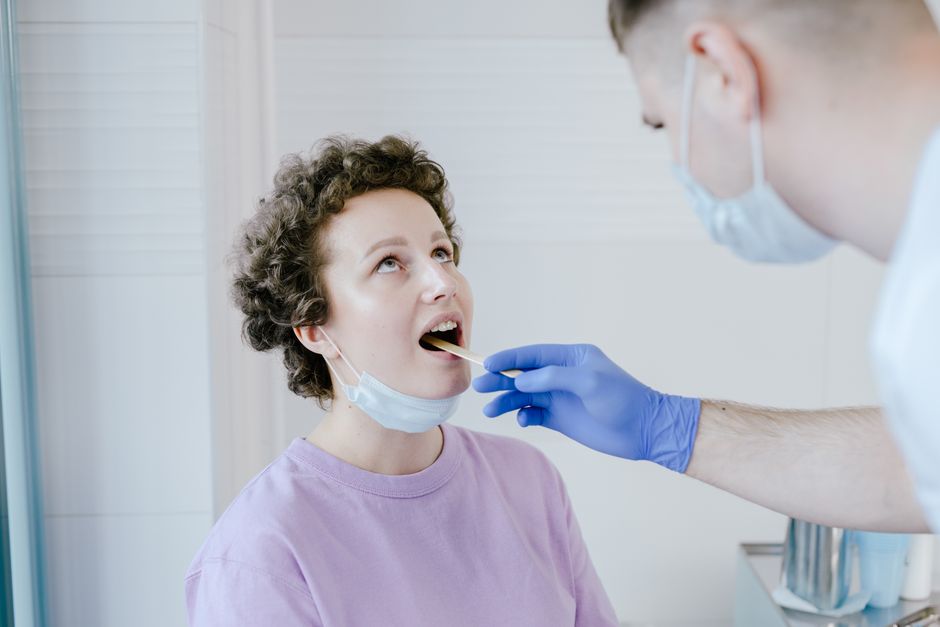
If you have a sore throat, your doctor needs to know if bacteria or a virus is causing it. The only reliable way to find out is with a specific test. Doctors test for strep throat using a rapid antigen test or a throat culture, both of which involve a quick swab of the back of your throat. The entire process takes less than a minute, and you will know the rapid test result in about 10 to 15 minutes while you are still in the office.
Why Does the Doctor Need to Test Instead of Just Looking?
You cannot tell if a sore throat is strep just by looking at it. Viruses cause most sore throats, and they do not need antibiotics. Strep throat is caused by a specific bacteria called Group A Streptococcus (Streptococcus pyogenes).
Doctors use specific tests because the symptoms of viral sore throats and bacterial strep throat overlap significantly. Redness, pain, and swollen tonsils happen with both. Without a test, a doctor would be guessing. Guessing leads to unnecessary antibiotics, which do not work on viruses and contribute to antibiotic resistance.
What Is the Rapid Strep Test?
The rapid strep test is the first test most doctors use. It is fast and accurate enough to guide immediate treatment in most cases.
The test works by detecting parts of the strep bacteria in the swab sample. The doctor or nurse takes a sterile cotton or synthetic swab and gently rubs it against the back of your throat and your tonsils. This collects a small sample of mucus and cells. The swab is then inserted into a testing device that looks for the bacteria’s antigens.
If the test detects the antigen, it is positive. If not, it is negative. The entire process takes roughly 10 to 15 minutes. The rapid test is very specific, meaning a positive result is almost always correct.
What Is a Throat Culture?
A throat culture is the second type of test. It is more sensitive than the rapid test but takes much longer to get results.
For a throat culture, the doctor takes the same type of swab from the back of your throat. Instead of running a rapid test, the swab is sent to a laboratory. The lab places the sample on a special dish that allows bacteria to grow. If Group A Streptococcus grows, the culture is positive.
Results take 24 to 48 hours. The culture is the gold standard for diagnosing strep throat. It can detect bacteria even when the rapid test misses them.





When Does the Doctor Do Both Tests?
Many doctors use a two-step approach. They run the rapid test first. If the rapid test is positive, you have strep and get treated immediately. If the rapid test is negative, the doctor may send the same swab for a throat culture to confirm.
This happens because the rapid test can miss some infections. The rapid test is about 70 to 90 percent accurate at detecting strep. The throat culture catches nearly all cases. In children and teens, the risk of missing strep is higher because of the risk of rheumatic fever, so the culture is commonly done after a negative rapid test.
In adults, the risk of rheumatic fever is much lower. Some doctors skip the culture if the rapid test is negative and the symptoms look viral. This is a common clinical judgment call, and it is safe in most cases.
What Does the Swab Feel Like?
The swab is the part most people worry about. It is not painful, but it can trigger a gag reflex.
You will be asked to open your mouth wide and stick out your tongue. The doctor may press your tongue down with a wooden stick to see your throat clearly. Then the swab is rubbed firmly against the back of your throat and tonsils for a few seconds. It feels like a brief scratch or tickle.
Some people gag or cough during the swab. This is normal. The whole procedure takes less than 10 seconds. The discomfort stops as soon as the swab is removed.
How Do You Prepare for the Test?
There is very little preparation needed. You do not need to fast or stop taking your regular medications.
However, you should tell your doctor if you have taken antibiotics recently. Recent antibiotic use can reduce the amount of bacteria in your throat and cause a false negative test result. This matters for both the rapid test and the culture.
You should also tell your doctor about any medications you take, including over-the-counter pain relievers. These do not usually affect the test, but your doctor needs a complete picture of your health.
Can You Do a Strep Test at Home?
Home strep test kits are available over the counter. They use the same antigen detection technology as the rapid test used in clinics.
The problem is the swabbing technique. Getting a good sample from the back of the throat and tonsils is harder than it looks. If you do not swab firmly enough or in the right spot, you can easily get a false negative result. A false negative means you have strep but the test says you do not.
If a home test is positive, it is likely correct. If it is negative but your symptoms are severe or getting worse, you should see a doctor. A throat culture may still be needed.
What Happens If the Test Is Positive?
A positive strep test means you have a bacterial infection that requires antibiotics. Antibiotics treat the infection, reduce symptoms faster, and lower the chance of spreading it to others.
Your doctor will prescribe an antibiotic, usually penicillin or amoxicillin for adults and children. If you are allergic to penicillin, other antibiotics are available. It is important to take the full course of antibiotics exactly as prescribed, even if you feel better before finishing them.
You are generally considered no longer contagious after you have been on antibiotics for 24 hours and your fever is gone. Until then, you should stay home from work, school, or daycare.
What Happens If the Test Is Negative?
A negative test means strep bacteria were not detected. This usually means your sore throat is caused by a virus.
Antibiotics will not help a viral sore throat. Instead, treatment focuses on symptom relief. Rest, warm fluids, saltwater gargles, and over-the-counter pain relievers like acetaminophen or ibuprofen can help manage the pain and fever.
If your rapid test is negative but the throat culture comes back positive, your doctor will call you to prescribe antibiotics. This is why the culture is important — it catches what the rapid test misses.
How Accurate Are These Tests?
The rapid strep test is very good at confirming strep when it is present, but it can miss some cases. The throat culture is the most accurate test available.
Here is the key difference:
- Rapid strep test: Results in 10-15 minutes. Highly specific, meaning a positive result is almost always correct. Less sensitive, meaning it can miss up to 20-30 percent of strep cases.
- Throat culture: Results in 24-48 hours. Highly sensitive, meaning it catches nearly all strep cases. This is why it is used to confirm a negative rapid test.
No test is perfect. But the combination of a rapid test followed by a culture when needed gives the most accurate diagnosis possible.
Why Is an Accurate Diagnosis Important?
Getting the right diagnosis matters for two reasons. First, untreated strep throat can lead to complications. Second, unnecessary antibiotics cause harm.
Untreated strep can sometimes lead to rheumatic fever, which can damage the heart valves. This is rare in adults but more common in children. It can also lead to kidney inflammation or a peritonsillar abscess, a collection of pus near the tonsils. These complications are serious but uncommon, especially when strep is treated promptly.
On the other hand, taking antibiotics when you do not have strep exposes you to side effects like diarrhea, rashes, and allergic reactions. It also contributes to the growing problem of antibiotic-resistant bacteria. An accurate test prevents both problems.
When Should You See a Doctor?
Not every sore throat needs a doctor visit. Most sore throats are viral and resolve on their own within a week.
You should see a doctor if you have a sore throat along with a fever above 100.4°F (38°C), swollen lymph nodes in your neck, white patches on your tonsils, or difficulty swallowing. These signs can indicate strep or another infection that needs treatment.
You should seek urgent care if you have trouble breathing, difficulty swallowing your own saliva, or a muffled voice. These can be signs of a more serious infection that requires immediate medical attention.
Frequently Asked Questions
Does the strep test hurt?
No, the swab does not hurt. It can cause a brief gag reflex or tickling sensation that stops as soon as the swab is removed.
How long does it take to get strep test results?
The rapid strep test gives results in about 10 to 15 minutes. A throat culture takes 24 to 48 hours.
Can a rapid strep test be wrong?
Yes. The rapid test can miss up to 20-30 percent of strep cases, which is why a throat culture is often done to confirm a negative result.
Do I need antibiotics if my test is positive?
Yes. A positive strep test means you have a bacterial infection that requires antibiotics to treat the infection and prevent complications.
