
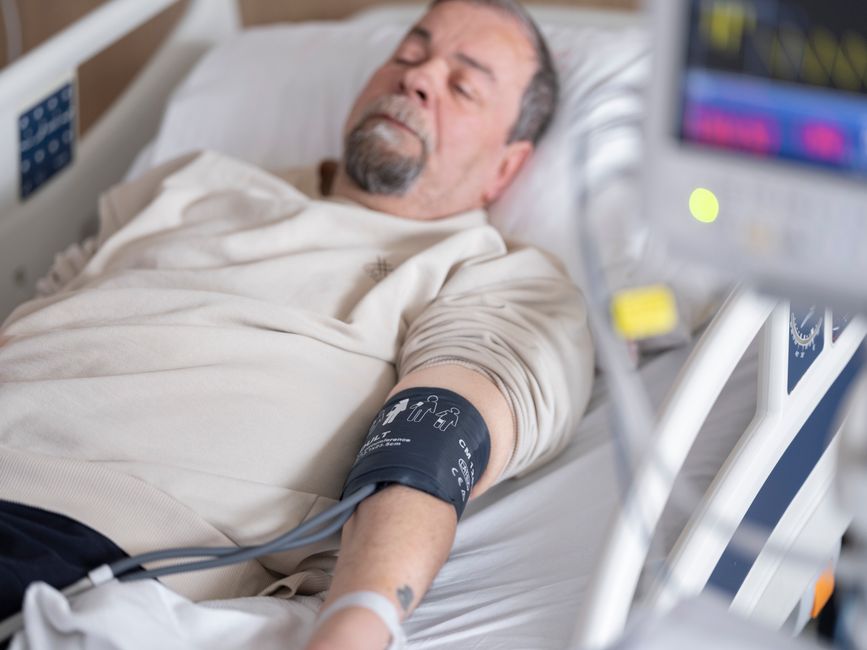
Sleep apnea is a common condition where breathing repeatedly stops and starts during sleep. Most people do not know they have it because it happens while they are unconscious. A partner or family member often notices the signs first, like loud snoring or gasping for air. Doctors diagnose sleep apnea by combining a review of your symptoms, a physical exam, and a sleep study that measures your breathing overnight.
The sleep study is the gold standard. It can be done in a sleep lab or at home with a portable device. The type of test you get depends on your symptoms, your health history, and whether you have other medical conditions. Both approaches measure how often your breathing pauses and how low your oxygen levels drop.
What Are the Main Symptoms Doctors Look For?
Doctors start with your symptoms. The most common ones are loud snoring, choking or gasping during sleep, and pauses in breathing witnessed by a bed partner. Daytime sleepiness is another major clue. If you fall asleep while driving, at work, or during quiet activities, that is a serious sign.
Other symptoms include morning headaches, dry mouth on waking, trouble concentrating, and irritability. Many people with sleep apnea also wake up frequently to urinate. If you have several of these symptoms, a doctor will likely recommend a sleep test.
Not everyone with sleep apnea snores. Some people have no bed partner to witness the pauses. That is why screening tools like the STOP-BANG questionnaire exist. It asks about snoring, tiredness, observed apnea, high blood pressure, BMI, age, neck size, and sex. A high score does not diagnose sleep apnea, but it flags who needs testing.
How Do Doctors Diagnose Sleep Apnea At Home Or In A Lab?
This is the central question. The answer depends on which test your doctor orders. Both home and lab tests measure the same core things: breathing effort, airflow, and blood oxygen levels. But they differ in how much data they collect.
A home sleep apnea test is a portable device you wear for one night in your own bed. It typically measures your breathing through a small nasal cannula, your oxygen level with a finger sensor, and your heart rate. Some devices also track your sleeping position and snoring.
Home tests are simpler and cheaper than lab tests. They are also more convenient because you sleep in your own bed. But they have limits. They do not measure brain waves, so they cannot tell how much you actually slept. They also cannot detect certain sleep stages or other conditions like periodic limb movement disorder.
A lab sleep study, called polysomnography, is more complete. You spend the night in a sleep center with sensors on your scalp, face, chest, legs, and finger. It measures brain waves, eye movements, muscle activity, heart rhythm, breathing, airflow, and oxygen. A technician watches you all night through a camera.
Lab studies provide much more information. They can identify whether you have central sleep apnea, where the brain fails to signal the muscles to breathe, versus obstructive sleep apnea, where the airway collapses. Lab studies also detect other sleep disorders that can look similar to sleep apnea.
Doctors generally order a home test first if you have moderate to high risk of obstructive sleep apnea and no serious health conditions. They order a lab study if you have heart disease, lung disease, or a history of stroke. Lab studies are also used when home tests are inconclusive or when your symptoms are severe.
What Do the Results Actually Show?
Both tests report a number called the apnea-hypopnea index, or AHI. This is the average number of apnea and hypopnea events per hour of sleep. An apnea is a full pause in breathing for at least 10 seconds. A hypopnea is a partial reduction in airflow that leads to a drop in oxygen or an arousal from sleep.
The AHI determines severity. An AHI under 5 is considered normal. An AHI of 5 to 14 is mild sleep apnea. An AHI of 15 to 29 is moderate. An AHI of 30 or higher is severe.
Oxygen levels matter too. Many sleep labs look at the percentage of time your oxygen stays below 90 percent. Frequent and prolonged drops in oxygen are more concerning than the AHI alone. Some doctors also use the oxygen desaturation index, or ODI, which counts oxygen drops per hour regardless of breathing pauses.
Home tests sometimes underestimate the AHI. If you move the sensors off during the night or do not sleep long enough, the data can be incomplete. That is why a negative home test does not always rule out sleep apnea. If your symptoms are strong but the home test is normal, your doctor may recommend a lab study.

Which Test Is Right for You?
There is no single right answer for everyone. The decision depends on your medical history and the reason for testing. Home testing is appropriate for most healthy adults with suspected moderate to severe obstructive sleep apnea. It is not the best choice if you have significant heart failure, lung disease, or a neurologic condition.
Home testing is also not ideal if you have insomnia or if you sleep poorly in general. A short or fragmented night can make the results unreliable. If you are a shift worker or someone who sleeps at odd hours, a lab study may be easier to schedule and control.
Lab testing is more accurate overall. It captures more data and allows a technician to correct sensor problems in real time. It also lets doctors see whether other conditions, like REM-related sleep apnea or sleep hypoventilation, are present.
| Feature | Home Sleep Test | Lab Sleep Study |
|---|---|---|
| Location | Your own bed | Sleep center |
| Measures brain waves | No | Yes |
| Measures breathing and oxygen | Yes | Yes |
| Detects other sleep disorders | No | Yes |
| Cost | Lower | Higher |
| Convenience | Higher | Lower |
| Accuracy for mild cases | May underestimate | High |
If you have already been diagnosed and need a follow-up to check if treatment is working, home tests are often used. They are simpler and can be repeated more easily. Lab studies are reserved for complex cases or when the diagnosis remains unclear.
What Happens After the Diagnosis?
Once sleep apnea is confirmed, treatment usually starts with a continuous positive airway pressure machine, or CPAP. This device delivers a steady stream of air through a mask to keep your airway open. It is the most effective treatment for obstructive sleep apnea, but only if you use it consistently.
Other options include oral appliances that reposition the jaw, positional therapy for people who only have apnea on their back, and lifestyle changes like weight loss. Weight loss can reduce or even eliminate mild sleep apnea in some people. Avoiding alcohol before bed also helps because alcohol relaxes the airway muscles.
Untreated sleep apnea has serious consequences. It raises the risk of high blood pressure, heart attack, stroke, and type 2 diabetes. It also increases the risk of motor vehicle accidents because of daytime sleepiness. If you have been told you stop breathing at night or you wake up gasping, do not ignore it.
Can You Get Tested Without Seeing a Doctor First?
No. In the United States, you need a prescription for a home sleep test or a lab sleep study. Some online companies sell devices directly to consumers, but the results are not always reviewed by a qualified clinician. A proper diagnosis requires a doctor to interpret the results in the context of your overall health.
You also cannot diagnose sleep apnea with a smartwatch or a fitness tracker. These devices can estimate oxygen levels and heart rate, but they are not validated for diagnosing sleep apnea. They may suggest you have a problem, but they cannot replace a medical test.
If you suspect you have sleep apnea, start by seeing your primary care doctor. They can review your symptoms, check your blood pressure and neck circumference, and decide whether testing is appropriate. If needed, they will refer you to a sleep specialist.
Frequently Asked Questions
How long does a home sleep apnea test take?
You wear the device for one night while you sleep. The test is considered valid if you get at least four hours of recorded sleep data.
Can a home sleep test miss sleep apnea?
Yes. Home tests can underestimate the severity and sometimes miss mild cases entirely. If your symptoms continue after a normal home test, a lab study is usually recommended.
Is a lab sleep study covered by insurance?
Most insurance plans cover sleep studies when ordered by a doctor, but coverage varies. Home sleep tests are also commonly covered when medically necessary. Check with your insurer before scheduling.
What is the difference between obstructive and central sleep apnea?
Obstructive sleep apnea happens when the throat muscles collapse and block the airway. Central sleep apnea happens when the brain does not send the right signals to the muscles that control breathing. Only a lab sleep study can reliably tell the two apart.
