
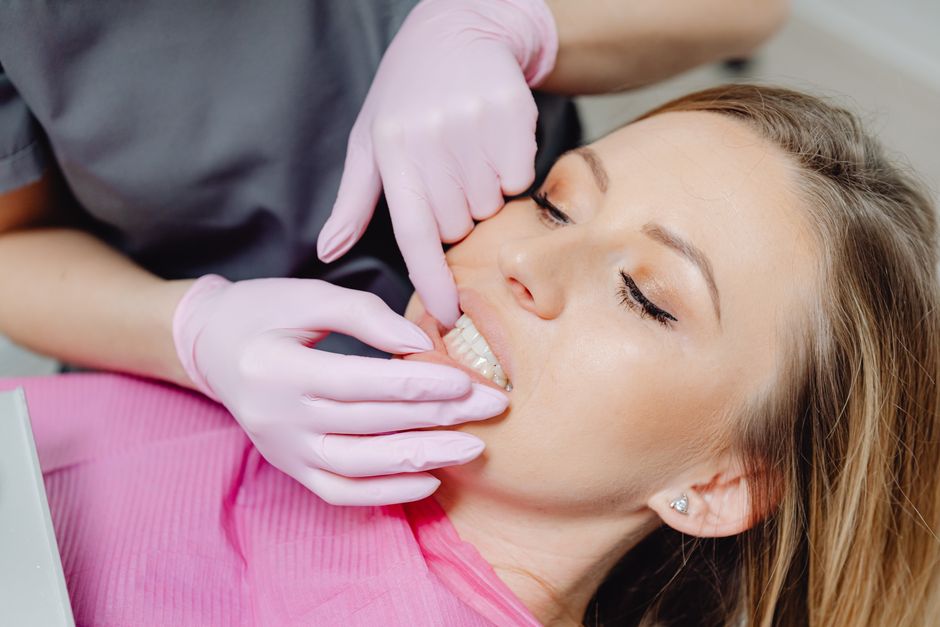
Dentists whiten your teeth by applying a peroxide‑based gel directly to your enamel and often activating it with a special light. The gel stays on for 15–30 minutes, sometimes repeated once or twice, and the whole appointment runs about 60–90 minutes. You can expect your teeth to lighten several shades in one visit, though results vary by person. Some temporary tooth sensitivity is common but usually fades within a day or two.
How Do Dentists Whiten Your Teeth?
The in‑office procedure starts with a quick cleaning to remove plaque and food debris. Your dentist or hygienist then places a protective barrier over your gums to keep the whitening gel off soft tissue. The gel—usually hydrogen peroxide or carbamide peroxide—is painted onto your front teeth. Some dentists use a special lamp or laser to accelerate the chemical reaction, while others let the gel sit without light. The gel is left on for 15 to 30 minutes, then wiped off. This step may be repeated two or three times during the visit.
After the final application, your teeth are rinsed thoroughly. You may get a fluoride treatment afterward to help reduce sensitivity. The entire process is done in one appointment, and you leave the office with noticeably brighter teeth.
What Types of Whitening Do Dentists Offer?
Professional whitening falls into two main categories: in‑office power whitening and take‑home custom trays.
In‑office whitening uses a high‑concentration peroxide gel (often 25–40%) that a dentist applies. Many clinics use a light or laser, but research indicates that the light itself does not improve long‑term results for most patients. The real advantage of in‑office treatment is the speed—you get most of the whitening done in one visit.
Take‑home trays are custom‑made for your mouth. Your dentist takes an impression and sends it to a lab. You get a set of thin plastic trays that fit your teeth exactly. You fill the trays with a lower‑concentration peroxide gel (usually 10–15%) and wear them for a few hours each day or overnight for one to two weeks. This method takes longer but can achieve similar results to in‑office treatment, and you have more control over the timing.
Some dentists also offer “combination” or “power” bleaching, which includes one in‑office session plus a short course of trays. There is no strong evidence that one method is clearly better than the other for everyone; your choice may depend on your budget, schedule, and sensitivity risk.
Is Professional Whitening Safe?
Yes, professional whitening is considered safe when performed by a licensed dentist. The main risk is temporary tooth sensitivity and gum irritation. The peroxide gel can cause the teeth to feel achy or sharp when exposed to cold air or drinks. Gum irritation happens if the gel touches the soft tissue, but your dentist places a protective barrier to prevent that.
Long‑term safety data is reassuring. Studies have not found that professional whitening damages enamel or causes lasting harm when used according to instructions. However, overuse—whitening too often or leaving gel on too long—can weaken enamel or cause uneven results. Most dentists recommend waiting at least two years between in‑office sessions.
Professional whitening is not recommended for pregnant or breastfeeding women because no clinical studies have been done on this population. It is also not effective on caps, crowns, veneers, or fillings—only natural tooth structure whitens.





How Long Do Results Last?
In‑office whitening results typically last six months to two years. The variability depends heavily on your lifestyle. People who drink coffee, tea, red wine, or smoke will see the color fade faster because these substances stain the tooth surface.
You can prolong results by avoiding staining foods and drinks for at least 48 hours after whitening. After that, regular brushing and flossing helps maintain your shade. Some dentists offer a “touch‑up” take‑home tray or recommend occasional over‑the‑counter whitening strips for maintenance. No whitening is permanent; teeth naturally darken with age no matter what you do.
What Should You Expect Before, During, and After?
Before your appointment: Your dentist will examine your teeth and gums. If you have untreated cavities, gum disease, or worn enamel, whitening should wait until those issues are resolved. You may be asked to have a professional cleaning first.
During the procedure: You will wear protective glasses. Your mouth will be held open with a retractor. The gel application itself is painless, but you may feel a mild tingling or warmth. Some people describe a “zing” that comes and goes. The sensation is normal. If it becomes strong, tell your dentist—they can apply a desensitizing agent.
After the appointment: Your teeth will be lighter immediately, but the color may deepen slightly over the next 24 hours as the teeth rehydrate. You should avoid dark foods, drinks, and tobacco for at least 48 hours. Sensitivity to cold can last one to three days. Over‑the‑counter pain relievers and desensitizing toothpaste can help. If sensitivity persists beyond a week, contact your dentist.
How Does Professional Whitening Compare to At‑Home Kits?
At‑home kits from drugstores contain lower peroxide concentrations (typically 3–6%) and are not custom‑fitted. The trays are one‑size‑fits‑all, so the gel can leak onto your gums and cause irritation. Results are slower and often less dramatic. A 2014 review in the Journal of the American Dental Association found that professionally applied whitening produces greater and faster shade change than over‑the‑counter products.
However, at‑home kits are safe when used according to the label. They can be a reasonable option for maintenance or for people with mild staining. If you have sensitive teeth or gum issues, a dentist‑made custom tray gives better control and less irritation. Professional supervision also means any problems, like uneven whitening or reaction to the gel, can be managed immediately.
Some people try “natural” remedies like charcoal or baking soda. These products can be abrasive and may wear away enamel over time. No clinical evidence supports that they whiten teeth effectively. Stick with peroxide‑based products that have been tested.
How Much Does Professional Whitening Cost?
In‑office whitening typically costs $400 to $1,000 per session. Take‑home tray kits from a dentist run $150 to $400. Most dental insurance plans consider whitening a cosmetic procedure and do not cover it. Some dentists offer payment plans or discounts for multiple family members.
Who Should Not Get Professional Whitening?
Teeth whitening is not safe for everyone. People with active gum disease, untreated cavities, or severe enamel erosion should skip it until the underlying problem is fixed. Children under 16 should not whiten because their pulp chambers are larger and more prone to sensitivity. Pregnant or breastfeeding women are advised to wait because of the lack of safety data.
Frequently Asked Questions
Does professional teeth whitening hurt?
Most people feel some temporary sensitivity during and after the procedure. It typically goes away within a few days. Your dentist can apply a desensitizing gel to reduce discomfort.
How many shades whiter will my teeth get?
Results vary, but many people see a change of 4 to 8 shades on a standard shade guide after one in‑office session. Individual results depend on your starting color, staining type, and enamel thickness.
Can I eat and drink right after whitening?
You should avoid any dark or staining foods and drinks for at least 48 hours. Stick to a “white diet” of plain chicken, rice, bread, and water during that time.
Is whitening safe for sensitive teeth?
If you already have sensitive teeth, let your dentist know. They may use a lower concentration gel, apply a desensitizing agent, or recommend a slower take‑home tray approach instead of the in‑office treatment.
Professional teeth whitening is a well‑studied, effective cosmetic procedure. It offers faster, more predictable results than store‑bought options, with less risk of gum irritation. The key is having a healthy mouth before you start and following your dentist’s aftercare instructions. If you have questions about whether you are a good candidate, talk to your dentist before booking an appointment.
