
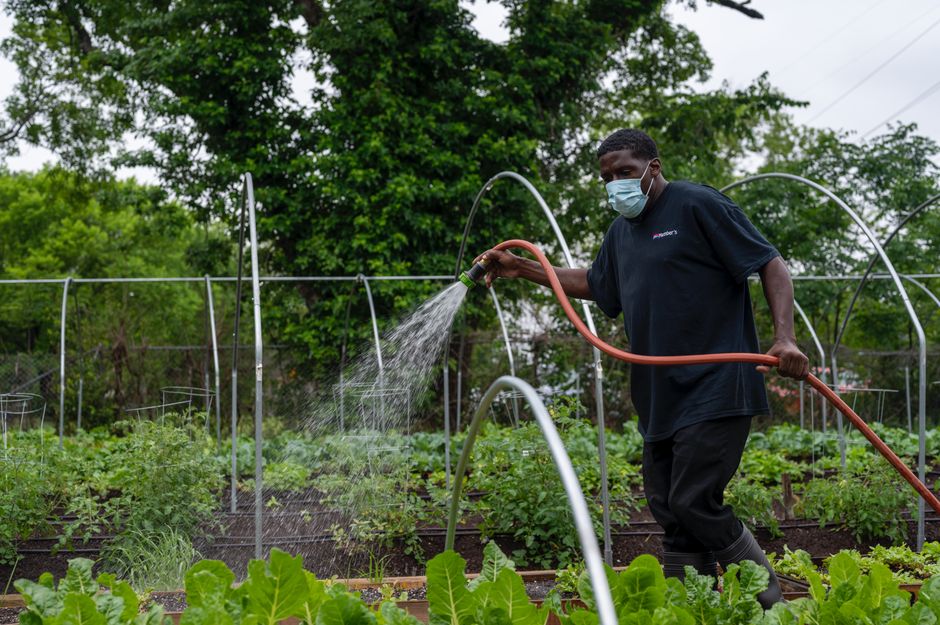
Community gardens are shared plots of land where people grow food and plants together, usually on public or donated land. They work through a simple structure: a sponsoring organization or local government provides the land, members pay a small fee or volunteer time, and each person tends an assigned bed or shares in a common growing area. In return, members get fresh produce, regular physical activity, and a built-in social network — benefits that researchers have linked to better diet and lower stress.
How Do Community Gardens Work Structure Benefits?
The structure of a community garden is what makes the benefits possible. Most gardens fall into one of three models, and each one changes who has access and how much work is shared.
In an allotment or individual-plot model, each member rents a defined bed. You plant what you want, harvest what you grow, and keep the results. This model gives the most control but also the most responsibility. If you skip a week of watering, your plants suffer and no one else steps in.
In a communal model, everyone works the same land together and divides the harvest. This suits people who want less commitment or who are new to gardening. The trade-off is that you have less say over what gets planted.
The hybrid model blends both. Members have a small personal plot plus shared responsibilities for common areas like herb beds, fruit trees, or a compost system. Many gardens also set aside a portion of the harvest for food banks, which is often a condition of using public land.
Whatever the model, the underlying mechanics are similar. A sponsoring body — a city parks department, a church, a school, or a nonprofit — holds the land or the lease. A garden manager or volunteer committee handles plot assignments, collects dues, and mediates disputes. Members agree to rules about water use, pesticide limits, and upkeep of shared paths and fences.
That governance layer is easy to overlook, but it is the reason gardens survive. A plot of land with no one managing it tends to fall apart within a season or two.
What Are the Documented Health Benefits of Community Gardening?
The strongest evidence for community gardening relates to diet and physical activity, and it comes from observational studies rather than randomized trials.
People who garden tend to eat more vegetables and fruit than people who do not. Some of this is self-selection — people who already like vegetables may be more likely to garden. But several studies that followed participants over time found that gardening was associated with increased produce intake even after accounting for baseline diet. A commonly cited finding is that gardeners are more likely to meet daily vegetable recommendations than non-gardeners, though the exact figures vary across studies.
Gardening also counts as moderate-intensity physical activity. Digging, hauling soil, and weeding raise heart rate and use major muscle groups. It is not equivalent to a structured workout, but it adds meaningful movement to a day that might otherwise involve very little.
The mental health picture is more mixed. Some studies report lower rates of stress, anxiety, and depression among gardeners. Others find the effect is small or fades over time. What is reasonably consistent is that gardening gets people outdoors and into regular contact with neighbors, and social connection itself has well-established ties to mental health.
One clarification worth making: the widely repeated claim that soil bacteria directly boost serotonin in humans is not established. The idea comes from studies in mice, and no human trials have confirmed it. The mental health benefits of gardening are better explained by activity, sunlight, purpose, and social contact than by anything in the dirt.
What Does the Research Actually Show — and What Does It Not?
Community gardening research has real limits, and it is worth being honest about them.
Most studies are observational. They compare gardeners to non-gardeners, or track gardeners over time without a control group. That design cannot prove that gardening caused the improvements. People who take up gardening may already differ in ways that affect health — they may be more active, more food-conscious, or more socially connected before they ever pick up a trowel.
A small number of randomized or quasi-experimental studies do exist, and they generally point in the same direction. But they tend to be small, short, and conducted in specific populations, which limits how far the results can be generalized.
Here is what the evidence supports:
- Community gardeners tend to eat more vegetables and fruit than non-gardeners
- Gardening involves physical activity at a moderate intensity
- Gardeners report stronger neighborhood social ties
- Some studies find reduced stress and improved mood, though results vary
Here is what the evidence does not support:
- That gardening treats or prevents any specific disease
- That soil microbes measurably change human brain chemistry
- That a community garden produces the same health effects as a structured exercise or nutrition program
The honest position is that community gardening is a reasonable, low-cost activity with plausible and partly documented health benefits. It is not a therapy, and no one should treat it as a substitute for medical care.





Who Benefits Most From Community Gardens?
The people who seem to gain the most are those with the least access to fresh food, outdoor space, or social contact.
In neighborhoods without a nearby grocery store selling affordable produce, a community garden can meaningfully increase what residents eat. That said, a garden plot does not replace a grocery store. It supplements it. A single bed will not feed a family year-round, and expecting it to do so sets people up for disappointment.
Older adults often report particular value. Gardening provides routine, light activity, and a reason to leave the house and talk to people — three things that matter a great deal for health in later life. Some programs pair older gardeners with younger ones, which adds a mentoring element.
Children who garden at school or with a parent tend to be more willing to try vegetables. Whether that willingness lasts into adulthood is not well established.
For people with limited mobility, raised beds and container gardening can make participation possible where ground-level plots would not. This is a design question, not a health claim — but it determines who can actually take part.
What Are the Practical Limits and Risks?
Community gardening has real constraints, and ignoring them leads to frustration or, in a few cases, actual harm.
Time. A garden needs attention through the growing season, often several times a week. People who travel, work long hours, or have unpredictable schedules frequently find they cannot keep up. Many gardens have waiting lists precisely because plots turn over when members fall behind.
Soil contamination. This is the risk most often overlooked. Urban soil can contain lead, arsenic, or other heavy metals from past industrial use, old paint, or vehicle exhaust. If you plan to grow food in a community garden, it is reasonable to ask whether the soil has been tested. Many city garden programs now test before opening a site, but not all do. Where contamination is a concern, raised beds with clean imported soil are a common solution. Root vegetables and leafy greens take up more from soil than fruiting crops like tomatoes, though the specifics depend on the contaminant.
Water access. A garden without a reliable water source is a garden that struggles in July. This is a structural issue, not a personal failing.
Social friction. Shared land means shared decisions. Disagreements over water use, weeds spreading from a neglected plot, or pesticide drift from a neighboring bed are common. Good gardens have clear written rules and someone willing to enforce them.
Pesticides. Rules vary widely. Some gardens ban synthetic pesticides entirely; others allow them with restrictions. If you are growing food you intend to eat, it is worth knowing what your neighbors are using and where the garden stands on it.
How Do You Join or Start a Community Garden?
Joining an existing garden is usually straightforward. Most have a website, a sign at the gate, or a contact through the local parks department or a community organization. Expect to pay an annual fee, which can range from nothing to a few hundred dollars depending on the city, and to sign an agreement about upkeep.
Starting a garden from scratch is a longer project. The main hurdles are land, water, and permission.
Start by finding out who owns the land you have in mind and whether it can legally be used for gardening. Cities often have a process for this, and some have programs that lease vacant lots to community groups. You will also need a water source, which may mean installing a spigot or arranging access to a nearby building.
Then there is the organizational side. Someone needs to collect dues, assign plots, keep records, and handle problems. Gardens run by a single enthusiastic person tend to collapse when that person moves on. A small committee is more durable.
Finally, test the soil before you plant anything you intend to eat. This is the step most new gardens skip, and it is the one that is hardest to fix later.
Frequently Asked Questions
How do community gardens work?
A sponsoring organization provides land, and members pay a fee or volunteer time in exchange for a plot or a share of the harvest. A garden manager or committee handles assignments, rules, and shared upkeep.
What are the main benefits of community gardens?
The best-supported benefits are increased vegetable and fruit intake, added physical activity, and stronger social ties among members. Some studies also report reduced stress, though those results are less consistent.
Are community gardens safe to grow food in?
They can be, but soil contamination is a real concern in urban areas. Ask whether the soil has been tested for lead and other heavy metals before growing food, and use raised beds with clean soil if contamination is found or unknown.
Do you need experience to join a community garden?
No. Most gardens welcome beginners, and communal or hybrid models are designed for people with limited time or experience. Expect to learn most of what you need from other members.
