
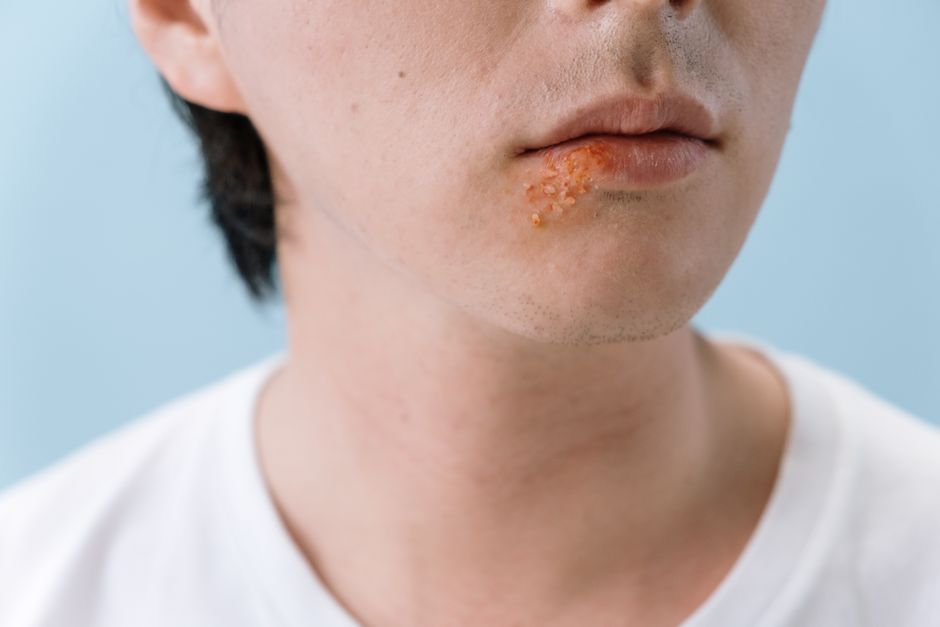
A cold sore is a small, fluid-filled blister that usually appears on or around the lips. It is caused by the herpes simplex virus type 1 (HSV-1). The sore goes through five clear stages: a tingling feeling, then a blister, then an open ulcer, then a crust, and finally healing. Cold sores are not the same as canker sores, which form inside the mouth and are not caused by herpes.
How Do Cold Sores Look Stages And Comparisons
Cold sores follow a predictable pattern. The first sign is often a tingling, burning, or itching sensation in one spot on the lip. Within a day or two, a cluster of small blisters appears. These blisters are filled with clear fluid and sit on red, swollen skin. After a few days, the blisters rupture and become shallow open sores, often weeping fluid. A yellow or brown crust then forms over the sore. This scab eventually falls off, and new skin grows underneath. The entire process usually takes 7 to 10 days without treatment.
Compared to other sores, cold sores look distinct. Canker sores appear inside the mouth as round white or yellow lesions with a red border. They are not contagious. Impetigo, a bacterial skin infection, can cause yellow crusty sores around the mouth but is more common in children and does not start with a tingling stage. Angular cheilitis causes red, cracked skin at the corners of the mouth, not blisters. Allergic reactions to lip products can cause swelling and bumps but not the classic blister cluster. Understanding these differences helps you identify a cold sore correctly.
What Are the Stages of a Cold Sore?
Stage 1 is the prodrome. This is the tingling, burning, or itching phase. It starts hours to a day before any visible blister appears. For many people, this is the earliest warning sign. There is no visible lesion yet, but the virus is actively replicating in the skin nerves.
Stage 2 is the blister phase. Small, fluid-filled blisters appear in a cluster. They are often on the lip border but can appear on the nose, chin, or inside the nostril. The blisters are fragile and may merge into a larger blister. The skin around them is red and swollen.
Stage 3 is the ulcer phase. The blisters break open, leaving shallow, open sores. The clear fluid drains, and the area may feel raw and painful. This is the most contagious stage because the fluid contains active virus particles.
Stage 4 is the crusting phase. A soft yellow or brown scab forms over the ulcer. The scab may crack and bleed, especially when you move your mouth. It can feel tight and uncomfortable. The contagiousness declines as the scab dries, but virus can still be present until the scab falls off completely.
Stage 5 is the healing phase. The scab falls off, revealing new pink skin underneath. Over the next several days, the redness fades. The skin returns to normal without scarring in most cases. Healing is complete when the skin looks and feels normal again.
How Long Does Each Stage Last?
There is some variation from person to person and with treatment. The prodrome stage typically lasts a few hours to 24 hours. The blister stage lasts about 2 days. The ulcer stage lasts roughly 1 to 2 days. The crusting stage can last 2 to 3 days. The healing stage takes another 2 to 3 days. Total duration without antiviral treatment is usually 7 to 10 days. With prescription antiviral medication taken at the first sign, the process may be shortened by 1 to 2 days.




How Do Cold Sores Compare to Canker Sores?
Cold sores and canker sores are often confused, but they are different conditions. Cold sores are caused by HSV-1, appear on the outside of the lips or around the mouth, are contagious, and start with tingling. Canker sores (aphthous ulcers) are not caused by a virus. They appear only inside the mouth—on the cheeks, tongue, or gums. They are round or oval with a white or yellow center and a red border. They are painful but not contagious. Canker sores may be triggered by injury, stress, or certain foods, not by herpes. Treatment for canker sores focuses on pain relief and healing, not antivirals.
How Do Cold Sores Compare to Other Lip Problems?
Impetigo is a bacterial infection that causes honey-colored crusts, often around the nose and mouth. Unlike cold sores, impetigo does not start with tingling and the crusts are thicker and yellow. It is also contagious but treated with antibiotics. Angular cheilitis appears as red, cracked, sore skin at the corners of the mouth. It can be caused by a fungal or bacterial infection, or by saliva buildup. There are no blisters. Herpes simplex virus type 2 (HSV-2) typically causes genital herpes but can rarely cause oral lesions. Oral HSV-2 infections are usually less severe and have fewer recurrences than HSV-1. Allergic contact dermatitis from lip products can cause swelling, redness, and small bumps, but not the typical blister cluster that progresses through stages. If you are unsure which condition you have, see a healthcare provider for an accurate diagnosis.
What Triggers a Cold Sore Outbreak?
Once you have the herpes simplex virus, it stays in your body. The virus lies dormant in nerve cells. Certain triggers can cause it to reactivate. Common triggers include stress, fatigue, illness such as a cold or flu, sun exposure, hormonal changes, and injury to the lip area. Some people notice outbreaks after dental work or when their immune system is weakened. Not everyone has the same triggers. Identifying your personal triggers can help you predict and possibly reduce outbreaks.
Can You Treat Cold Sores at Home?
Over-the-counter creams containing docosanol can shorten healing time if applied at the first sign. Cold compresses can ease pain and swelling. Pain relievers like ibuprofen or acetaminophen can help with discomfort. Keeping the area clean and avoiding touching the sore reduces the risk of spreading the virus. Some research suggests that lysine supplements may reduce recurrence for some people, but evidence is not strong enough for a universal recommendation. Prescription antiviral medications such as acyclovir, valacyclovir, or famciclovir are the most effective treatment. They work best when started at the prodrome stage. For frequent outbreaks, a daily suppressive dose can reduce recurrence by 70-80%.
How Do You Prevent Spreading Cold Sores?
Cold sores are highly contagious from the prodrome stage until the scab completely falls off. During this time, avoid kissing, sharing utensils, cups, towels, or lip products. Do not touch the sore and then touch your eyes or genitals. Wash your hands frequently. Avoid oral sex if you have an active sore, as HSV-1 can cause genital herpes. Using sunscreen on your lips may reduce outbreaks triggered by sun exposure. If you have frequent outbreaks, talk to your doctor about daily antiviral medication to reduce transmission risk.
When Should You See a Doctor?
Most cold sores heal on their own and do not require medical attention. See a healthcare provider if the sore does not heal within 2 weeks, if you have severe pain, if you have frequent outbreaks, or if you have a weakened immune system. Also see a doctor if the infection spreads to your eyes, as herpes keratitis can cause vision damage. Children with cold sores may need medical advice if they are very young or have difficulty eating or drinking due to pain.
Frequently Asked Questions
Are cold sores the same as herpes?
Yes. Cold sores are caused by herpes simplex virus type 1 (HSV-1), a type of herpes. Oral herpes is different from genital herpes, which is usually HSV-2, but both are caused by herpes viruses.
How long is a cold sore contagious?
A cold sore is contagious from the first tingling sensation until the scab falls off and the skin is completely healed. This is usually about 7 to 10 days.
Can you get a cold sore on your tongue?
Cold sores typically appear on the lips or around the mouth, not on the tongue. Sores on the tongue are more likely canker sores or other conditions. If you have a sore on your tongue that does not heal, see a dentist or doctor.
What can I put on a cold sore to dry it out?
Over-the-counter creams containing docosanol can shorten healing. Some people use drying agents like rubbing alcohol, but this can be painful and delay healing. It is better to use a product designed for cold sores or a prescription antiviral.
