
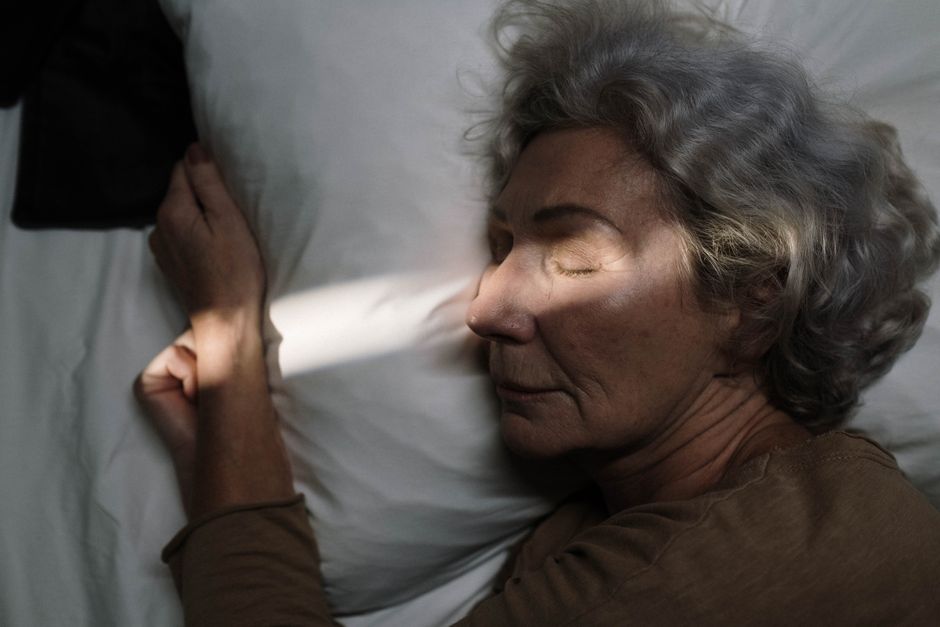
People who are completely blind often have a sleep problem that has nothing to do with darkness or light in the room. Their circadian rhythm — the internal clock that tells the body when to sleep and wake — can drift out of sync with the 24-hour day. Because light is the strongest signal that sets that clock, people who cannot perceive light do not get that daily reset. As a result, their sleep and wake times can shift later and later each day, sometimes by hours at a time. This condition is called non-24-hour sleep-wake disorder, and it affects a large portion of totally blind individuals.
What Does It Mean for a Circadian Clock to Drift?
The body’s internal clock runs on a cycle that is close to 24 hours, but not exactly. For most people, it runs slightly longer — about 24.2 hours on average. Every morning, bright light entering the eyes signals the brain to shift the clock back to align with the actual day. This is called light entrainment.
In people who cannot perceive light, that reset never happens. The clock continues on its natural cycle, which may be 24.5 or 25 hours long. Over days and weeks, the clock drifts further and further from the real time of day. A person may feel sleepy at 10 PM one week, then 2 AM the next week, then 6 AM the week after. This is not a choice or a habit problem. It is a biological mismatch between the internal clock and the external world.
How Common Is Non-24 in Blind People?
Non-24 is most common in people who have no light perception at all — meaning they cannot see any light, even bright sunlight. Research suggests that roughly half to two-thirds of totally blind people experience this condition. People who are legally blind but retain some light perception usually maintain a normal sleep-wake cycle because even dim light signals can help reset the clock.
The condition is not about how much sleep a person gets. Many people with non-24 can sleep for a full night when their internal clock aligns with the real night. The problem is that the alignment only happens periodically. On many days, their body is telling them to sleep in the middle of the afternoon or to stay awake through the night.
What Does a Drifting Sleep Schedule Actually Look Like?
Imagine a clock that runs 30 minutes slow every day. After a week, it is hours behind. The same thing happens with a drifting circadian rhythm. A person with non-24 may experience:
- Periods of normal sleep — when the internal clock happens to align with the actual night, sleep is often restful.
- Periods of severe insomnia — when the clock is misaligned, falling asleep at a normal bedtime is nearly impossible.
- Periods of daytime sleepiness — when the internal clock says it is nighttime during the day, fatigue becomes overwhelming.
- A repeating cycle — the pattern of good days and bad days often follows a predictable rotation as the clock drifts through the full 24-hour cycle.
Because the cycle repeats, some people notice that every few weeks they have a stretch of normal sleep followed by a stretch of disrupted sleep. This cyclical pattern is a hallmark of non-24 and is rarely seen in other sleep disorders.
Why Does the Clock Drift Differently for Each Person?
The natural period of the human circadian clock is not identical in everyone. Most people run slightly longer than 24 hours, but some run shorter. This means the speed of drift varies. A person whose clock runs 24.5 hours will shift by about 30 minutes each day. Someone whose clock runs 25 hours shifts by a full hour each day.
The direction of the drift also matters. Most people drift later — meaning their sleep times move forward into the day. But a small number of people drift earlier, experiencing progressively earlier sleep times. Both patterns are possible, and both are equally disruptive to daily life.
This variability is one reason why non-24 is not a one-size-fits-all condition. Two people with total blindness can have very different sleep experiences even though they share the same underlying problem.
Can Blind People With Non-24 Be Treated?
Yes. The most established treatment is a medication called tasimelteon, which is approved specifically for non-24-hour sleep-wake disorder. It works by binding to melatonin receptors in the brain, helping to shift the internal clock closer to the 24-hour day. Clinical trials have shown that it can help align sleep-wake cycles in totally blind individuals, though it does not work perfectly for everyone.
Melatonin supplements are also used, but the evidence is more complicated. Some studies suggest that carefully timed low-dose melatonin can help shift the clock. However, the timing must be precise, and the effect varies from person to person. Taking melatonin at the wrong time can make the drift worse. This is not something to experiment with on your own — it requires guidance from a sleep specialist.
Behavioral strategies like keeping a fixed wake time or using bright light therapy are often recommended for sighted people with circadian disorders. For totally blind individuals, these approaches have limited benefit because the brain is not receiving the light signal. Structured daily routines can help with daily functioning, but they do not reset the underlying clock.
How Do Blind People Sleep When Circadian Clocks Drift?
When the circadian clock drifts, sleep happens when the internal clock says it is night — not when the external world says it is night. A person may sleep perfectly from 4 AM to noon for a week, then shift to 7 AM to 3 PM the next week. The sleep itself is often normal in quality and duration. The problem is the timing.
This creates a frustrating reality. The person is not sleeping poorly in the sense of waking up frequently or having shallow sleep. They are sleeping well, but at times that do not match work schedules, family life, or social expectations. Many people with non-24 describe feeling like they are living in a different time zone that shifts every few days.
Over time, the constant shifting can lead to daytime fatigue, difficulty concentrating, and mood changes. These are not separate sleep disorders. They are direct consequences of the circadian clock being out of sync with the environment.
Is There a Difference Between Blind People Who See Light and Those Who Do Not?
Yes, and this distinction is critical. The eyes do more than create visual images. They also contain specialized cells that detect light for the purpose of setting the circadian clock. These cells are separate from the rods and cones used for vision.
People who are legally blind but can still perceive light — even dimly — usually have functioning circadian light detection. Their brains receive the light signal, and their clocks stay aligned with the 24-hour day. They may have other sleep problems, but non-24 is uncommon in this group.
People with no light perception at all lack this signal entirely. Their circadian clock free-runs on its own natural period. This is why non-24 is almost exclusively seen in people with total blindness, not in people with partial vision or light perception.
What Should Someone Do If They Suspect Non-24?
If a blind person experiences a repeating pattern of good sleep followed by bad sleep that cycles over several weeks, non-24 is a reasonable possibility. The first step is to see a sleep specialist, ideally one experienced with circadian rhythm disorders. The specialist may recommend keeping a detailed sleep diary for several weeks to document the pattern.
Actigraphy — wearing a small watch-like device that tracks movement and light exposure — is often used to confirm the diagnosis. In some cases, melatonin levels in urine or saliva can be measured to determine where the internal clock is in its cycle.
Treatment should be guided by a professional. Self-treating with melatonin or other supplements carries real risks of making the problem worse. The medication options and dosing strategies for non-24 are specific, and the evidence base is much stronger for some approaches than others.
Frequently Asked Questions
Can blind people with non-24 still get restful sleep?
Yes. When their internal clock aligns with the actual night, sleep is often normal in quality and duration. The problem is not the sleep itself but the timing of it.
Is non-24 the same as insomnia?
No. Insomnia is difficulty falling or staying asleep. Non-24 is a circadian rhythm disorder where the internal clock drifts out of sync with the 24-hour day, causing sleep times to shift periodically.
Does melatonin help blind people with non-24?
Carefully timed melatonin can help some people, but the timing and dose must be precise. Taking it at the wrong time can worsen the drift, so it should only be used under medical supervision.
Can blind people with light perception develop non-24?
It is uncommon. People who retain any light perception usually maintain a normal circadian rhythm because the brain still receives the light signals needed to reset the clock daily.
