
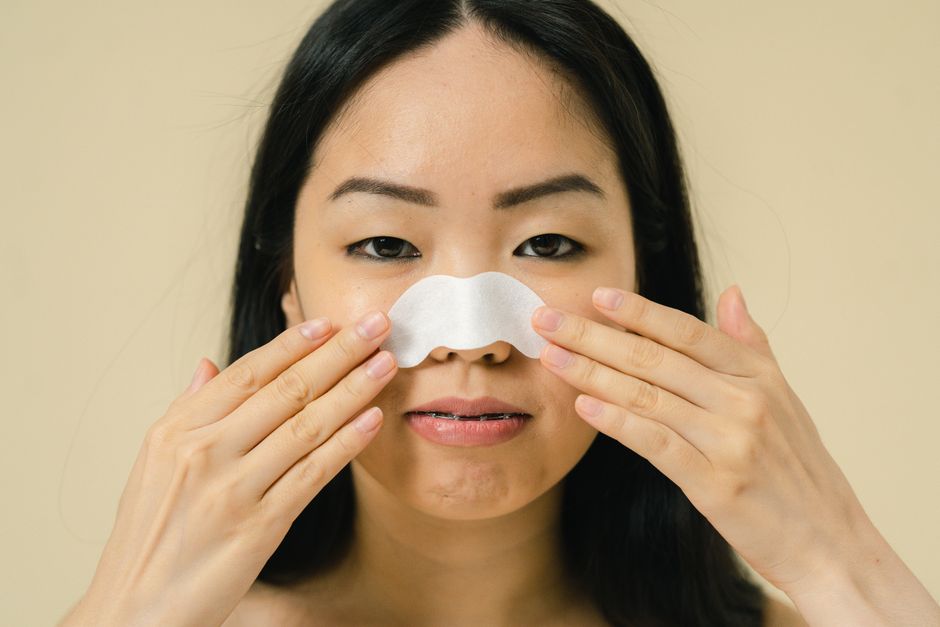
A blackhead is a pore that stays open at the skin’s surface, and the dark color comes from the plug itself reacting with air — not from trapped dirt. The plug is a mix of sebum, dead skin cells, and tiny hair debris. Once that mixture reaches the surface, oxygen in the air reacts with melanin and other compounds in the plug, turning it brown or black. That color change is oxidation, the same process that browns a cut apple.
How Do Blackheads Form And Why They Turn Dark?
Every pore on your face is a tiny channel connecting a hair follicle and its sebaceous gland to the skin surface. Sebaceous glands produce sebum, an oily substance that coats and protects the skin. Sebum normally flows up and out of the pore without a problem.
A blackhead starts when that flow is disrupted. Dead skin cells shed from the pore lining mix with sebum and form a plug. If the pore opening stays wide, the plug sits exposed to air. If the opening narrows and closes over, the same plug becomes a whitehead instead.
The dark tip is a chemical reaction, not a stain. Two things in the plug are thought to contribute to the color: melanin, the pigment produced by cells in the follicle, and oxidized sebum and cell debris. When the plug is exposed to oxygen, these compounds darken. This is why a blackhead can look almost black on one part of the face and brownish on another — the size of the opening and how much air reaches the plug vary.
Here is the point most people get wrong: blackheads are not dirt. Scrubbing harder does not remove the color, because the color is not on the surface. It is a chemical change inside the plug itself. That single fact explains why harsh scrubs and tight pore strips tend to disappoint.
What Causes Blackheads to Form in the First Place?
Blackheads are a form of comedonal acne, and they form when three things line up: excess sebum, faster-than-normal shedding of skin cells inside the pore, and a pore opening that stays open. Any factor that pushes one of these levers can increase blackheads.
The strongest driver is hormonal. Androgens — hormones present in both men and women — signal the sebaceous glands to produce more oil. This is why blackheads often appear or worsen during puberty, in the week before a menstrual period, and during pregnancy. It is also why some hormonal conditions that raise androgen levels are associated with more acne.
Other contributors are well documented but generally play a smaller role:
- Genetics. Skin type, pore size, and how much sebum you produce run in families.
- Certain medications. Some drugs, including certain steroids and lithium, can trigger or worsen acne. This is a conversation to have with the prescriber, not a reason to stop a medicine on your own.
- Cosmetics and skincare that clog pores. Heavy, occlusive products can contribute, especially if you are prone to acne.
- Humidity and friction. Sweat, heat, and pressure from helmets, straps, or tight clothing are associated with acne in the areas they touch.
Diet is a more debated area. Some studies suggest that high-glycemic diets — lots of refined carbohydrates and sugary foods — are linked to more acne, and some research points to dairy. The evidence is not strong enough to say that cutting a specific food will clear your blackheads. It is reasonable to describe this as an area of ongoing research rather than a settled cause.
Why Do Some Pores Turn Dark and Others Stay White?
The difference between a blackhead and a whitehead comes down to one thing: whether the pore opening is open or closed.
An open comedo — the clinical term for a blackhead — has a widened opening. Air reaches the plug, and the plug oxidizes and darkens. A closed comedo, or whitehead, has a narrow opening covered by a thin layer of skin. The plug stays sealed off from air, so it keeps its pale, yellowish color and shows up as a small bump under the skin.
Pore size is largely inherited, but pores can look larger when they are stretched by a plug or when the skin around them loses elasticity with age. Sun exposure breaks down collagen and elastin over time, and that can make pores appear more prominent. This is one more reason daily sun protection matters for skin appearance, not just skin cancer risk.
Are Blackheads on the Nose Different From Blackheads Elsewhere?
The nose is the most common site for blackheads, and there is a good anatomical reason. The sebaceous glands on the nose, forehead, and chin — the so-called T-zone — are larger and more active than glands elsewhere on the face. More oil means more opportunity for a plug to form.
Not everything dark on the nose is a blackhead, though. This is a genuinely useful distinction. Sebaceous filaments are normal, small, light-colored collections of sebum inside the pore. They can look grayish or slightly dark and are present on almost everyone’s nose. They are not acne and do not need treatment. Pore strips often pull out sebaceous filaments rather than true blackheads, which is why the results look dramatic but the pores refill quickly.
True blackheads are usually raised or clearly defined dark dots. Sebaceous filaments are flatter and more uniform across the nose. A dermatologist can tell the difference on examination.
What Actually Helps Clear Blackheads?
Evidence supports a small number of approaches for comedonal acne. The most studied are topical retinoids, which help normalize how skin cells shed inside the pore and are considered a first-line treatment for comedonal acne by dermatologists. They require patience — improvement typically takes weeks to a few months, and irritation is common early on. Retinoids are available by prescription and, in some forms, over the counter.
Other options with supporting evidence include:
- Salicylic acid. A beta-hydroxy acid that penetrates the pore and helps break down the plug. It is widely available over the counter in cleansers and leave-on products.
- Azelaic acid. Has evidence for acne and is sometimes used when other treatments are not tolerated.
- Professional extraction. A dermatologist or trained clinician can remove blackheads with sterile tools. This works, but it does not prevent new ones from forming.
What the evidence does not support is aggressive scrubbing, pore strips as a long-term solution, or “pore vacuum” devices. These may remove surface material briefly but do not address why the plug forms. Picking and squeezing at home can push material deeper, cause inflammation, and leave scars or dark marks.
If blackheads are widespread, inflamed, or not responding to over-the-counter options after a few months, seeing a dermatologist is reasonable. Prescription treatments exist and are more effective for moderate to severe cases than anything you can buy without a prescription.
Can You Prevent Blackheads From Forming?
You cannot change your genetics or your hormones, but you can reduce some of the conditions that let plugs form.
Wash your face gently twice a day with a mild cleanser. Use skincare and makeup labeled non-comedogenic, which means formulated to be less likely to clog pores. Remove makeup before bed. Protect your skin from the sun daily, since sun damage contributes to the appearance of enlarged pores over time. If you sweat heavily, rinse off sooner rather than later.
Be skeptical of products that promise to “shrink” pores permanently. Pore size is structural. What products can do is keep pores clear so they look smaller, and that is a realistic goal.
Frequently Asked Questions
Are blackheads caused by poor hygiene?
No. Blackheads form from excess sebum and skin cells inside the pore, and the dark color is oxidation, not dirt. Scrubbing harder will not clear them and can irritate the skin.
Why do blackheads turn black?
The plug of oil and dead skin cells is exposed to air at the pore opening, and oxygen reacts with melanin and other compounds in the plug, darkening it. This is the same oxidation that turns a cut apple brown.
Do pore strips remove blackheads permanently?
No. Pore strips can pull out surface material, often sebaceous filaments rather than true blackheads, and the pores refill within days. Topical retinoids and salicylic acid address the underlying plug formation.
Can blackheads go away on their own?
Sometimes, especially if hormonal drivers settle, but many people need active treatment to clear them. Topical retinoids are the most studied option for comedonal acne.
