
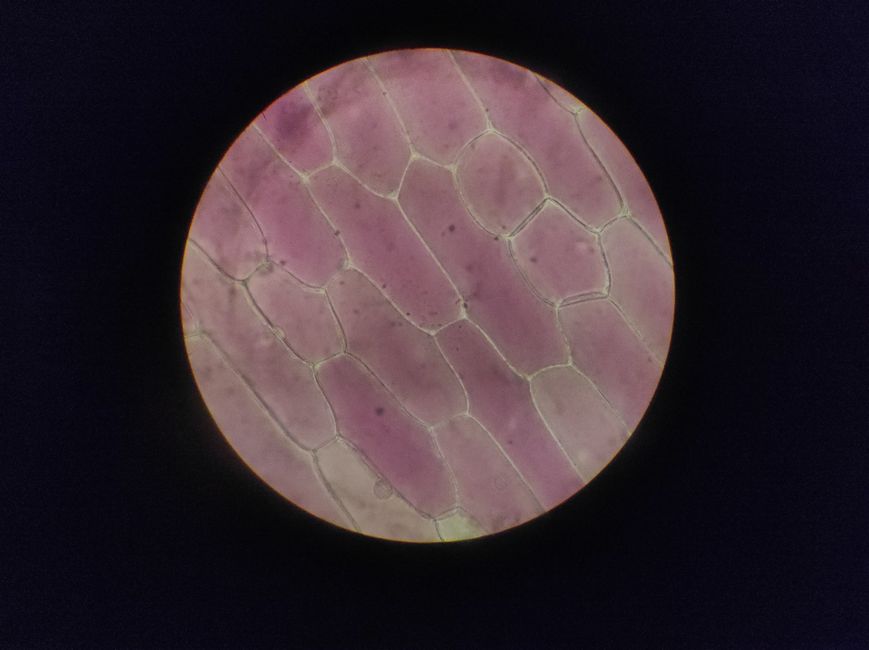
Matthias Schleiden was a German botanist who, in 1838, published a paper proposing that all plants are made of cells. This idea, along with Theodor Schwann’s parallel work on animals, formed the foundation of the cell theory. Schleiden’s specific contribution was establishing the cell as the basic structural unit of plant life, a concept that changed how scientists understood all living organisms.
Who Was Matthias Schleiden?
Matthias Jakob Schleiden was born in Hamburg, Germany, in 1804. He originally studied law and practiced as a lawyer, but he found the profession unsatisfying. He switched to medicine and natural science, earning his doctorate in 1831. His interest in plant anatomy grew during this period, and he began using the newly improved compound microscope to study plant tissues in detail.
Schleiden was not a patient observer by nature. He was known for his sharp temper and direct criticism of other scientists. But he brought a fresh, systematic approach to botany. Instead of just describing plant structures, he asked a deeper question: what is the fundamental building block of a plant?
What Did Schleiden Discover About Plant Cells?
In 1838, Schleiden published his landmark paper titled “Contributions to Phytogenesis” in the journal Müller’s Archiv für Anatomie, Physiologie und wissenschaftliche Medicin. In this paper, he stated that all parts of a plant are composed of cells or their derivatives. He described the nucleus as a central structure within the cell and suggested it played a role in cell development.
Schleiden’s key contribution was recognizing that the cell is the basic unit of plant structure. Before his work, botanists described plant tissues in terms of fibers, tubes, and vessels. Schleiden reframed the entire field by showing that these structures were all made of cells. He also proposed that new cells formed from the nucleus, a process he called “free cell formation.” This specific part of his theory was later proven incorrect, but the core idea — that cells are the fundamental unit of plant life — held up.
How Did Schleiden’s Work Combine With Schwann’s?
Schleiden’s work did not happen in isolation. He shared his findings with Theodor Schwann, a German physiologist who was studying animal tissues. Schwann had observed similar cellular structures in animal tissues and recognized that Schleiden’s plant observations mirrored his own findings. In 1839, Schwann published his own work extending the cell theory to animals.
Together, Schleiden and Schwann proposed the two foundational principles of the cell theory: all living things are made of cells, and the cell is the basic unit of life. Schwann credited Schleiden’s plant research as a direct influence on his animal studies. The collaboration between the botanist and the physiologist created a unified theory that applied to both kingdoms of life.



What Was the “Free Cell Formation” Error?
Schleiden believed that new cells formed from the nucleus in a process he compared to crystal growth. He thought the nucleolus appeared first, then the nucleus formed around it, and finally the cell wall developed around the nucleus. This idea was called “free cell formation” because it suggested cells could form spontaneously from non-cellular material.
This part of Schleiden’s theory was wrong. In 1855, Rudolf Virchow famously summarized the correct view with the phrase “omnis cellula e cellula” — every cell comes from a cell. Cell division, not spontaneous formation, is how new cells arise. But this error does not erase Schleiden’s real contribution. His insistence that cells are the structural basis of all plant life was correct and remains a foundational principle of biology.
Why Does Schleiden’s Contribution Matter Today?
The modern cell theory has three main principles: all living organisms are made of cells, the cell is the basic unit of structure and function, and all cells come from pre-existing cells. Schleiden is credited with the first two principles as they apply to plants. His work helped establish cell biology as a distinct scientific field.
Schleiden also influenced how scientists study plants. He emphasized careful observation and systematic classification of plant structures. His methods helped move botany from a descriptive discipline to an experimental science. Many of the techniques he developed for preparing and staining plant specimens are still used in modified form in laboratories today.
It is worth noting that Schleiden’s legacy includes more than the cell theory. He wrote a popular textbook called “Elements of Scientific Botany” that was widely used in universities. He also advocated for the use of microscopy in botanical research at a time when many botanists relied only on naked-eye observation. His push for better instruments and methods accelerated the pace of discovery in plant science.
How Did Schleiden’s Work Influence Modern Plant Science?
Every time a scientist studies plant tissue under a microscope, they rely on the framework Schleiden established. When researchers investigate how plant cells divide, differentiate, or respond to stress, they build on the understanding that the cell is the fundamental unit of plant function. Plant biotechnology, genetic engineering, and agricultural science all depend on this cellular framework.
Schleiden’s contribution also shaped how we understand plant diseases. When plant pathologists identify a pathogen affecting crops, they study how it interacts with plant cells at the microscopic level. This approach traces directly back to the cellular perspective Schleiden introduced. His work also informed the development of plant tissue culture techniques, which are used to grow plants from single cells in laboratory conditions.
The cell theory itself has expanded since Schleiden’s time. Scientists now know that cells contain specialized organelles, that DNA carries genetic information, and that cells communicate with each other through complex signaling pathways. But the fundamental insight — that the cell is the basic unit of life — remains unchanged and unchallenged.
What Are Common Misconceptions About Schleiden’s Work?
One common misconception is that Schleiden discovered the cell. He did not. Robert Hooke observed and named cells in 1665 when he examined cork under a microscope. Antonie van Leeuwenhoek observed living cells in the 1670s. Schleiden’s contribution was not the discovery of cells but the recognition that cells are the universal structural unit of plants.
Another misconception is that Schleiden worked alone. The cell theory is often attributed to “Schleiden and Schwann,” and for good reason. They corresponded regularly and shared their findings. Schwann explicitly acknowledged that Schleiden’s plant research helped him recognize the significance of his own observations on animal tissues. The theory was a collaborative achievement, even though each scientist worked primarily in his own field.
Some sources also incorrectly state that Schleiden proposed the idea that all cells come from pre-existing cells. He did not. He proposed the opposite — that cells form spontaneously. It was Virchow who corrected this error years later. Understanding this distinction matters because it shows how science advances through both correct insights and the correction of errors.
How Does the Cell Theory Apply to Both Plants and Animals?
Schleiden studied plants. Schwann studied animals. Together, their work showed that the same fundamental principle applies to both. Plant cells have cell walls, chloroplasts, and large vacuoles. Animal cells do not. But both are enclosed by a cell membrane, both contain genetic material, and both carry out the basic processes of life.
This unity is remarkable. A leaf cell and a muscle cell look very different under a microscope. They perform very different functions. But they share the same basic architecture and the same fundamental nature. Schleiden’s contribution was recognizing this unity in the plant kingdom. Schwann extended it to the animal kingdom. Together, they showed that life on Earth shares a common cellular foundation.
Frequently Asked Questions
What was Matthias Schleiden’s main contribution to the cell theory?
Schleiden established that all plants are composed of cells and that the cell is the basic structural unit of plant life. His 1838 paper on plant cell structure provided the botanical foundation for the cell theory.
Did Schleiden work with Theodor Schwann?
Yes, Schleiden shared his plant cell findings with Schwann, who recognized the same pattern in animal tissues. Schwann published his extension of the theory to animals in 1839, and the two are jointly credited with the cell theory.
Was Schleiden’s cell theory completely correct?
No. His idea that new cells form spontaneously from the nucleus was later proven wrong by Rudolf Virchow, who showed that all cells come from pre-existing cells. The core principle about cells being the basic unit of plant structure was correct.
