
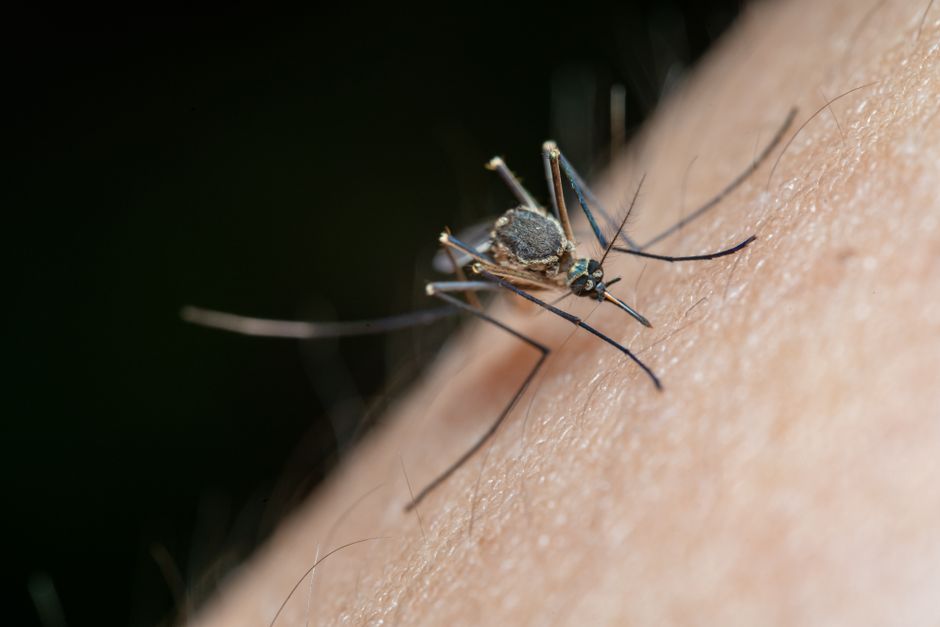
Dengue is spread only through the bite of an infected Aedes mosquito, most often Aedes aegypti. The mosquito picks up the virus when it bites a person who already has dengue, and about a week later that mosquito can pass the virus to the next person it bites. You stop dengue by stopping mosquito bites and removing the standing water where these mosquitoes breed.
How Dengue Transmission Works And How To Stop It
Dengue does not spread directly from person to person. You cannot catch it from coughing, touching, or sharing food with someone who has it. The only route is a mosquito bite.
The cycle works like this. A female Aedes mosquito bites someone who has dengue virus in their blood. The virus travels into the mosquito’s gut and infects its tissues. Over the next 4 to 10 days, the virus multiplies inside the mosquito. Once the virus reaches the mosquito’s salivary glands, that mosquito is infectious for the rest of its life.
When that mosquito bites a healthy person, it injects saliva along with the virus. The virus enters the person’s bloodstream and begins infecting white blood cells. Symptoms usually appear 4 to 10 days after that bite.
An infected person can pass the virus to new mosquitoes from the day before symptoms start until about day 7 of illness. This is why dengue spreads so efficiently in households and neighborhoods. One sick person can infect many mosquitoes, and each of those mosquitoes can infect many people.
Stopping dengue means breaking this cycle at two points: preventing mosquitoes from biting infected people and eliminating mosquito breeding sites so new mosquitoes never emerge.
Which Mosquitoes Spread Dengue?
Not all mosquitoes carry dengue. The primary vectors are Aedes aegypti and, to a lesser extent, Aedes albopictus. Both species are daytime biters with strong preferences for human environments.
Aedes aegypti is especially well adapted to living alongside humans. It breeds in artificial containers — flower pots, buckets, discarded tires, pet bowls, and anything that holds rainwater. It prefers to bite indoors and often feeds multiple times before laying eggs. This behavior makes it a highly effective transmitter.
These mosquitoes do not travel far. Most stay within 100 to 200 meters of where they hatched. That means dengue outbreaks are intensely local. If you have dengue in your house, the mosquitoes that spread it likely bred within your yard or your neighbor’s yard.
One important detail: Aedes mosquitoes lay eggs that can survive drying out. Eggs can remain viable for months and hatch when water returns. This is why a single neglected container can seed outbreaks long after it was last filled.
What Are The Symptoms Of Dengue?
Many dengue infections produce no symptoms at all. Estimates suggest that roughly half to three-quarters of infections are asymptomatic or very mild. People who do develop symptoms typically get them 4 to 10 days after the mosquito bite.
Classic dengue starts with a sudden high fever, often reaching 104°F or higher. Along with the fever come severe headache, pain behind the eyes, muscle and joint pain, nausea, and a rash. The joint pain is often intense, which is why dengue is sometimes called “breakbone fever.” Symptoms usually last 2 to 7 days.
The danger period comes after the fever drops, usually around day 3 to 7 of illness. Some patients develop plasma leakage — fluid seeping out of blood vessels. This is severe dengue, previously called dengue hemorrhagic fever. Warning signs include severe abdominal pain, persistent vomiting, bleeding gums, blood in vomit, rapid breathing, and extreme fatigue.
Severe dengue is a medical emergency. If you or someone you know has dengue and develops any of these warning signs after the fever breaks, seek hospital care immediately. With proper supportive care, the death rate from severe dengue is low. Without it, severe dengue can be fatal.
How Do You Prevent Mosquito Bites?
Because there is no widely available antiviral treatment for dengue, prevention is the entire strategy. Bite prevention is your first line of defense.
Use an EPA-registered insect repellent. Products containing DEET, picaridin, or oil of lemon eucalyptus are proven effective against Aedes mosquitoes. Apply repellent to exposed skin during daylight hours, especially in the early morning and late afternoon when these mosquitoes feed most actively.
Wear clothing that covers your arms and legs when you are outdoors in dengue-endemic areas. Treating clothing with permethrin adds another layer of protection. Permethrin is an insecticide that repels and kills mosquitoes on contact. It should be applied to fabric, not skin.
Use air conditioning and window screens when available. Aedes aegypti prefers to bite indoors, so physical barriers matter. Sleep under a mosquito net if you are in a room without screens or air conditioning.
If someone in your household has dengue, take extra precautions. That person should use repellent and stay under a mosquito net during the first week of illness. This prevents them from infecting local mosquitoes and starting a new transmission cycle.
How Do You Eliminate Mosquito Breeding Sites?
Bite prevention protects you personally. Eliminating breeding sites protects your entire neighborhood. This is the most effective community-level strategy we have.
Walk your property at least once a week and look for anything that can hold water. Common breeding sites include:
- Flower pot saucers and plant trays
- Pet water bowls
- Buckets, barrels, and trash can lids
- Discarded tires
- Clogged gutters
- Bird baths and ornamental ponds
- Unused swimming pools or pool covers collecting rainwater
- Bottles, cans, and plastic packaging
Empty and scrub these containers weekly. Scrubbing matters because Aedes eggs stick to container walls. Simply dumping the water leaves eggs behind that can hatch when the container refills.
For containers you cannot empty — like rain barrels or large plant saucers — cover them tightly or add a larvicide. Products containing Bacillus thuringiensis israelensis (BTI) kill mosquito larvae without harming people or pets. These are available as dunks or granules at most hardware stores.
Community efforts multiply the effect. If every household on a street eliminates breeding sites, the local mosquito population drops dramatically. This is why dengue control campaigns focus on neighborhood clean-up days and door-to-door inspections.
Is There A Dengue Vaccine?
A dengue vaccine exists, but it is not for everyone. The vaccine, known as Dengvaxia, is recommended only for people who have had a previous dengue infection confirmed by laboratory testing.
The reason involves a phenomenon called antibody-dependent enhancement. If you get dengue a second time with a different serotype, your immune response can make the illness worse. The vaccine appears to mimic this risk in people who have never had dengue. For that group, the vaccine may increase the chance of severe disease during a later natural infection.
Because of this, the vaccine is not recommended for travelers who have never had dengue. It is used in some endemic countries for people with confirmed prior infection. Another vaccine, Qdenga, has been approved in several countries and has broader indications, but its long-term safety data is still accumulating.
If you are considering the vaccine, talk to a travel medicine specialist or infectious disease doctor. They can advise whether testing for prior dengue exposure is appropriate and whether vaccination makes sense for your situation.
What Should You Do If You Think You Have Dengue?
See a doctor. A blood test can confirm dengue, usually by detecting the virus or antibodies. Early diagnosis helps doctors monitor for complications.
There is no specific antiviral drug for dengue. Treatment is supportive: rest, fluids, and acetaminophen for fever and pain. Do not take ibuprofen, naproxen, or aspirin. These are NSAIDs, and they increase bleeding risk — a particular danger in dengue because the virus already affects blood clotting.
Stay well hydrated. Dengue can cause fluid loss through fever, vomiting, and reduced intake. Oral rehydration solutions are preferable to plain water because they replace electrolytes.
Monitor for warning signs of severe dengue, especially after the fever drops. If you develop severe abdominal pain, persistent vomiting, bleeding, or unusual drowsiness, go to an emergency room immediately. Do not wait to see if it passes.
Does Dengue Spread In The United States?
Yes, but the risk is localized. Dengue is endemic in Puerto Rico, the U.S. Virgin Islands, and American Samoa. Outbreaks have occurred in Florida, Texas, Hawaii, and Arizona in recent years.
Climate change and the spread of Aedes aegypti and Aedes albopictus are expanding the mosquito’s range northward. The mosquitoes that transmit dengue now live in much of the southeastern United States and parts of the Southwest. Local transmission requires both the mosquito and an infected person, so outbreaks typically begin when a traveler returns from an endemic area with the virus.
Most dengue cases in the U.S. are travel-associated. But local outbreaks do happen, and they are becoming more frequent. The CDC tracks dengue activity, and state health departments issue alerts when local transmission is detected.
If you live in an area where these mosquitoes are present, the same prevention rules apply: use repellent, eliminate standing water, and seek care promptly if you develop fever after travel to a dengue-endemic area.
Frequently Asked Questions
Can you get dengue twice?
Yes. There are four dengue virus serotypes, and infection with one does not protect against the others. A second infection with a different serotype carries a higher risk of severe disease.
How long after a mosquito bite do dengue symptoms appear?
Symptoms typically appear 4 to 10 days after the bite of an infected mosquito. The incubation period is rarely longer than two weeks.
Is dengue contagious from person to person?
No. Dengue spreads only through mosquito bites. An infected person can transmit the virus to mosquitoes, but not directly to other people.
What time of day do dengue mosquitoes bite?
Aedes mosquitoes bite primarily during daylight hours, with peak activity in the early morning and late afternoon. They can also bite indoors and at night in well-lit rooms.
