
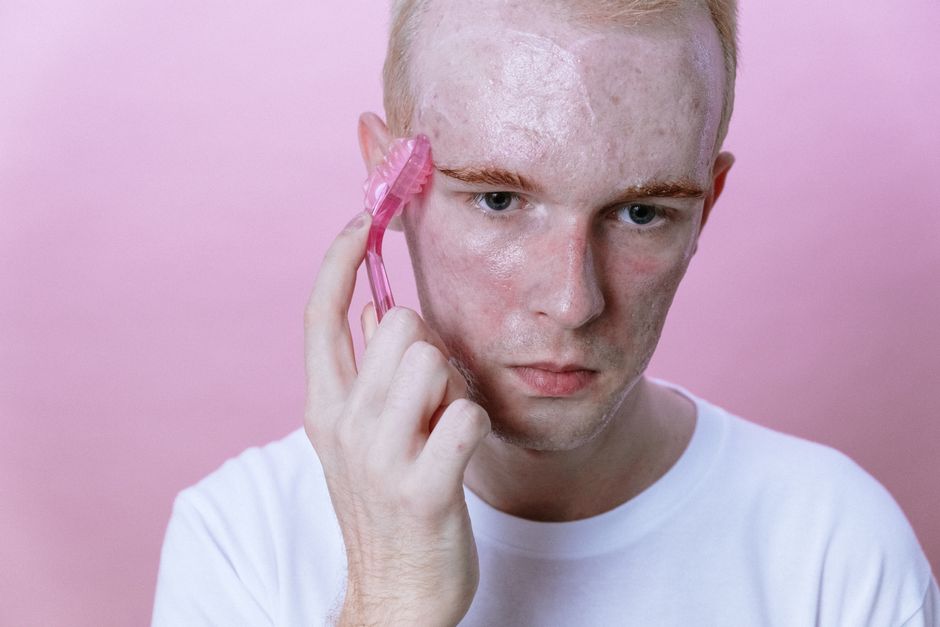
Acne scars form when the skin’s deeper layers are damaged during the healing process. Microneedling treats these scars by creating controlled micro-injuries that trigger the skin to produce new collagen. The depth of the needle determines whether that collagen is rebuilt where the scar actually sits. For most acne scars, the effective treatment zone is between 0.5 mm and 2.5 mm. Shallow rolling scars respond to depths around 0.5 to 1.0 mm, while deeper boxcar and icepick scars typically require 1.5 to 2.5 mm to reach the base of the scar tissue.
Why Depth Matters for Acne Scars
Your skin has distinct layers, and each layer responds differently to injury. The epidermis is the thin outer layer. The dermis sits below it and contains the collagen and elastin that give skin its structure. Acne scarring damages the dermis. If a needle only reaches the epidermis, the skin produces surface cells but little new collagen where the scar exists.
Collagen remodeling happens in the dermis. When needles penetrate to this layer, the body interprets the micro-injuries as damage and sends fibroblasts to produce fresh collagen. That new collagen fills in the depressed scar from below. The depth must match the scar’s location. Treating too shallowly produces little visible change. Treating too deeply increases pain, bleeding, and the risk of scarring or hyperpigmentation.
How Deep Should Microneedling Go For Acne Scars?
The answer depends on the scar type and the device being used. Dermatologists classify acne scars into three main categories: icepick, boxcar, and rolling scars. Each sits at a different depth in the skin.
Icepick scars are narrow, deep pits that extend into the lower dermis. They often require depths of 2.0 to 2.5 mm. Some clinicians use even deeper settings, but the risk of complications rises significantly beyond 2.5 mm.
Boxcar scars are wider depressions with sharp edges. They sit at medium depth, usually 1.0 to 1.5 mm. The needle must reach the base of the depression to stimulate collagen where the tissue is missing.
Rolling scars have smooth, sloping edges and sit relatively shallow. Depths of 0.5 to 1.0 mm are often sufficient. These scars also respond well to subcision, a separate procedure that breaks up the fibrous bands tethering the scar down.
Professional devices allow the clinician to adjust needle depth in 0.25 mm increments. At-home devices are almost always limited to 0.25 to 0.5 mm. That is too shallow to meaningfully treat acne scars. At-home rollers can improve skin texture and fine lines, but they do not penetrate deeply enough to remodel scar tissue.
Device Types and Their Depth Limits
Two main types of microneedling devices are used in clinical settings: derma rollers and motorized pens. They differ in how they deliver the needles and how deep they can safely go.
Derma rollers have a cylindrical head covered in fine needles. The user rolls it across the skin. The depth is fixed by the needle length, which typically ranges from 0.5 mm to 2.0 mm. Because the needles enter at an angle, the actual penetration can be slightly less than the needle length. Rolling also creates a dragging motion that can cause more tissue trauma.
Motorized pens are the standard in dermatology offices. They use a stamping motion, with needles moving up and down rapidly. The depth is adjustable, usually from 0.25 mm to 3.0 mm. The perpendicular entry allows for more precise depth control. Most dermatologists prefer pens for treating acne scars because the depth can be tailored to each scar type in different areas of the face.
Radiofrequency microneedling is a variation that combines needles with heat energy. The needles penetrate to a set depth, then deliver radiofrequency energy to the dermis. This heats the tissue and stimulates collagen production while the needle itself causes the mechanical injury. Studies suggest this may be more effective for deeper scars, but it also carries a higher risk of burns and pigmentation changes, especially in darker skin tones.




What Depth Is Too Deep?
Going beyond 3.0 mm on the face is rarely recommended. The facial dermis is thinner than the dermis on most of the body. On the cheeks, the dermis measures roughly 1.0 to 2.0 mm thick. On the forehead, it is even thinner. Needles that penetrate past the dermis reach the subcutaneous fat layer. This does not improve scar remodeling and increases the risk of bleeding, infection, and nerve damage.
Certain facial areas require extra caution. The skin around the eyes is the thinnest on the face, often less than 0.5 mm thick. Many clinicians avoid microneedling directly on the eyelids entirely. The area around the mouth and jawline also has thinner skin and more sensitive structures.
If you have darker skin, the risk of post-inflammatory hyperpigmentation increases with deeper treatments. The melanocytes in darker skin are more reactive to injury. A skilled clinician will often start at a conservative depth and adjust based on how your skin responds.
How Many Sessions Are Needed
One session will not eliminate acne scars. Collagen remodeling takes time. The skin produces new collagen over several weeks after each treatment, but the full effect becomes visible only after multiple sessions.
Most dermatologists recommend three to six sessions spaced four to six weeks apart. The spacing matters because it gives the skin time to rebuild collagen between treatments. Treating too frequently does not speed up results; it simply increases irritation and the risk of complications.
The visible improvement after a full course of treatment varies. Some people see a 30 to 50 percent reduction in scar depth and visibility. Others see less. Microneedling does not completely erase scars. It softens their appearance by rebuilding collagen in the depressed areas. Deep scars may still be visible after treatment, though less pronounced.
Preparing for Treatment and What to Expect
Your skin should be healthy before treatment. Active acne breakouts, open wounds, or skin infections should be resolved first. Many clinicians recommend stopping topical retinoids and exfoliating acids five to seven days before the procedure. These products thin the skin and increase the risk of excessive irritation.
During the procedure, a topical numbing cream is applied for 30 to 60 minutes. At depths above 1.5 mm, most patients feel some discomfort, but the numbing keeps it manageable. The procedure itself takes 15 to 30 minutes depending on the treatment area.
Immediately after treatment, the skin looks red and feels like a sunburn. This usually settles within 24 to 48 hours. At deeper depths, pinpoint bleeding may occur. This is normal and indicates the needles reached the dermis. Crusting can develop in the following days but typically resolves within a week.
Sun protection is critical after treatment. Newly formed skin is vulnerable to UV damage, which can cause hyperpigmentation. Use a broad-spectrum sunscreen with SPF 30 or higher for at least two weeks after each session.
Who Should Avoid Deep Microneedling
Not everyone is a good candidate for deep microneedling. People with active acne infections, keloid scarring tendencies, or a history of poor wound healing should avoid the procedure. Pregnant women should also avoid it, as no safety data exists for this population.
People taking blood thinners, including aspirin and certain supplements like fish oil, may have increased bleeding during treatment. Your clinician should know your full medication list before the procedure.
If you have a history of cold sores, deeper treatments can trigger an outbreak. Antiviral medication may be prescribed before treatment to prevent this.
Frequently Asked Questions
Can at-home microneedling treat acne scars?
No, at-home devices are too shallow to reach the dermis where acne scars form. They typically penetrate only 0.25 to 0.5 mm, which is not enough to stimulate meaningful collagen remodeling in scar tissue.
Is deeper microneedling always more effective?
No, depth must match the scar type and location. Going deeper than necessary increases pain, bleeding, and the risk of complications without improving results.
How long after microneedling will I see results for acne scars?
Most people notice improvement after three to four weeks, when new collagen begins to form. Full results appear gradually over several months as collagen continues to rebuild.
Does microneedling hurt at depths needed for acne scars?
Topical numbing cream is used before treatment, which significantly reduces discomfort. At depths above 1.5 mm, you may feel a prickling sensation, but most patients tolerate the procedure well.
