
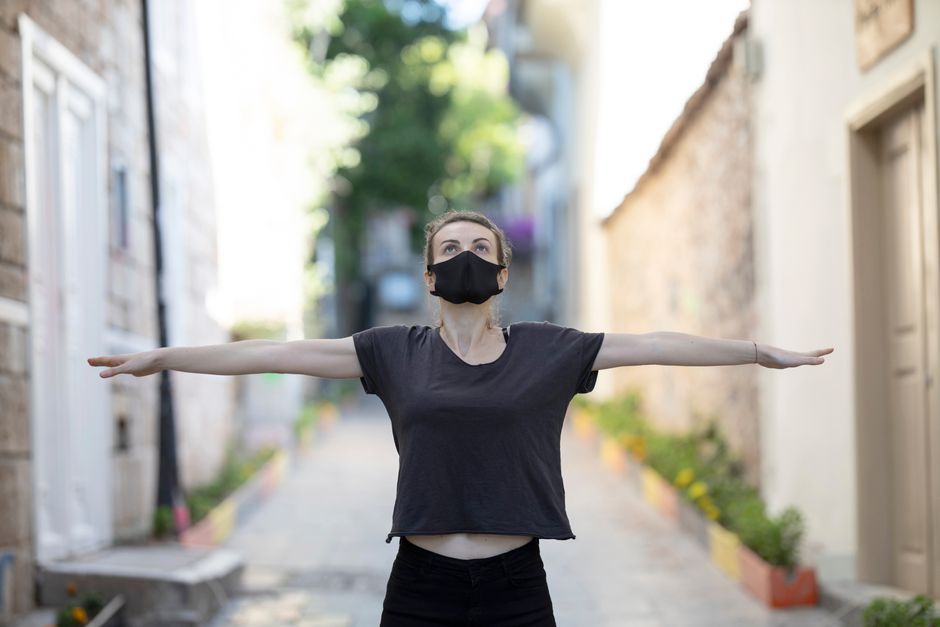
COVID-19 spreads mainly through the air when an infected person breathes, talks, coughs, or sneezes. Tiny droplets and smaller particles called aerosols carry the virus out of the nose and mouth. You can slow transmission by improving indoor ventilation, wearing a well-fitting mask in crowded spaces, staying home when sick, and getting the updated vaccine when you are eligible.
How Does COVID-19 Spread From Person to Person?
The virus that causes COVID-19 travels in respiratory droplets and aerosols. Droplets are larger and fall to the ground quickly. Aerosols are much smaller and can stay suspended in the air for minutes to hours, especially indoors.
When someone breathes, talks, sings, or exercises, they release these particles. The closer you are to an infected person, the higher your risk. The longer you are near them, the higher your risk too. This is why crowded indoor spaces are the highest-risk settings.
Transmission happens most often when you inhale these particles. It can also occur if the virus lands on your eyes, nose, or mouth directly — for example, if someone coughs right in your face. Touching a contaminated surface and then touching your face is possible, but research indicates this is not a major route of spread compared to breathing in the virus.
How Long Can the Virus Stay in the Air?
Studies have shown that aerosols containing the virus can remain suspended in indoor air for extended periods. The exact time depends on airflow, humidity, and ventilation. In a poorly ventilated room, infectious particles can accumulate and linger long after the infected person has left.
Outdoors, the risk is much lower. Moving air disperses the particles quickly, which is why outdoor gatherings are far safer than indoor ones. That does not mean outdoor transmission is impossible — close, prolonged, face-to-face contact outdoors can still spread the virus.
This airborne nature is why the emphasis on ventilation matters. Opening windows, using air purifiers with HEPA filters, and running exhaust fans all reduce the concentration of virus particles in the air.
What Are the Most Common Ways People Get Infected?
The most common scenario is spending time indoors with someone who has the virus. Household transmission is very common. So is transmission in workplaces, schools, and social gatherings where people are close together for long periods.
Specific activities that increase risk:
- Indoor dining without good ventilation
- Gym classes in small rooms
- Riding public transportation during rush hour
- Attending large indoor concerts or events
- Visiting crowded bars or nightclubs
People who have no symptoms can still spread the virus. In fact, a significant portion of transmission comes from people who do not know they are infected. This is why prevention measures matter even when everyone feels fine.


How Covid 19 Spreads And How To Slow Transmission?
The virus spreads through the air, so the most effective ways to slow transmission target the air you breathe. Ventilation is the single most underused tool. Open windows on opposite sides of a room to create cross-ventilation. Use portable HEPA air cleaners in rooms where people gather. Run bathroom and kitchen exhaust fans.
Masks work when worn consistently and correctly. A well-fitting N95 or KN95 respirator filters out a high percentage of particles. Cloth masks offer less protection but are better than nothing. The key is fit — gaps around the nose or sides let unfiltered air in and out.
Distance matters. Staying at least six feet away from people outside your household reduces exposure to concentrated virus particles. This is not a guarantee of safety, but it lowers the dose of virus you might inhale. Lower doses are associated with milder illness in some research, though this is not fully settled.
Hand hygiene remains important, especially after touching shared surfaces. But do not let handwashing give you a false sense of security. The dominant route is airborne, not surface contact.
Does Vaccination Still Matter for Slowing Spread?
Yes. Current vaccines are very good at preventing severe illness, hospitalization, and death. Their ability to prevent infection entirely has decreased with newer variants, but vaccinated people who do get infected tend to be contagious for a shorter period and may produce less virus.
Boosters matter because protection wanes over time. Staying up to date with recommended doses restores your immune response. This is especially important for older adults, pregnant women, and people with chronic conditions.
Vaccination also protects people around you. If you are infected but have some immunity, you are less likely to pass the virus to a vulnerable person. This is not absolute protection, but it reduces the odds.
What Should You Do If You Have Been Exposed?
If you learn you were in close contact with someone who tested positive, start by wearing a high-quality mask around others. Test as soon as you can, and test again a few days later if the first test is negative. The virus can take several days to reach detectable levels.
Watch for symptoms: fever, cough, sore throat, runny nose, fatigue, body aches, and loss of taste or smell. Some people also experience headache, nausea, or diarrhea. If symptoms develop, test again.
If you test positive, isolate away from others in your household if possible. Sleep in a separate room and use a separate bathroom if you have one. Open windows in shared spaces and wear a mask when you must be around others. Continue isolating until your symptoms are improving and you have been fever-free for 24 hours without medication.
Do Air Purifiers and HVAC Upgrades Actually Help?
Yes, when used properly. Portable air cleaners with HEPA filters remove virus-sized particles from the air. They are most effective when sized correctly for the room and placed where air circulates well. A small unit in a large open space will not do much.
Upgrading HVAC filters to MERV-13 or higher helps in buildings with central air systems. Increasing the amount of outdoor air brought into the building also dilutes virus particles. These measures are proven to reduce airborne pathogen concentrations.
Ultraviolet germicidal irradiation, or UVGI, is another tool used in some hospitals and public buildings. It inactivates viruses in the air. Some portable units are now available for home use, but evidence on their real-world effectiveness in homes is more limited.
How Long Does COVID-19 Stay on Surfaces?
Early in the pandemic, researchers found the virus could survive on surfaces for hours to days depending on the material. On plastic and stainless steel, it lasted longer. On cardboard and fabric, it lasted less time.
This created a lot of anxiety about groceries and packages. But later research made clear that surface transmission is rare compared to airborne spread. The amount of live virus left on a surface declines quickly, and you would need to touch the surface and then your eyes, nose, or mouth to get infected.
Regular handwashing and cleaning high-touch surfaces like doorknobs and light switches are still reasonable habits. But if you are choosing where to spend your prevention energy, improving indoor air is a far better investment than wiping down every package.
Are There Seasons or Settings Where Spread Is Worse?
Winter is the highest-risk season. People spend more time indoors, and colder, drier air may help the virus survive longer in particles. Low humidity also dries out the mucous membranes in your nose and throat, which may make you more susceptible.
Summer reduces risk outdoors but not indoors. Air conditioning recirculates indoor air without bringing in fresh air, so crowded indoor spaces remain risky even in warm weather. If you are indoors with people outside your household, ventilation still matters regardless of the season.
Frequently Asked Questions
Can I get COVID-19 from someone who has no symptoms?
Yes. People who are infected but asymptomatic can still release virus particles and spread the virus to others. This is why prevention measures apply to everyone, not just people who feel sick.
How long after exposure do symptoms appear?
Symptoms typically appear 2 to 14 days after exposure, with most people developing symptoms around day 4 to 6. Testing too early can give a false negative, so repeat testing a few days after exposure is recommended.
Is it safe to be outdoors without a mask?
Outdoor transmission is much less common than indoor transmission because moving air disperses virus particles. In crowded outdoor settings where you are close to others for a long time, wearing a mask still reduces risk.
Do COVID-19 vaccines stop you from spreading the virus?
Vaccines reduce the chance of infection and shorten the contagious period, but they do not completely prevent transmission. A vaccinated person who gets infected can still spread the virus to others.
