
Collagen is the most abundant protein in your body. It makes up roughly a third of your total protein mass. Collagen synthesis is the process where cells build this protein from amino acids, assemble it into a triple-helix structure, and then package those helices into long, strong fibrils that give skin, bone, tendon, and cartilage their strength. The work happens mainly inside specialized cells called fibroblasts and their relatives, and it takes place in a sequence of steps that must occur in the right order for the final fiber to hold together.
How Collagen Synthesis Works From Cells To Fibrils?
Collagen synthesis starts inside the cell, in a compartment called the endoplasmic reticulum, where three protein chains are woven into a helix. Those helices then travel out of the cell and assemble into larger fibrils in the space between cells. Each step depends on the one before it, and a failure at any stage can produce weak or faulty collagen.
The protein begins as a single strand called a prepropeptide. As it enters the endoplasmic reticulum, enzymes trim off a short end piece, leaving what is called a pro-alpha chain. Three of these chains twist around each other into a rope-like triple helix. That triple helix is the basic building block of every collagen type.
From there, the helix moves through the cell’s packaging system and is released outside the cell. Once outside, enzymes clip off the loose ends that were protecting the helix. The trimmed molecules then line up side by side and lock together into fibrils. Fibrils bundle into fibers, and fibers give tissue its pulling strength.
A detail that surprises many people: the triple helix is not fully stable when it forms. It needs chemical bonds, called crosslinks, to hold it together. Those crosslinks depend on specific nutrients, which is one reason diet affects collagen quality.
What Happens Inside the Cell During Collagen Synthesis?
The cell does the heavy lifting first. Fibroblasts in skin and tendon, osteoblasts in bone, and chondrocytes in cartilage all follow the same basic script. They read the collagen gene, build the protein chain, and prepare it for export.
One step stands out. Before the triple helix can form, certain amino acids on the chain must be modified. The most important is the addition of a hydroxyl group to proline and lysine. This step requires vitamin C as a cofactor. Without enough vitamin C, the helix cannot form properly, which is the underlying problem in scurvy. The chains stay loose and get degraded instead of becoming stable collagen.
This is why vitamin C deficiency shows up as bleeding gums and poor wound healing. The body is still making collagen chains, but it cannot finish them. The link between vitamin C and collagen is one of the clearest nutrient-protein connections in human biology.
Two other nutrients matter here. Iron is needed for the same proline and lysine modification steps. Copper is required later, during crosslinking outside the cell. A diet short on any of these can affect collagen quality even when protein intake is adequate.
How Does the Triple Helix Form and Leave the Cell?
Three pro-alpha chains align and wind together into a right-handed triple helix. The winding is not random. The chains have a repeating sequence of amino acids, mostly glycine in every third position, that allows them to pack tightly. Glycine is the smallest amino acid, and that small size is what lets the three chains sit close together.
This is why glycine appears so often in collagen. It is not a marketing detail. It is a structural requirement. Change the glycine in a critical position and the helix cannot assemble correctly. Some inherited connective tissue disorders, including certain forms of osteogenesis imperfecta, result from exactly this kind of change in the collagen gene.
Once assembled, the triple helix travels through the Golgi apparatus and is packaged into vesicles. Those vesicles fuse with the cell membrane and release the helix into the extracellular space. The molecule is still slightly larger than its final form, with short non-helical ends called telopeptides. Those ends are removed outside the cell by enzymes.
How Do Collagen Molecules Become Fibrils?
Outside the cell, the trimmed collagen molecules line up in a staggered pattern. Each molecule overlaps its neighbor, and the overlap creates a repeating banded appearance that is visible under an electron microscope. This staggered arrangement is what makes collagen fibrils so strong.
Enzymes then create crosslinks between adjacent molecules. These crosslinks are covalent bonds that lock the molecules together. Without them, fibrils would slide apart under load. Copper-dependent enzymes called lysyl oxidases drive much of this crosslinking. That is why copper deficiency can weaken connective tissue.
Fibrils grow in diameter as more molecules join. The final thickness depends on the tissue. Tendon fibrils are large and strong to handle heavy pulling forces. Skin fibrils are smaller and organized in a mesh. Cartilage fibrils are arranged to trap water and resist compression.
Fibrils then bundle into fibers. In tendon, fibers align in parallel bundles. In skin, they form a woven network. This organization at the fiber level is what gives each tissue its specific mechanical behavior. The same building block produces very different materials depending on how it is arranged.
What Nutrients and Conditions Affect Collagen Synthesis?
Collagen production needs raw materials and helpers. Protein provides the amino acids. Vitamin C, iron, and copper act as cofactors for the enzymes that modify and crosslink the protein. Zinc supports wound healing and cell division, though its direct role in collagen synthesis is less specific.
Age changes the picture. Collagen production tends to decline with age, and existing collagen becomes more crosslinked and less flexible. This contributes to skin thinning and stiffer tendons. The decline is gradual and varies widely between people.
Hormones also influence synthesis. Estrogen supports collagen production in skin, which helps explain why skin changes accelerate after menopause. Some research suggests estrogen decline is linked to measurable drops in skin collagen, though the size of the effect varies across studies.
Lifestyle factors matter more than most supplements. Smoking damages collagen and increases breakdown. Ultraviolet light from the sun degrades collagen fibers in skin over time. Chronic high blood sugar can lead to abnormal crosslinking, which is part of why diabetes affects connective tissue.
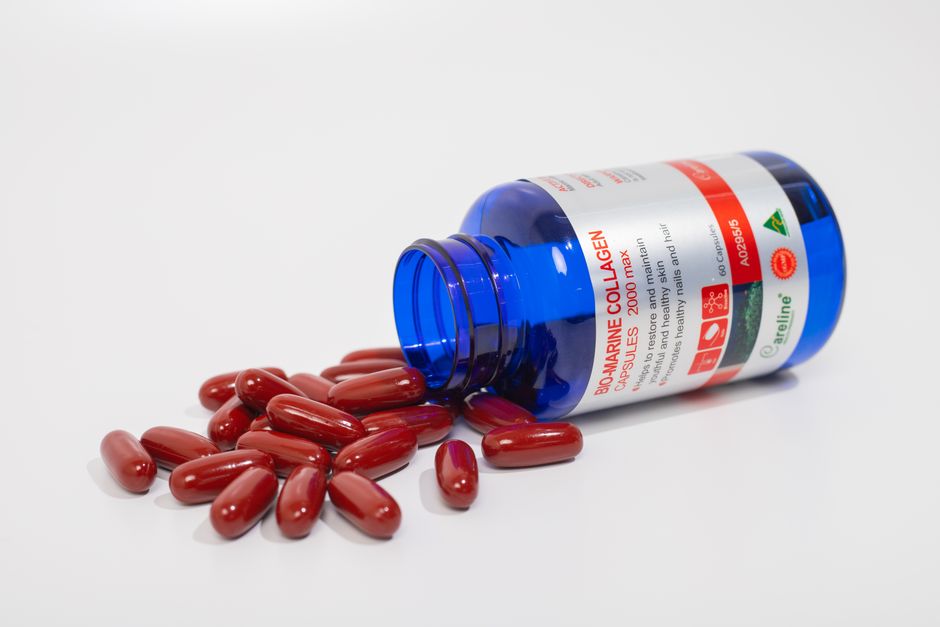
On supplements, the evidence is limited. Collagen peptides are widely sold, and some small trials suggest they may support skin hydration and elasticity. The results are not consistent, and no large long-term trials confirm meaningful changes in the body’s own collagen synthesis. Hydrolyzed collagen is broken into amino acids during digestion. It does not travel intact to your skin as collagen. The body uses those amino acids wherever it needs them.
What Can Go Wrong With Collagen Synthesis?
Problems can occur at any step. Genetic changes in collagen genes can produce weak or malformed collagen. These conditions include several types of osteogenesis imperfecta, some forms of Ehlers-Danlos syndrome, and certain cartilage disorders. The severity depends on which gene is affected and how the change alters the protein.
Nutrient deficiencies disrupt specific steps. Vitamin C deficiency blocks helix formation. Copper deficiency impairs crosslinking. These are well documented, though severe deficiencies are uncommon in people eating a varied diet.
Enzyme problems can also cause trouble. In some rare inherited conditions, the enzymes that modify collagen do not work properly, leading to connective tissue weakness even when the collagen gene itself is normal.
Acquired damage is more common than inherited disease. Sun exposure, smoking, and poor blood sugar control all degrade collagen over years. The effects build slowly and are not reversible by supplements. This is a case where prevention matters more than repair.
The body does continually break down and rebuild collagen. This turnover is part of normal tissue maintenance. It slows with age but does not stop. That ongoing process is why wound healing still works in older adults, just more slowly than in younger people.
Frequently Asked Questions
Where does collagen synthesis take place?
Most of it happens inside fibroblasts and related cells, starting in the endoplasmic reticulum where the triple helix forms. The final assembly into fibrils occurs outside the cell in the extracellular space.
What vitamin is required for collagen synthesis?
Vitamin C is required as a cofactor for the enzymes that modify proline and lysine, a step needed before the triple helix can form. Without it, collagen chains cannot stabilize and are degraded.
Does eating collagen increase collagen in your body?
Collagen is broken down into amino acids during digestion and does not travel intact to your skin or joints. Some small studies suggest collagen peptides may support skin hydration, but large long-term trials confirming increased collagen synthesis are lacking.
How long does it take for collagen to form in the body?
Collagen turnover varies by tissue, and no single timeline applies to all of it. Newly formed collagen requires crosslinking and remodeling over time before it reaches full strength, and this process differs between skin, bone, and tendon.
