
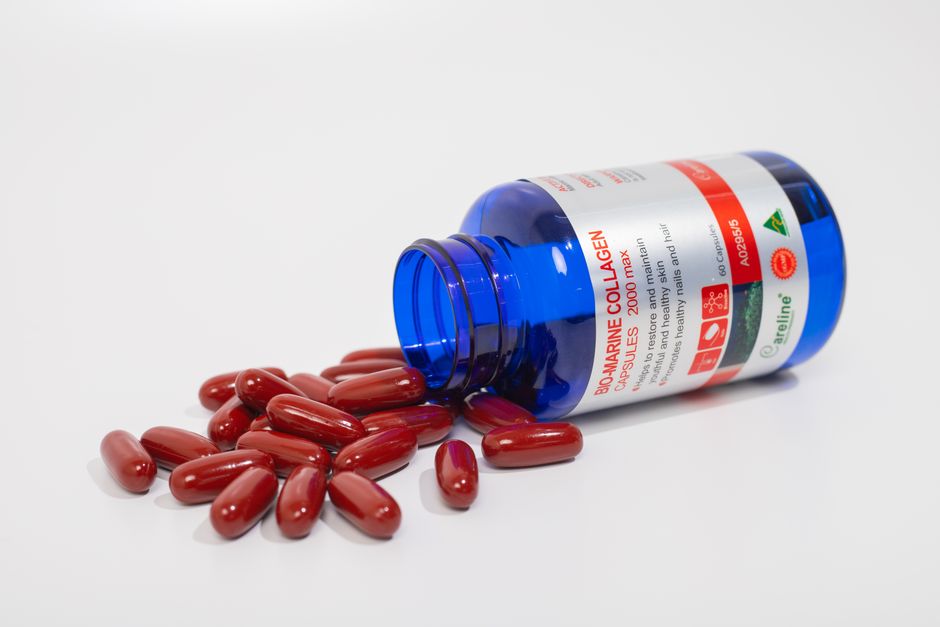
Collagen hydrolysate is collagen protein that has been broken into small fragments called peptides, usually through heat and enzyme treatment. Those peptides are small enough to survive digestion in part and appear in the bloodstream within hours of ingestion. Once there, they act less like building blocks and more like signals — they reach skin and joint tissue and prompt cells called fibroblasts and chondrocytes to adjust their own collagen production. That signaling role, not direct replacement of lost collagen, is the core of how collagen hydrolysate is thought to work.
What Is Collagen Hydrolysate and How Is It Different From Regular Collagen?
Collagen is the most abundant protein in the human body. It gives structure to skin, tendons, ligaments, bone, and cartilage. In its native form it is a large, tightly coiled molecule — roughly 300,000 daltons in molecular weight — which makes it difficult to absorb intact.
Hydrolysis changes that. The process uses heat, acid, or enzymes to cleave the protein into shorter chains. The result is collagen hydrolysate, also sold as collagen peptides. Most commercial products fall between 2,000 and 10,000 daltons, with some marketed as “micro” or “nano” peptides below that range.
This size difference matters. Smaller peptides are more water-soluble and more resistant to complete breakdown in the gut. Studies using labeled collagen peptides have detected them in human blood after oral intake, which confirms at least some absorption. That finding is well established. What those peptides do once absorbed is where the evidence gets more interesting and, in places, less certain.
Types I, II, and III — What the Labels Mean
Collagen comes in several types. Type I dominates skin, tendon, and bone. Type II is the main collagen in cartilage. Type III is found alongside type I in skin and blood vessels.
Most hydrolysate powders on the market are type I and III, derived from bovine hide or fish skin. Type II collagen products, often from chicken sternum, are usually sold as undenatured collagen — not hydrolyzed — because the intact form is thought to interact with the immune system differently. These are genuinely different products with different proposed mechanisms. Treating them as interchangeable is a common mistake.
How Does Collagen Hydrolysate Work for Skin?
Skin collagen declines with age. After roughly age 20, the body’s own collagen production trends downward, and existing collagen fibers become more fragmented. This shows up as thinner skin, reduced elasticity, and fine lines. Sun exposure accelerates the process substantially.
The signaling hypothesis works like this: absorbed collagen peptides reach the dermis, where fibroblasts — the cells that build collagen — take them up or detect them. In response, fibroblasts appear to increase production of new collagen and other matrix components like elastin and hyaluronic acid. Some research also suggests the peptides may stimulate fibroblast migration and support the skin’s antioxidant defenses.
This is a plausible and partially supported mechanism. It is not the same as saying the collagen you swallow becomes the collagen in your face. It does not. The peptides act as messengers, and the body does the building.
What Human Studies Show
Several randomized controlled trials have tested oral collagen peptides for skin. Results have generally shown modest improvements in skin elasticity and hydration, and some studies report reduced wrinkle depth, typically after 8 to 12 weeks of daily use.
The honest caveats matter here. Many trials are small. Some are industry-funded. Measurement methods vary, and short-term skin measurements can be influenced by hydration and other factors. The direction of the evidence is positive but the effect sizes are modest, and no collagen supplement has been shown to reverse significant skin aging.
One clarification worth making: collagen peptides are not a substitute for sun protection. Ultraviolet exposure degrades skin collagen faster than any supplement can plausibly offset. If skin aging is the concern, sunscreen does more than any powder.
How Does Collagen Hydrolysate Work for Joints?
Joint cartilage is built largely from type II collagen and proteoglycans, which together give cartilage its ability to absorb shock and resist compression. In osteoarthritis, this cartilage gradually breaks down, and the joint becomes painful and stiff.
When hydrolyzed collagen is ingested, peptides accumulate in cartilage tissue in animal studies. In humans, the proposed mechanism is that these peptides signal chondrocytes — the cartilage-building cells — and may also have a mild anti-inflammatory effect on joint tissue. Some researchers describe it as providing the raw amino acids glycine and proline, though the amounts delivered are small compared with dietary protein overall.
This is where the evidence requires more caution than the marketing usually allows. Trials of collagen peptides for knee osteoarthritis have reported reductions in joint pain scores, often measured on standard scales like the WOMAC. Several of these trials are small, and results across studies are not fully consistent. A 2019 review of the evidence concluded that collagen supplementation may reduce joint pain modestly, while noting the need for larger, better-controlled trials.
Collagen hydrolysate is not a disease-modifying treatment for osteoarthritis. It has not been shown to regrow cartilage or slow structural progression of the disease. Anyone presenting it that way is overstating the evidence.

How Much Collagen Hydrolysate Do You Need?
There is no official recommended daily intake for collagen hydrolysate. No regulatory body has established a reference value, because collagen is not an essential nutrient — the body makes its own, and dietary protein provides the amino acids it needs.
Doses studied in clinical trials have typically ranged from about 2.5 grams to 15 grams per day, with many skin and joint studies using around 10 grams daily. Those are the amounts that were tested, not official recommendations. The evidence does not clearly establish that higher doses work better, and no strong dose-response data exists.
For people who choose to use it, the practical points are straightforward: it is a protein source, so it contributes calories, and it should not crowd out complete protein from food. Collagen is an incomplete protein — it is low in tryptophan and does not contain all essential amino acids in adequate amounts on its own.
Are There Risks or Reasons to Avoid It?
For most healthy adults, collagen hydrolysate is generally well tolerated in the amounts studied. Reported side effects in trials are uncommon and typically mild, such as digestive discomfort or a feeling of fullness.
There are real considerations, though. Collagen peptides from fish, shellfish, or egg can trigger allergic reactions in people with those allergies. Anyone with a known allergy to the source material should avoid that product.
People with kidney disease should talk to a clinician before adding concentrated protein supplements, since protein intake may need to be managed. The same applies to anyone with a medical condition affecting protein metabolism.
Pregnant and breastfeeding women are often left out of supplement research entirely. No clinical guidelines currently exist for collagen hydrolysate use in pregnancy or breastfeeding, so there is no established safety data to point to for those groups.
Does Collagen Hydrolysate Actually Reach Skin and Joints?
This is the question that determines whether any of the mechanism talk holds up. The answer is: partially, and in a form that is not intact collagen.
Studies using labeled peptides have found that a small fraction of ingested collagen peptides appears in the blood as short peptide chains, and some of these accumulate in cartilage and skin tissue in animal models. The absorbed fraction is small — much of the collagen you eat is broken down into individual amino acids like any other protein.
So the honest picture is this: a modest amount of intact peptides gets through, and those peptides appear capable of influencing cell behavior. The body does not receive ready-made collagen. It receives signals and raw material, and it responds within its own limits.
What Else Affects Skin and Joint Collagen?
Collagen supplements operate against a backdrop of factors that influence collagen far more powerfully than any powder.
- Sun exposure — ultraviolet radiation breaks down skin collagen and is the single largest driver of visible skin aging.
- Smoking — reduces collagen synthesis and accelerates skin aging.
- Dietary protein — adequate total protein supports the body’s own collagen production.
- Vitamin C — required for collagen synthesis; deficiency impairs it.
- Physical activity — mechanical loading stimulates connective tissue maintenance in joints and tendons.
- Body weight — excess weight increases load on weight-bearing joints and is a recognized factor in knee osteoarthritis.
None of these are reasons to dismiss collagen hydrolysate. They are context. A supplement cannot compensate for smoking, unprotected sun exposure, or a diet low in protein.
Is Collagen Hydrolysate Worth Trying?
For skin, the evidence is modest but real: small trials suggest improvements in elasticity and hydration with daily use over weeks to months. For joints, the evidence is weaker and less consistent, with some trials showing pain reduction and others showing little difference from placebo.
Collagen hydrolysate is not a treatment for any disease. It is not a substitute for medical care for osteoarthritis or any skin condition. It is a protein supplement with a plausible mechanism and a body of small, mixed studies behind it.
If someone wants to try it, the reasonable approach is to treat it as an experiment with a defined timeframe — a few months — and judge whether they notice anything. If nothing changes, the evidence does not support continuing to spend money on it indefinitely.
Frequently Asked Questions
How long does collagen hydrolysate take to work for skin?
Most clinical trials that reported skin benefits measured changes after 8 to 12 weeks of daily use. Shorter periods have not been well studied, so there is no reliable evidence that effects appear sooner.
Does collagen hydrolysate rebuild cartilage in joints?
No. It has not been shown to regrow cartilage or slow the structural progression of osteoarthritis. Some trials report modest pain reduction, but the evidence is mixed and does not support a cartilage-rebuilding claim.
Can you take collagen hydrolysate every day?
Daily use is how it was tested in most trials, generally at doses between about 2.5 and 15 grams per day. There is no official recommended daily intake, and long-term safety data beyond a year is limited.
Is collagen hydrolysate safe during pregnancy?
No clinical guidelines currently exist for collagen hydrolysate use in pregnancy or breastfeeding, so there is no established safety data for these groups. Pregnant or breastfeeding women should ask a clinician before using it.
