
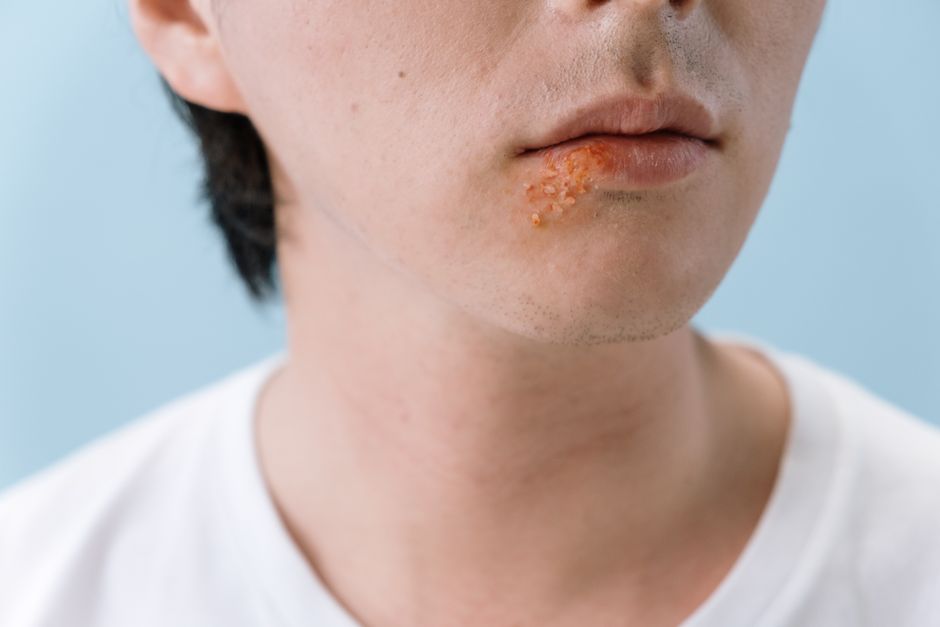
A cold sore starts long before you see it. The virus that causes them, herpes simplex virus type 1 (HSV-1), travels down a nerve and settles into a cluster of nerve cells near your spine, where it can stay quiet for months or years. When something wakes it up, it travels back along the same nerve to the skin and multiplies there. The blister you notice is the visible end of that journey, not the beginning.
Most people carry HSV-1 without knowing it. The World Health Organization estimates that billions of people worldwide are infected, and many never develop a sore at all. For those who do, the process follows a fairly predictable sequence from the first tingle to a healed patch of skin.
What Actually Causes a Cold Sore?
HSV-1 causes most cold sores. A closely related virus, HSV-2, causes most genital herpes, but it can also cause sores around the mouth through oral contact. Once either virus enters your body, it stays for life. There is no cure that removes it.
The virus does not live in your skin between outbreaks. After the initial infection, it retreats into the trigeminal ganglion, a bundle of nerve cells near the base of the skull. There it enters a dormant state called latency. During latency, the virus produces almost no new particles and causes no symptoms.
This is the part many people misunderstand. A cold sore is not a new infection each time. It is the same virus reactivating from the same hiding place. That is why the sore tends to appear in roughly the same spot on your lip or around your mouth, following the path of the nerve it traveled.
How Cold Sores Form From Virus To Visible Blister?
Reactivation begins in the nerve cell. A trigger, such as physical stress, illness, or ultraviolet light, causes the dormant virus to switch back on. New viral particles are made inside the nerve cell and travel along the nerve fiber toward the skin.
When the virus reaches the skin surface, it enters the epithelial cells that line your lips and mouth. It hijacks those cells to make copies of itself. The infected cells eventually break down, and your immune system responds with inflammation. That combination of cell damage and immune activity produces the familiar sequence of a cold sore.
The timing is consistent. From the first warning sign to a fully formed blister usually takes about one to two days. The blister itself is a small pocket of fluid that contains clear serum and millions of viral particles. That fluid is highly infectious.
One detail worth knowing: the tingling or burning that comes before the blister is not imaginary. It happens because the virus is moving along a sensory nerve, and the nerve signals irritation before any visible damage appears. This early phase is called the prodrome, and it is when the virus is already shedding and can be passed to others.
What Are the Stages of a Cold Sore?
A cold sore moves through predictable stages. Not every person notices every stage, and the first outbreak is usually the most severe. Later ones tend to be milder and heal faster.
- Tingling and itching. A burning or prickling feeling appears where the sore will form. The skin may look normal at this point.
- Redness and swelling. The area becomes red and slightly raised as inflammation builds.
- Blister formation. One or more small, fluid-filled blisters appear, often clustered together. They may be painful.
- Weeping and crusting. The blisters break, release fluid, and form a yellowish crust. This stage is when the sore is most contagious.
- Healing. The crust dries and flakes, and new skin forms underneath. A faint pink mark may linger briefly.
For most people, a cold sore heals within about one to two weeks without treatment. The first outbreak a person ever has can take longer and may come with fever, swollen lymph nodes, and general flu-like discomfort.
What Triggers a Cold Sore to Come Back?
Triggers vary from person to person, and many people cannot identify what set off a particular outbreak. The most consistently reported triggers include:
- Emotional or physical stress
- Fever or another infection, which is why cold sores are sometimes called fever blisters
- Sun exposure and sunburn on the lips
- Fatigue and lack of sleep
- Hormonal changes, including menstruation
- Skin injury or irritation around the mouth
These triggers are widely reported by patients and described in clinical literature, but the evidence linking each one to reactivation is not equally strong. Stress and ultraviolet light have the most support. Others rest more on observation than on controlled study.
What does not cause cold sores is worth stating plainly. Chocolate, acidic foods, and spicy foods are often blamed, but no good evidence shows they reactivate the virus. They may irritate a sore that is already there.
How Contagious Is a Cold Sore?
Cold sores are contagious from the moment the tingling starts until the skin has fully healed. The virus spreads through direct skin-to-skin contact with the sore or its fluid. It does not spread through the air or by touching objects like doorknobs.
Many transmissions happen when no sore is visible. This is called asymptomatic shedding, and it is one of the more surprising facts about HSV-1. The virus can be present on the skin surface without causing any symptoms, and it can be passed to another person during that time.
For most healthy adults, HSV-1 causes cold sores and nothing more. The risk is higher for people with weakened immune systems and for newborns, who can develop serious illness from HSV infection. Anyone with a cold sore should avoid kissing a baby and should wash their hands carefully before handling one.
Can You Stop a Cold Sore From Forming?
Treatment works best when it starts at the first tingle, before the blister appears. Antiviral medications, available as creams or pills, can shorten healing time and reduce symptoms. Some clinicians recommend starting them during the prodrome. The benefit is modest, not dramatic, and varies by person.
Prescription antivirals are more effective than over-the-counter creams in most cases. The evidence supports their use, but it does not support claims that any product prevents a cold sore from forming entirely. No treatment eliminates the virus from your body or stops all future outbreaks.
Practical steps that reduce spread and discomfort:
- Apply sun protection to the lips if sunlight triggers your outbreaks.
- Avoid touching the sore and wash your hands if you do.
- Do not share lip balm, utensils, or towels during an outbreak.
- Avoid kissing and oral contact until the sore has fully healed.
For people with frequent outbreaks, some clinicians prescribe daily antiviral therapy to reduce how often they occur. This is a decision to make with a healthcare provider, not something to self-manage.
One clarification worth holding onto: a cold sore is a reactivation of a virus you already carry, not a sign of poor hygiene or a new infection. Most adults carry HSV-1, and many never develop a visible sore. Having one says nothing about your health habits.
Frequently Asked Questions
How long does it take for a cold sore to appear after the tingling starts?
A blister usually forms within one to two days of the first tingling or burning. The tingling means the virus is already active and the area is contagious.
Can a cold sore spread to other parts of my body?
Yes, the virus can spread to other skin areas through direct contact with sore fluid, especially during the weeping stage. Washing your hands and avoiding touching the sore reduces this risk.
Are cold sores the same as canker sores?
No. Cold sores are caused by HSV-1 and usually appear on the outside of the lips, while canker sores are not caused by a virus and form inside the mouth. They look different and are treated differently.
When should I see a doctor about a cold sore?
See a doctor if a sore lasts more than two weeks, spreads widely, or comes with fever, or if you have a weakened immune system. Newborns with any suspected HSV exposure need urgent medical care.
