
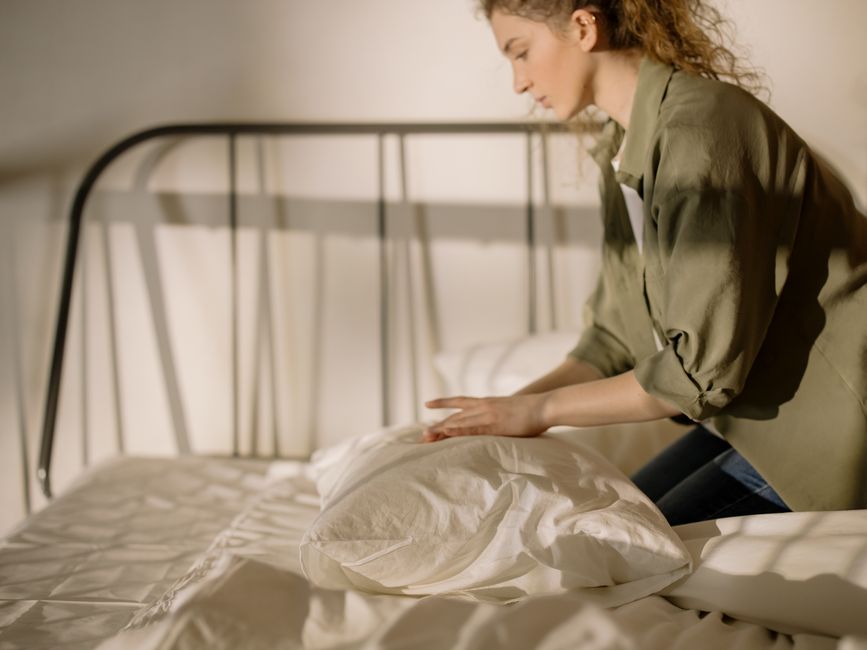
Most pillows can be washed, but the method depends entirely on what is inside them. Down and down-alternative pillows usually go in a front-loading washing machine on a gentle cycle. Memory foam and other solid foam pillows should not go in a machine at all. The cover can be washed; the foam core is spot-cleaned only.
Getting this wrong is expensive. A foam pillow that goes through a full wash cycle can crumble, lose its shape, and never recover. A down pillow washed on a hot, rough cycle can clump and tear. The right approach takes an afternoon and adds years to the life of the pillow.
Why Should You Wash Your Pillows at All?
A pillow collects more than most people realize. Overnight it absorbs sweat, skin oils, saliva, and shed skin cells. Over months, that material works into the fabric and the filling.
Dust mites are the bigger issue. These microscopic organisms feed on shed skin cells and thrive in warm, humid environments. A pillow is close to ideal for them. Their waste is a common trigger for allergy and asthma symptoms in sensitive people. Washing removes both the mites and the material they feed on.
Pillows also lose loft over time as filling compacts and oils weigh it down. A wash and a proper dry can restore some of that bounce, especially for down and polyester fill.
There is a practical point many people miss. A clean pillowcase does not protect the pillow itself. Oils and moisture pass through the case fabric. The pillow needs its own cleaning schedule, separate from the weekly laundry.
How Often Should You Wash Your Pillows?
Washing pillows every three to four months is a reasonable routine for most people. Some guidance suggests doing it each time you change your bedding for the season, which works out to about four times a year.
Wash more often if you sweat heavily at night, sleep without a pillowcase, have allergies or asthma, or let pets on the bed. In those cases, every one to two months is more appropriate.
Pillow protectors change the math. A zippered, waterproof protector creates a barrier between you and the pillow. Wash the protector monthly and the pillow itself less often.
Pillows have a lifespan regardless of cleaning. Most should be replaced every one to two years. If a pillow no longer springs back when folded in half, or has permanent stains or a musty smell that washing does not fix, replacement makes more sense than another wash.
How Can You Wash Your Pillows Based on What’s Inside?
The filling decides everything. Check the care label first. If the label says dry clean only, follow it, or contact the manufacturer before doing anything else.
Down and Feather Pillows
Most down and feather pillows are machine washable. Use a front-loading machine if you have one. Top-loaders with a center agitator can tear the fabric and tangle the filling.
Wash two pillows at once to balance the load. Use a mild detergent and a gentle or delicate cycle with cool water. Skip fabric softener, which coats the down and reduces loft. An extra rinse cycle helps remove all the detergent.
Drying matters as much as washing. Down clumps when wet and needs to be dried thoroughly. Use low heat with two or three clean dryer balls or tennis balls to break up clumps as it tumbles. Expect it to take several cycles. Squeeze the pillow as it dries to check for damp clumps in the center. Any moisture left inside can lead to mildew.
Polyester and Down-Alternative Pillows
These are the most forgiving. Most can go in a washing machine on a gentle cycle with cool or warm water and mild detergent. Check the label, since some cheaply made versions have seams that split under agitation.
Dry on low heat with dryer balls, and make sure the filling is completely dry before use. Polyester fill can hold water in the center even when the surface feels dry.
Memory Foam and Latex Pillows
Do not machine wash these. Water breaks down the foam structure, and the pillow will crumble or lose its shape permanently. The same applies to solid latex.
Instead, spot-clean the surface with a damp cloth and a small amount of mild soap, then wipe away the soap with a clean damp cloth. Let it air dry completely away from direct heat and sunlight, which can degrade foam. Wash the removable cover according to its own label.
For odors, sprinkle baking soda on the foam, let it sit for a few hours, then vacuum it off. This is a common recommendation, though there is no strong clinical evidence on its effectiveness for odor removal specifically.
Buckwheat and Other Filled Pillows
Buckwheat hull pillows usually have a removable cover that can be washed. The hulls themselves should not be washed with water. Empty them out, air the hulls in sunlight, and wash only the fabric shell according to its label.
Can You Wash a Pillow Without a Washing Machine?
Yes, for some types. Hand washing works for down and polyester pillows if you have a bathtub and patience.
Fill a tub with cool water and a small amount of mild detergent. Submerge the pillow and gently press down to work the soapy water through it. Do not wring or twist it, which damages the filling and seams. Drain the tub, refill with clean water, and press the pillow repeatedly until the water runs clear.
Pressing out water takes time. Roll the pillow in a clean towel and press down to squeeze out moisture, then dry it as you would in a machine, using low heat and dryer balls, or air dry it in a well-ventilated space with frequent fluffing.
Foam pillows cannot be hand washed either. Spot cleaning is the only option.
What Mistakes Damage Pillows?
Hot water is one of the most common. It can shrink fabric, set stains, and damage down fibers. Cool or warm water is safer for nearly every washable pillow.
Harsh detergent and bleach are another. Bleach weakens fabric and can leave residue that irritates skin. A mild detergent is enough.
Fabric softener seems harmless but works against you on pillows. It leaves a coating that reduces fluffiness and can trap moisture.
Under-drying is the mistake people notice least and regret most. A pillow that feels dry on the outside can still be damp inside. That moisture encourages mildew and musty odors. When in doubt, run another cycle.
Finally, washing a foam pillow in a machine is the single most damaging error. There is no way to undo it once the foam breaks down.
How Do You Keep Pillows Cleaner Between Washes?
Use a pillowcase and change it weekly, along with your sheets. Add a zippered pillow protector underneath for a stronger barrier.
Air pillows out periodically by removing the case and letting them sit in a dry, ventilated spot. Rotate between two pillows so each gets a rest, which helps them keep their shape.
Keep the bedroom cool and dry. Dust mites need humidity to thrive, so lowering moisture in the room helps. Wash bedding in hot water when allergies are a concern, since hot water is more effective at killing dust mites than cool water.
If you have allergies or asthma, the pillow itself matters. A washable pillow with a tightly woven cover and a good protector is easier to keep clean than a foam pillow you can only spot-clean.
Frequently Asked Questions
Can you wash pillows in a washing machine?
Most down, feather, polyester, and down-alternative pillows can be machine washed on a gentle cycle with cool water. Memory foam and latex pillows should never go in a washing machine, because water breaks down the foam.
How often should you wash your pillows?
Every three to four months is a reasonable routine for most people. Wash more often, roughly every one to two months, if you sweat heavily at night or have allergies or asthma.
Can you wash a memory foam pillow?
No. Water damages the foam structure permanently, so memory foam pillows should only be spot-cleaned and air dried. The removable cover can usually be washed separately according to its label.
How do you dry a pillow after washing it?
Use low heat in a dryer with two or three dryer balls to break up clumps, and expect several cycles for down pillows. Make sure the center is completely dry before use, since trapped moisture can cause mildew.
