
Your blood type is written into your red blood cells, and you can find out what it is in two reliable ways: a quick lab test your doctor orders, or an at-home blood typing kit. Both look for the same two things — the ABO group (A, B, AB, or O) and the Rh factor (positive or negative). You cannot tell your blood type from how you feel, what you eat, or your personality. The only accurate answers come from testing.
That last point matters because blood type is one of the most mythologized facts about the human body. It is also one of the most practical. Knowing your type matters for transfusions, pregnancy, and organ matching. Here is how the testing actually works, what the results mean, and where the popular claims fall apart.
How Can You Tell Your Blood Type?
You tell your blood type by testing your blood for specific markers on the surface of red blood cells. There is no other way to know for certain.
Your red blood cells carry proteins and sugars on their outer surface called antigens. The ABO system is built on two of them — the A antigen and the B antigen. Your blood type reflects which ones you have:
- Type A — A antigen on the red cells
- Type B — B antigen on the red cells
- Type AB — both A and B antigens
- Type O — neither antigen
A separate marker, the Rh factor (also called the D antigen), adds the positive or negative. If your red cells carry the D antigen, you are Rh positive. If they do not, you are Rh negative. Put the two systems together and you get the eight common types: A+, A−, B+, B−, AB+, AB−, O+, and O−.
Testing works by mixing your blood with known antibodies and watching for a reaction. If your cells clump together in the presence of anti-A antibodies, you have the A antigen. No clumping means you do not. The same logic applies to B and to Rh. It is a simple, well-established method that has been used for decades.
What Are the Different Ways to Get Your Blood Type Tested?
There are three realistic routes, and they differ in accuracy, cost, and convenience.
Lab testing through your doctor
This is the most reliable option. A healthcare provider orders a blood type test, often called a type and screen or ABO/Rh typing. A trained lab technician runs the sample using standardized methods and quality controls. Results usually come back within a day or so. If you are having surgery, are pregnant, or need a transfusion, this is the test that gets done — and the result is what hospitals will rely on.
Blood donation
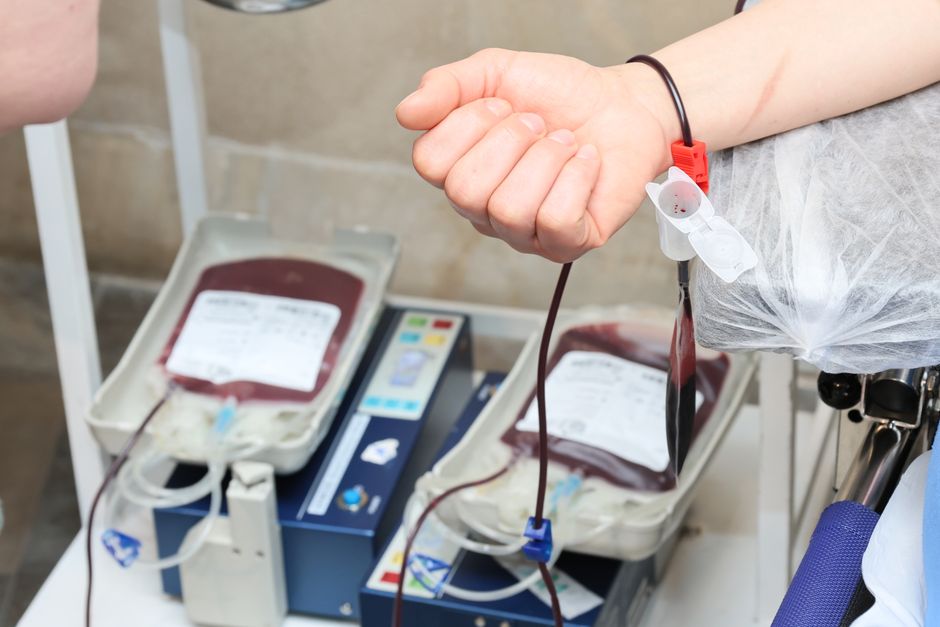
When you donate blood, the blood bank types your blood as part of standard processing. Many donation centers will tell you your type afterward, sometimes through a donor portal or a card they send you. This is essentially free and uses professional lab methods. The catch is that you have to be eligible to donate and willing to do so.
At-home test kits
You can buy kits that let you prick your finger, place drops of blood on a card, and read the result from how the blood reacts. These can work, but the accuracy depends heavily on following the instructions exactly and reading the result correctly. Eldoncard is one brand commonly sold for home use. Home kits are reasonable for curiosity. They are not a substitute for a lab result if the information will be used for anything medical.
One detail worth knowing: a home kit or a donor card is not the same as a formal medical record. If you need your blood type for a procedure or pregnancy, the hospital will test you again regardless of what your card says. That is not distrust — it is standard safety practice.
What Do the Results Actually Mean?
Your blood type tells you which donor blood is compatible with yours. It does not tell you anything about your health, your diet, or your personality.
The reason type matters is your immune system. Your body makes antibodies against the ABO antigens you do not have. A person with type A has anti-B antibodies. A person with type O has both anti-A and anti-B antibodies. If you receive blood with an antigen your body sees as foreign, your antibodies attack those cells, which can cause a serious and potentially fatal transfusion reaction.
That is why compatibility rules exist. In broad terms:
- Type O negative is often called the universal donor for red blood cells, because it lacks A, B, and RhD antigens.
- Type AB positive is often called the universal recipient for red blood cells, because it has all three.
- Rh negative people should generally receive Rh negative blood, especially women of childbearing age.
These are simplified rules. In practice, hospitals match blood more carefully, and plasma compatibility works differently from red cell compatibility. The rules above apply to red blood cells, not plasma.
Why Does the Rh Factor Matter So Much in Pregnancy?
The Rh factor is the part of blood typing that carries the biggest health consequence, and it has nothing to do with transfusions.
If an Rh negative mother carries an Rh positive baby, some of the baby’s blood can enter her circulation, usually around delivery. Her immune system may then make antibodies against the RhD antigen. Those antibodies are the problem — not for this pregnancy, but potentially for a future one. In a later pregnancy with another Rh positive baby, her antibodies can cross the placenta and attack the baby’s red blood cells, causing a condition called hemolytic disease of the newborn.
This is largely preventable. Rh negative pregnant women are typically offered an injection of Rh immune globulin (often called RhoGAM) at specific points in pregnancy and after delivery. It prevents the mother from making those antibodies in the first place. This is one of the clearest examples of why knowing your blood type is not trivia — it is part of routine prenatal care.
If you are pregnant or planning a pregnancy and do not know your Rh status, that is a conversation to have with your provider. It is standard practice to check it early.
Can You Figure Out Your Blood Type Without a Test?
No. There is no reliable way to determine your blood type from symptoms, appearance, or family history.
People sometimes try to reason it out from their parents’ types. That can narrow the possibilities but almost never confirms a single answer. Two type A parents, for example, can have a type O child, because both parents may carry a hidden O allele. So even a strong family pattern leaves you with multiple possible outcomes. Only a test settles it.
You also cannot feel your blood type. There are no symptoms tied to being A, B, AB, or O. The one exception is a rare situation where a person’s immune system reacts to their own blood, but that is a medical condition, not a way to self-diagnose a type.
What About the Blood Type Diet and Other Popular Claims?
The blood type diet — the idea that you should eat certain foods based on your ABO type — has no solid clinical evidence behind it.
The concept was popularized by a book in the 1990s. It proposed that different blood types evolved at different times and should eat like their ancestors. The problem is that the underlying premise is not supported by what we know about blood group evolution, and no well-controlled trials have shown that eating by blood type improves health outcomes. Some studies have looked at blood type and various disease risks, with mixed and often weak results. That is different from showing a diet works.
Other claims — that your blood type determines your personality, your stress response, or your ideal exercise — fall into the same category. They are not backed by reliable evidence. Blood type is a real and important medical fact. It is not a lifestyle blueprint.
When Should You Get Tested?
Most people never need to know their blood type for medical reasons. But there are clear situations where testing is standard:
- Before surgery or any procedure where transfusion might be needed
- During pregnancy, as part of routine prenatal screening
- If you are donating blood or an organ
- If you are being evaluated for a transfusion or blood disorder
- If you simply want to know for personal records or donation planning
For the last one, a home kit or a blood donation is a reasonable path. For the first four, let the clinical system handle it. Your provider will order the right test, and the result will be documented properly.
If you have never been typed and want to know, the simplest honest answer is this: ask your doctor for a blood type test, or donate blood and check your donor record. Everything else is guesswork dressed up as certainty.
Frequently Asked Questions
Can I find out my blood type at home?
Yes, at-home test kits let you type your own blood using a finger prick and a reaction card. They can work if you follow the instructions exactly, but they are not a substitute for a lab result when the information matters medically.
How long does a blood type test take?
The lab test itself is quick, and results are usually available within a day or so. Timing depends on the lab and how the test was ordered.
Does your blood type change over your life?
No, your ABO and Rh type are set by your genetics and do not change. The only exception is after certain medical treatments like a bone marrow transplant, where the donor’s blood type can temporarily or permanently replace your own.
Can you tell your blood type from your parents’ types?
You can narrow the possibilities, but you usually cannot confirm your exact type. Two type A parents, for example, can have a type O child, so family history alone leaves more than one possible answer.
