
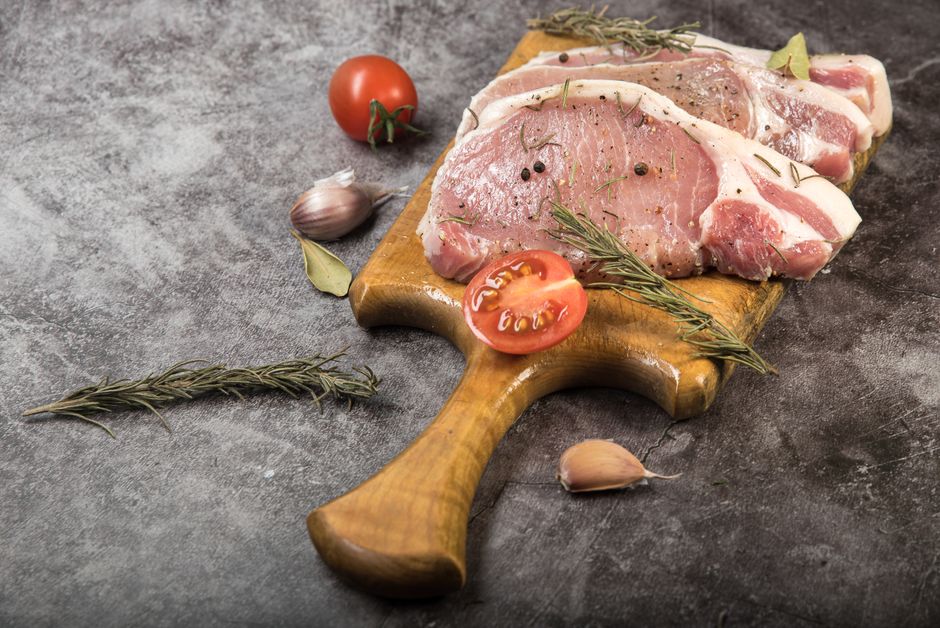
A pork chop is safely done when its internal temperature reaches 145°F (63°C), measured with a food thermometer at the thickest part away from bone and fat. At that temperature, the meat is safe to eat and still juicy. The USDA lowered its recommended pork cooking temperature from 160°F to 145°F in 2011, followed by a three-minute rest time. Color alone is not a reliable indicator — a fully cooked pork chop can still look pink inside.
Why 145°F Is the Standard for Pork Chops
The 145°F target comes from USDA food safety guidance and reflects decades of research on Trichinella and other pathogens in pork. The three-minute rest time matters because the temperature continues to rise slightly after the chop leaves the heat, and it gives time for juices to redistribute.
Pork today is not the pork your grandmother cooked. Modern commercial pork in the US is leaner and is raised under conditions that have nearly eliminated Trichinella from the commercial supply. That’s a big part of why the recommended temperature dropped. Cooking to 160°F or higher still works, but it dries the meat out. There’s no safety benefit above 145°F as long as the rest time is observed.
Ground pork is a different story. It should be cooked to 160°F because grinding mixes surface bacteria throughout the meat. This distinction matters — a pork burger and a pork chop are not the same food safety scenario.
How Can You Tell When a Pork Chop Is Done Without a Thermometer?
You can’t tell reliably without a thermometer. That’s the honest answer. Color, juice clarity, and firmness are all unreliable indicators, and the USDA and food safety experts consistently recommend using a thermometer as the only dependable method.
That said, if you find yourself without one, here are the cues cooks commonly rely on — with the caveat that none of them are a substitute for temperature:
- Firmness: A cooked chop feels firm but still yields slightly when pressed. A raw chop feels soft and squishy. A overcooked one feels hard.
- Juices: Clear juices running from the chop suggest it’s done, but pink-tinged juices can still appear in a safely cooked chop.
- Color: The center should shift from translucent pink to opaque white or pale pink. But modern pork can stay pink at 145°F and still be safe.
- Shrinkage: Meat pulls away from the bone slightly as it cooks. This is a rough cue at best.
The pink color issue trips up a lot of people. USDA food safety research has confirmed that pork can remain pink even when it has reached a safe internal temperature. The pink comes from myoglobin, a protein in muscle tissue, and its color depends on cooking method, pH, and the age of the animal — not just temperature.
What Happens If You Eat an Undercooked Pork Chop?
Undercooked pork can carry parasites and bacteria that cause foodborne illness. The main concerns are Trichinella spiralis, Salmonella, Listeria, and E. coli. Symptoms typically appear within hours to days and include nausea, diarrhea, stomach cramps, and fever.
Trichinella infection, called trichinosis, is rare in the US today but not impossible. Most US cases now come from eating undercooked wild game rather than commercial pork. When it does occur, trichinosis can cause muscle pain, swelling around the eyes, and fever. Severe cases can affect the heart and nervous system.
Bacterial contamination is the more common risk. Salmonella and Listeria can cause serious illness, especially in people with weakened immune systems, pregnant women, young children, and adults over 65. If you suspect food poisoning, most cases resolve on their own within a few days. Seek medical attention if symptoms are severe, bloody, or last more than three days.


Does the Cooking Method Change the Target Temperature?
No. The safe internal temperature for a whole pork chop is 145°F regardless of whether you grill, pan-sear, roast, bake, or sous vide it. The method affects texture, flavor, and how evenly the chop cooks — not the safety threshold.
Some methods make it easier to hit the target:
- Sous vide: Cooking at a precise low temperature for a longer time can pasteurize pork at temperatures below 145°F, but this requires specific time-and-temperature combinations that are not the same as the standard guidance. Home sous vide cooks should follow established pasteurization tables rather than guessing.
- Grilling and pan-searing: These create high surface heat and can cook the outside faster than the inside. Always check the center.
- Roasting and baking: More even heat, but thicker chops still need a thermometer check at the thickest point.
- Braising: Long, slow, moist cooking will push the temperature well past 145°F. That’s fine for tough cuts like shoulder, but it will dry out a lean loin chop.
Bone-in versus boneless also doesn’t change the target temperature. It changes where you place the thermometer. With a bone-in chop, insert the probe into the thickest part of the meat, avoiding the bone, which conducts heat differently and can give a false reading.
How Do You Measure the Temperature Correctly?
Insert an instant-read thermometer into the thickest part of the chop, away from bone, fat, and gristle. Those materials heat at different rates and can throw off the reading. Push the probe in from the side for thin chops to get a more accurate center reading.
Check in more than one spot. A single reading can miss a cooler pocket. If the chop is thick, take two or three readings. The lowest number is the one that matters.
Let the chop rest for at least three minutes before cutting. During the rest, the temperature may rise a few degrees and the juices redistribute. Cutting immediately lets those juices run out and gives you a drier chop.
Calibrate your thermometer periodically. An ice water bath should read 32°F. If it doesn’t, adjust or replace the thermometer. A thermometer that reads low could lead you to undercook meat without knowing it.
Why Does Pork Sometimes Look Pink Even When It’s Done?
Pink pork is normal and does not mean it’s undercooked. The color comes from myoglobin, an oxygen-carrying protein in muscle. When myoglobin is heated, it changes color — but the exact shade depends on several factors beyond temperature.
Research published in food science literature has shown that myoglobin can remain pink at temperatures well above 145°F depending on the pH of the meat, the cooking method, and whether the pork was previously frozen. Young pigs also tend to have more pink color. So a pink center is not a reliable sign of doneness in either direction.
This is why food safety agencies moved away from color-based guidance. The thermometer is the only tool that answers the question directly.
What About Resting and Carryover Cooking?
Carryover cooking is the continued rise in internal temperature after meat is removed from heat. For a pork chop, the rise is usually small — a few degrees — but it matters if you pull the chop at exactly 145°F and want a margin of safety.
The USDA rest time of three minutes is built into the 145°F recommendation. During those three minutes, the temperature either holds or rises slightly, and any pathogens present are further reduced. Skipping the rest doesn’t automatically make the chop unsafe if it hit 145°F, but the rest is part of the official guidance and worth following.
For thicker chops or roasts, carryover can be more significant. Pulling a large roast at 140°F and letting it rest can bring it to 145°F or higher. For individual chops, the effect is smaller and less predictable. Use the thermometer, not the clock, as your guide.
Frequently Asked Questions
Is it safe to eat pork that is slightly pink in the middle?
Yes, if it reached 145°F and rested for three minutes. Pink color in pork is caused by myoglobin and does not reliably indicate doneness.
Can you get trichinosis from undercooked pork?
It is possible but rare in the US commercial pork supply today. Most US trichinosis cases now come from undercooked wild game rather than store-bought pork.
What temperature should a bone-in pork chop be cooked to?
145°F, the same as boneless. Insert the thermometer into the thickest part of the meat, avoiding the bone.
How long should a pork chop rest after cooking?
At least three minutes. This is part of the USDA guidance and allows juices to redistribute while the temperature holds or rises slightly.
