
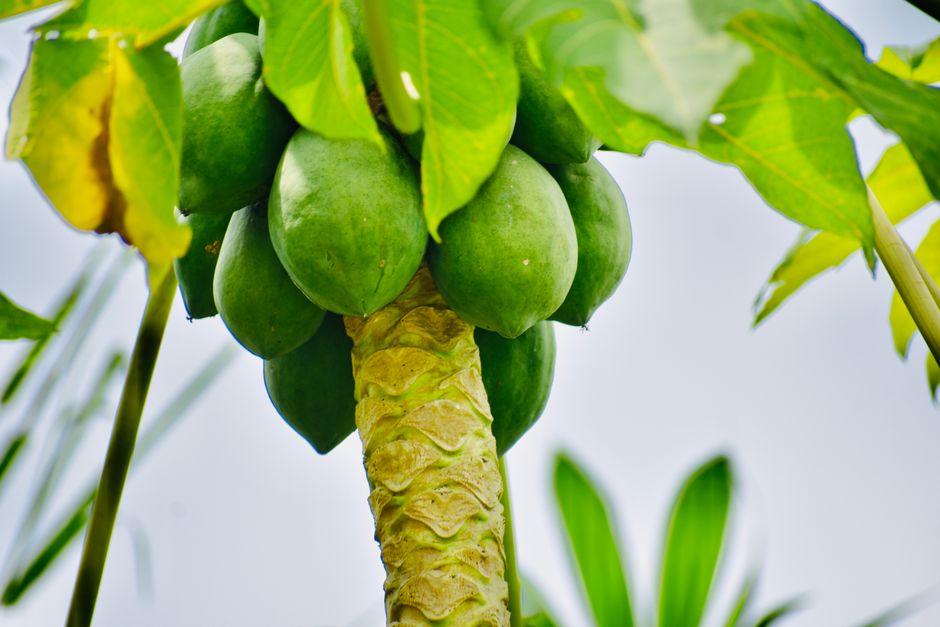
A ripe papaya gives slightly when you press it and has skin that has shifted from green to yellow or orange. The stem end smells sweet and faintly musky. Skip fruit that is rock-hard or has dark sunken spots, because it was picked too early or is already breaking down.
Papaya is one of those fruits that keeps ripening after harvest, so a firm one is not a loss. Buy it, leave it on the counter, and check it daily. The trick is knowing what “ready” actually looks and feels like, because papaya goes from perfect to past its prime faster than most fruit.
What Does A Ripe Papaya Look And Feel Like?
Color is the first cue, but it is not the whole story. A ripe papaya has mostly yellow or orange skin, though patches of green near the stem are normal and do not mean it is unripe. The full shift from green to yellow-orange usually signals the fruit is ready or close to it.
The feel matters more than the color. Cup the papaya in your hand and press gently with your thumb. A ripe one yields slightly, like a ripe avocado or a soft peach. If it feels hard as a stone, it needs more time. If your thumb leaves an indentation that stays, it is overripe and best eaten right away or blended into a smoothie.
Weight is a useful secondary check. A good papaya feels heavy for its size, which suggests it is holding moisture rather than drying out inside. Very light fruit tends to be mealy or hollow.
One thing people get wrong: a little green on the skin does not mean the fruit is unripe. Many varieties ripen with green shoulders near the stem while the rest turns golden. Judge by the combination of color, give, and smell rather than color alone.
How Can You Tell If A Papaya Is Ripe By Smell?
The nose is often the most reliable test. Bring the papaya close to your face, especially near the stem end, and breathe in. A ripe papaya has a sweet, slightly musky fragrance. It should smell like papaya, not like nothing.
If you smell nothing, the fruit is underripe. If the smell is sharp, sour, or fermented, it has gone too far. That fermented note is a sign of breakdown, and the flesh inside is likely mushy or off.
The stem end is where the aroma concentrates, so test there first. Some people find papaya’s natural scent faintly unpleasant, similar to a mild sweat or cheese note. That is normal for the fruit and not a sign of spoilage.
Why Does Papaya Ripen After You Buy It?
Papaya is a climacteric fruit, meaning it continues to ripen after being picked. It releases ethylene gas, a plant hormone that drives the ripening process, and exposure to ethylene speeds things up.
This is why a hard papaya from the store is not a problem. Left at room temperature, it will soften and sweeten over a few days. Putting it in a paper bag traps the ethylene and can speed ripening. Adding a banana or apple to the bag adds more ethylene and can hasten the process further.
Once ripe, move the papaya to the refrigerator to slow further ripening. Cold storage will dull the flavor somewhat and can cause chilling injury if the fruit is still unripe, so only refrigerate after it has softened. A ripe papaya typically keeps for several days in the fridge.
Here is a detail worth knowing: papaya does not ripen well once it has been cut. A halved papaya will not continue to soften and sweeten the way a whole one does, so wait until the whole fruit is ready before slicing into it.





What Are The Signs A Papaya Has Gone Bad?
Overripe papaya announces itself clearly. Look for these signs:
- Dark, sunken, or moldy spots on the skin
- A fermented or sour smell rather than a sweet one
- Skin that feels wet or leaks juice
- Flesh that is mushy, brown, or translucent when cut
- A thumb press that leaves a deep, permanent dent
Small surface blemishes are usually harmless and can be cut away. But large dark patches, mold, or any fermented odor mean the fruit is past saving. When in doubt, throw it out. Food safety guidance is consistent on this point: mold on soft fruit can send roots below the surface, so cutting around it is not a reliable fix.
An overripe papaya that is merely very soft but still smells sweet and shows no mold can often be used in smoothies or baked goods. The line is smell and visible decay, not softness alone.
Does The Inside Of A Ripe Papaya Look A Certain Way?
Once you cut in, the flesh of a ripe papaya is a deep orange or salmon color and looks moist and smooth. It should slice easily and hold its shape rather than collapse. The central cavity holds small, round, black seeds surrounded by a gel-like coating.
The seeds are edible but peppery and are usually scooped out and discarded. Some people dry and grind them as a pepper substitute. Do not eat the seeds raw in large amounts, and note that papaya seeds are not a proven treatment for anything despite what some wellness sites claim.
If the flesh is pale yellow and firm, the fruit was underripe. Underripe papaya is not dangerous, but it is starchy and bland. It is used as a vegetable in some cuisines, shredded into salads or cooked in curries, where its firm texture works in its favor.
How Should You Store Papaya So It Ripens Properly?
Store an unripe papaya at room temperature, out of direct sunlight. A countertop is fine. Check it daily by pressing gently near the middle. Most papayas soften within a few days to a week, though timing varies by how mature the fruit was at harvest.
To speed things up, place the papaya in a paper bag, optionally with a ripe banana or apple. To slow things down once it is ripe, refrigerate it whole. Cut papaya should be refrigerated in a sealed container and eaten within a few days.
Avoid storing unripe papaya in the fridge. Cold temperatures interfere with the ripening enzymes and can cause the fruit to develop a watery texture and poor flavor. This is the same chilling injury that affects tomatoes and avocados.
Is Papaya Nutritious, And Are There Any Safety Concerns?
Ripe papaya is a good source of vitamin C and provides vitamin A in the form of beta-carotene, along with fiber and potassium. According to USDA nutritional data, a cup of cubed raw papaya contains roughly 60 calories and about 88 milligrams of vitamin C, which is more than the daily recommended amount for most adults.
One safety note matters for some readers. Unripe (green) papaya contains higher levels of an enzyme called papain and a compound called latex. People with a latex allergy may react to papaya, especially unripe papaya, because the proteins are similar. If you have a known latex allergy, talk to your doctor before eating papaya, particularly the unripe kind.
Papaya is generally well tolerated. The main caution is the latex allergy cross-reaction, and the fact that papaya seeds are sometimes marketed as a remedy with no solid evidence behind them. The flesh of the ripe fruit is the part with the nutrition.
Frequently Asked Questions
How do you know when a papaya is ready to eat?
A ripe papaya is mostly yellow or orange, gives slightly when pressed, and smells sweet near the stem. If it is still hard and green, leave it at room temperature for a few more days.
Can you eat papaya when it is still a little green?
Yes, slightly green papaya is safe to eat but will be firm and bland. Fully green papaya is usually eaten cooked as a vegetable rather than raw as fruit.
How long does it take for a papaya to ripen on the counter?
Most papayas soften within a few days to a week at room temperature, depending on how mature they were when picked. Check daily by pressing gently.
Should you put papaya in the fridge to ripen?
No, keep unripe papaya at room temperature so it can ripen properly. Move it to the refrigerator only after it has softened and you want to slow further ripening.
