
Hair breakage happens when the hair shaft loses more structure than it can replace. The fix is not one product or one trick. It is a combination of gentler handling, less chemical and heat stress, and patience while damaged strands grow out.
You can stop hair breakage by reducing the forces that snap strands: rough brushing, tight styles, high heat, and repeated chemical processing. You also need to keep hair moisturized and strong enough to stretch without snapping. Because hair is dead once it leaves the scalp, no product can repair a broken strand. You can only protect the hair you have and let new, healthier hair grow.
That last point surprises many people. Hair is not living tissue. The part you see and touch is made of protein that was formed in the follicle below the skin. Once it emerges, it cannot heal itself. This is why breakage prevention matters more than breakage repair.
What Actually Causes Hair Breakage?
Breakage is usually mechanical, chemical, or a mix of both. Mechanical breakage comes from physical force. Chemical breakage comes from processes that alter the hair’s structure.
Mechanical causes include brushing wet hair, detangling roughly, and pulling hair into tight styles. Wet hair stretches more and is more fragile. Pulling on it when it is wet causes more breakage than handling it dry.
Chemical causes include hair dye, bleach, relaxers, and perms. These break chemical bonds inside the hair shaft. Bleach and relaxers are the most damaging because they work by breaking down or rearranging the hair’s internal structure.
Heat is a separate stress. Flat irons, curling irons, and blow dryers remove moisture and can cause what is called bubble hair, where water inside the shaft boils and creates weak spots. Over time these weak spots become break points.
A few other factors matter too:
- Nutritional deficiencies, especially low iron or low protein intake
- Thyroid conditions and other medical issues
- Certain medications
- Trichorrhexis nodosa, a condition where hair develops weak nodes that snap
- Genetics that affect how strong your hair is to begin with
If breakage is sudden, widespread, or comes with other symptoms, it is worth seeing a doctor. Hair changes can be an early sign of a medical issue.
How Can You Stop Hair Breakage With Better Handling?
Changing how you touch your hair is the single most effective step for most people. Most breakage happens during washing, detangling, and styling.
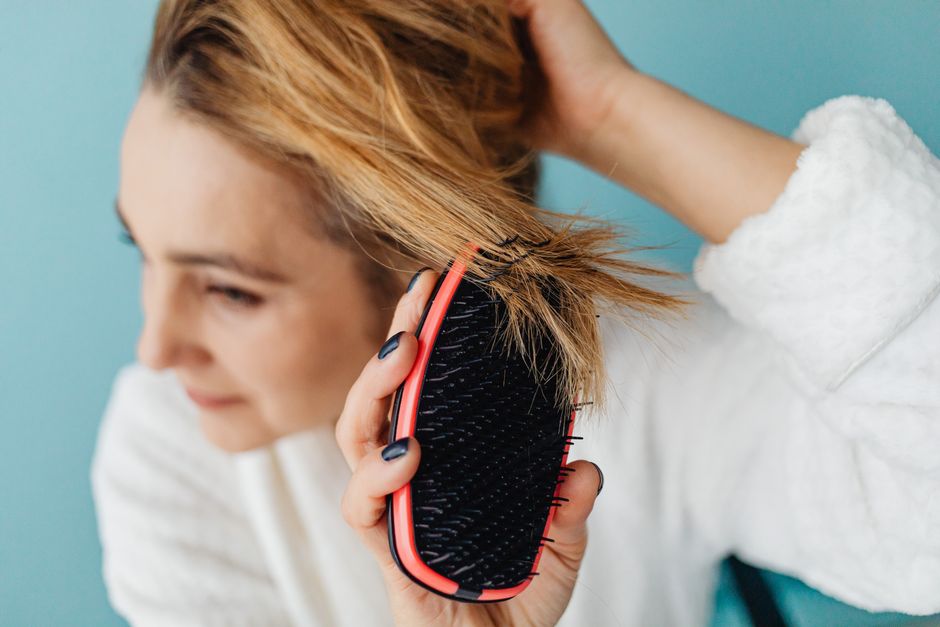
Start with detangling. Use a wide-tooth comb or your fingers. Work from the ends up toward the roots, not from the roots down. Never rip through a knot. If a tangle will not come out, apply conditioner and work it loose slowly.
Wash gently. Focus shampoo on the scalp, not the length of your hair. The ends get cleaned as suds rinse through. Scrubbing the ends adds friction for no benefit.
Dry without rubbing. Wrapping hair in a soft towel or cotton T-shirt and pressing out water causes less friction than a rough towel rub.
Loosen your styles. Tight ponytails, braids, and buns pull on the follicle and the shaft. Over time this can cause traction alopecia, a form of hair loss from repeated pulling. If a style hurts, it is too tight.
Sleep on a smooth surface. Silk or satin pillowcases reduce friction compared with cotton. This is a small effect, but it is real for people who move a lot during sleep.
Does Heat and Chemical Processing Cause Breakage?
Yes. Heat and chemicals are two of the most common causes of significant breakage. The damage is cumulative, meaning it builds up with each treatment.
Heat damage depends on temperature and how often you apply it. Repeated use of high heat on the same strands weakens them over time. Once hair is heat-damaged, the structure does not recover. The damaged section has to be cut off or grown out.
Chemical damage works differently but is often more severe. Bleach and relaxers change the hair’s internal bonds. Hair that has been bleached and then relaxed is at high risk of breaking, because two damaging processes stack on the same strand.
If you want to reduce breakage, some practical steps help:
- Lower the heat setting on styling tools
- Use a heat protectant, though understand it reduces damage rather than preventing it
- Space out chemical treatments
- Avoid overlapping bleach or relaxer on already-processed hair
- Let a professional handle bleach and relaxers
Be skeptical of claims that a product can repair split ends or rebuild broken bonds permanently. Some bond-building products have shown measurable effects on hair strength in laboratory and small studies. Whether that translates into less visible breakage for the average person is less clear. The evidence is limited.



Which Ingredients and Products Help?
Moisturizing and protein ingredients can improve how hair feels and behaves. They cannot repair hair that is already broken.
Moisturizers attract and hold water in the hair. Common ones include glycerin, honey, and various oils. They make hair more flexible, which can reduce snapping during handling.
Protein treatments temporarily fill gaps in the hair’s outer layer. Hydrolyzed proteins, which are broken into small pieces, can attach to the surface. This makes hair feel stronger for a while. It washes out over time.
The balance matters. Too much protein can make hair stiff and brittle. Too little can leave it weak and stretchy. If your hair snaps easily when wet and feels mushy, it may need protein. If it feels stiff and snaps when dry, it may need moisture.
This is not a precise science. There is no blood test for hair protein balance. Most people figure it out by trial and error.
What does not help: products that claim to heal split ends. Split ends cannot be mended. The only fix is trimming them off. Leaving them can let the split travel up the shaft, which leads to more breakage.
Can Nutrition and Health Affect Hair Breakage?
Yes. Hair is built from protein, and its growth depends on adequate nutrition and normal hormone levels. When the body is short on key nutrients, hair is often one of the first things to suffer.
Protein matters because hair is made mostly of a protein called keratin. Very low protein intake can lead to weak, brittle hair over time.
Iron matters because iron deficiency is a well-known cause of hair shedding and poor hair quality. This is common in menstruating women. A doctor can check iron levels with a blood test.
Other nutrients linked to hair health include zinc, vitamin D, and B vitamins. The evidence for routine supplementation in people without a deficiency is weak. If you already get enough of these nutrients, taking more is unlikely to help your hair.
Medical conditions can also cause breakage or shedding. Thyroid problems, both underactive and overactive, can change hair. So can other hormonal shifts. If your hair changed suddenly without an obvious cause, that is a reason to see a doctor rather than buy another product.
How Long Does It Take to See Less Breakage?
You may notice less breakage within a few weeks of gentler handling. Visible improvement in hair length and thickness takes longer, because hair grows slowly.
Hair grows about half an inch per month on average. That number varies from person to person. To see a meaningful change in length, you are usually looking at several months.
Damaged sections do not recover. If you have significant damage, the practical path is to trim off the worst parts and protect the new growth. This can feel like a setback, but it prevents splits from traveling upward and causing more loss.
Consistency matters more than any single product. Gentle handling every wash, every style, and every night adds up. A single aggressive detangling session can undo weeks of careful care.
When Should You See a Doctor?
See a doctor if hair breakage or loss is sudden, patchy, or accompanied by other symptoms. These patterns are less likely to be simple mechanical damage.
Signs worth checking include:
- Hair coming out in clumps rather than breaking off
- Bald patches or thinning in specific areas
- Scalp pain, itching, or redness
- Breakage along with fatigue, weight changes, or other symptoms
- Breakage that continues despite gentler care
A doctor can check for thyroid issues, nutritional deficiencies, and other causes. Some of these are simple to treat once identified. Others need ongoing management.
It helps to be specific when you describe the problem. Saying “my hair is breaking” is different from “my hair is falling out from the root.” The two have different causes and different treatments.
Frequently Asked Questions
Can you repair hair that is already broken?
No. Hair is not living tissue, so a broken strand cannot heal itself. The only real fixes are trimming the damage off or letting new hair grow in.
What is the fastest way to stop hair breakage?
Stop the forces that cause it: rough brushing, tight styles, high heat, and chemical overlap. Reducing those stresses usually shows results within a few weeks.
Does protein help with hair breakage?
Protein treatments can temporarily make hair feel stronger by filling gaps in the outer layer. They wash out over time and do not repair the strand.
How long does it take for hair to grow back after breakage?
Hair grows about half an inch per month on average, so visible length takes several months. Damaged sections do not recover and usually need to be trimmed.
