
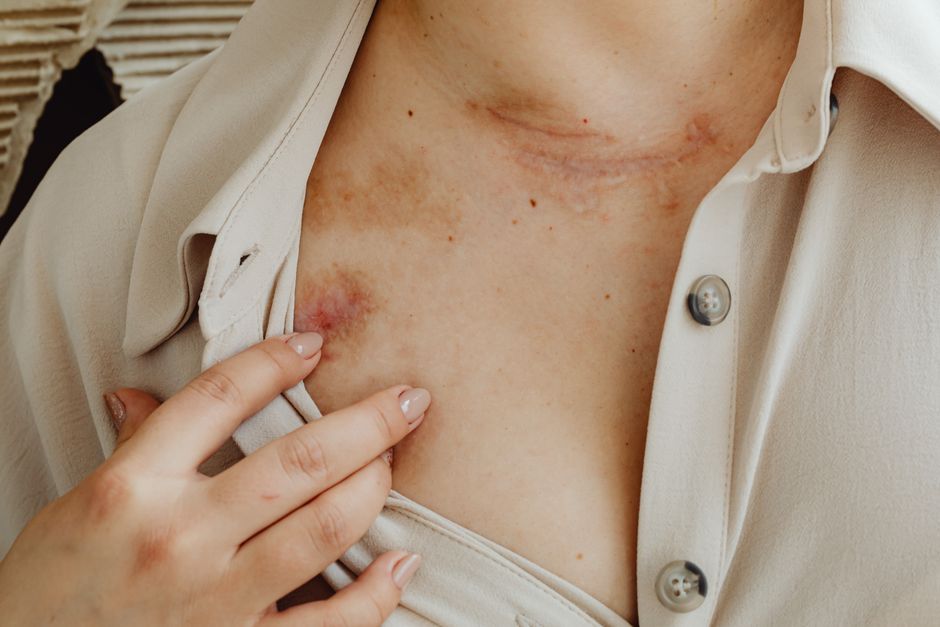
Scars are a normal part of how your skin heals after an injury. When the deeper layer of skin is damaged, your body produces collagen fibers to close the wound, but that new tissue looks and feels different from the surrounding skin. You cannot erase a scar completely, but you can improve its appearance, texture, and color. The most effective approach depends on the age of the scar, its type, and your skin tone, so treatment options range from simple silicone sheets to medical procedures like laser therapy.
What Are the Different Types of Scars?
Not all scars respond to the same treatment. Knowing what kind of scar you have is the first step in choosing a removal strategy.
Atrophic scars sit below the surrounding skin. They form when the skin loses tissue during healing, which is typical of acne scars or chickenpox marks. These look like shallow depressions or pits.
Hypertrophic scars are raised and red. They stay within the boundary of the original wound and often fade over time. Keloid scars are similar but more aggressive — they grow beyond the wound edges and can continue expanding for months or years. Keloids are more common in people with darker skin tones.
Contracture scars occur after burns. They tighten the skin and can restrict movement when they form over joints. Stretch marks, technically called striae, are a form of scarring from rapid skin stretching, though they behave differently from injury scars.
Do Over-the-Counter Scar Creams Actually Work?
The market is full of creams, gels, and oils that promise dramatic results. Most of them do not live up to the advertising.
Plain moisturizers help by keeping the scar hydrated, which can make it feel softer and look less flaky. However, they do not change the underlying collagen structure. Silicone is the one over-the-counter ingredient with solid evidence behind it. Silicone sheets and gels create a protective layer over the scar that hydrates the tissue and helps regulate collagen production. Research consistently shows that silicone products improve scar color and thickness, especially when used on newer scars.
Products containing onion extract, vitamin E, and cocoa butter are widely sold, but the evidence for them is weak. Some studies suggest onion extract may slightly reduce scar redness, but results are mixed. Vitamin E can actually cause contact dermatitis in some people, making the scar worse. If you want to try a cream, silicone-based products are the most evidence-backed choice. Apply them daily for at least 8 to 12 weeks to see measurable improvement.
What Medical Procedures Remove Scars?
When creams are not enough, dermatologists and plastic surgeons offer procedures that physically alter scar tissue. These are the most effective options for older or more severe scars.
Laser therapy is one of the most common approaches. Vascular lasers target red blood vessels in newer scars, reducing redness. Fractional lasers create microscopic wounds in the scar tissue, prompting the skin to rebuild itself with a more normal texture. Multiple sessions are usually needed, and results build gradually over several months.
Microneedling uses fine needles to puncture the skin. Like fractional lasers, it triggers a wound-healing response that stimulates collagen production. It is particularly useful for atrophic acne scars. The procedure is less expensive than laser therapy but requires multiple sessions and has a longer recovery time.
Chemical peels remove the top layers of skin using acids like glycolic acid or trichloroacetic acid. They work best for superficial scars and uneven pigmentation. Deeper peels carry more risk of side effects, including changes in skin color.
Corticosteroid injections are the first-line treatment for hypertrophic and keloid scars. The steroid reduces inflammation and flattens the raised tissue. Injections are typically repeated every few weeks until the scar flattens. Some dermatologists combine injections with cryotherapy, which freezes and destroys scar tissue.
Surgical revision involves cutting out the scar and closing the wound with precise stitches so it heals as a thinner, less noticeable line. This is an option for wide or unsightly scars but does not guarantee a perfect result. Surgery can actually trigger a new scar, so it is not recommended for people prone to keloids.



How Long Does It Take for a Scar to Fade?
Scar healing is a slow process, and patience is part of the treatment.
A new scar takes about 3 to 6 months to fully mature. During this time, it may look red, raised, and firm. Over the next year, most scars gradually soften and fade. The final appearance is usually visible after 12 to 18 months. Some scars, especially keloids, never stop changing and may continue to grow.
Timing matters for treatment. Silicone products work best on fresh scars, ideally starting within a few weeks of the wound closing. Lasers and microneedling are more effective on mature scars that have finished the active healing phase. Steroid injections work on active keloids at any stage.
Sun exposure is one of the biggest factors in scar appearance. UV light darkens scar tissue and makes it stand out against surrounding skin. Sunscreen with SPF 30 or higher should be applied to healing scars daily. This is not optional advice — unprotected sun exposure can permanently darken a scar.
Are Home Remedies for Scars Effective?
Internet forums are full of claims about lemon juice, honey, aloe vera, and essential oils. The honest answer is that none of these have strong clinical evidence behind them.
Honey has antibacterial properties and can support wound healing in the early stages, which may indirectly improve the final scar. Aloe vera is soothing and moisturizing but has not been shown to change scar tissue. Lemon juice is acidic and can irritate the skin, potentially causing hyperpigmentation, which is the opposite of what you want. Essential oils are fragrance compounds that can trigger allergic reactions on damaged skin.
A simple, fragrance-free moisturizer is a reasonable home approach. Massaging the scar gently for a few minutes daily can help break up adhesions and improve flexibility, though it will not erase the scar. The evidence for massage is mostly anecdotal, but it is harmless and may help with comfort.
Can You Prevent Scars From Forming?
Prevention is more effective than treatment. The way a wound is cared for in the first weeks determines how the scar will look.
Keep the wound clean and covered with a sterile dressing. A moist environment heals faster and produces less scabbing. Do not pick at scabs — they are a natural protective layer, and removing them early pulls out new tissue underneath. Once the wound has closed, start silicone therapy immediately. Applying silicone sheets to a fresh scar is the single most effective preventive measure supported by clinical evidence.
Keep the area out of the sun for at least the first year. If the wound is on a joint, avoid stretching it excessively during healing, as tension can widen the scar. For surgical incisions, follow your surgeon’s instructions about activity restrictions and dressing changes.
When Should You See a Dermatologist?
Not every scar needs professional treatment, but some situations warrant a medical evaluation.
See a dermatologist if a scar is painful, itchy, or restricts movement. A scar that keeps growing beyond the wound boundary may be a keloid and needs early intervention. Scars that develop after burns should always be evaluated by a specialist, as they can cause contractures that limit function.
If a scar changes color, becomes ulcerated, or bleeds without reason, get it checked. While rare, skin cancers can develop within scar tissue, particularly in old burn scars.
For cosmetic concerns, a board-certified dermatologist can assess your scar type and recommend a realistic treatment plan. Be wary of clinics that promise complete scar removal. Any provider who guarantees a scar will disappear is not being honest. The goal of treatment is improvement, not perfection.
How Can You Remove Scars: What Actually Works
There is no single answer that fits every scar, but the evidence points to a clear hierarchy of effective treatments.
For new scars, silicone sheets or gel applied daily is the most proven option. It is affordable, safe, and backed by decades of clinical research. For older scars, professional procedures like laser therapy, microneedling, or steroid injections offer the best results. Over-the-counter creams, except for silicone, are largely ineffective. Home remedies have no reliable evidence behind them.
Realistic expectations matter. Scars are permanent changes to your skin. The best treatments can make them less visible, softer, and closer to your natural skin tone, but they will not make them disappear. The earlier you start treatment, the better the outcome.
Frequently Asked Questions
Can scars be completely removed?
No, scars cannot be completely removed. Treatment can significantly improve their appearance, but some trace of the scar will always remain.
How long should I use silicone sheets on a scar?
Use silicone sheets for at least 8 to 12 weeks, starting as soon as the wound has closed. Consistent daily wear is more important than the exact number of weeks.
Are laser treatments painful?
Most laser treatments cause mild discomfort, often described as a rubber band snapping against the skin. Numbing cream is typically applied beforehand to minimize pain.
Do steroid injections work for all scar types?
No, steroid injections work best for raised scars like hypertrophic scars and keloids. They are not effective for atrophic or depressed scars.
