
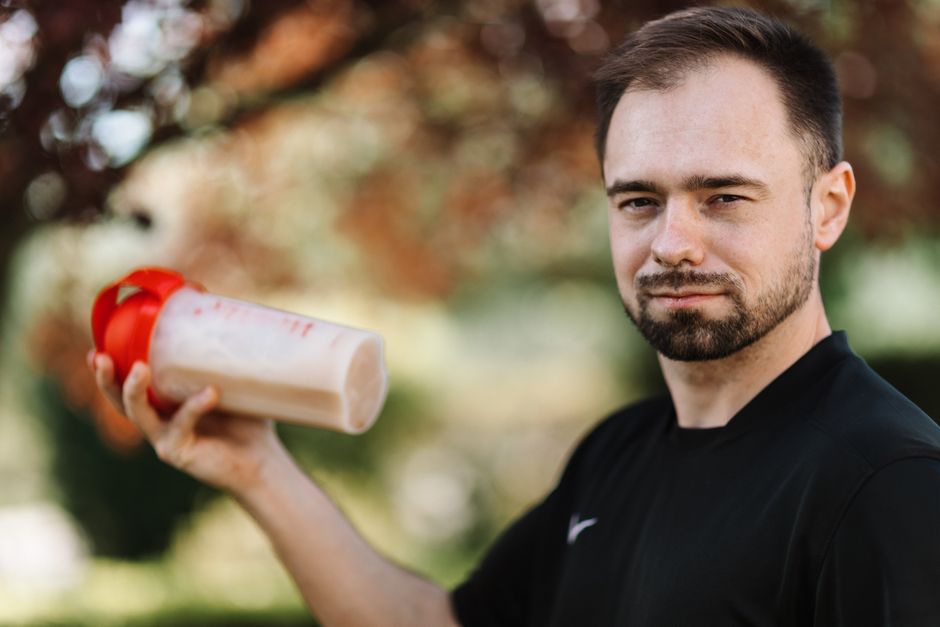
You make a protein shake by combining a liquid, a protein source, and optional flavorings in a shaker cup or blender, then shaking or blending until smooth. The basic ratio is one scoop of protein powder to 8 to 12 ounces of liquid. That is the whole method. Everything else — which powder, which liquid, what you add — is a set of choices that change the taste and nutrition but not the basic technique.
How Can You Make A Protein Shake?
Start with cold liquid in a shaker cup. Add the powder after the liquid, not before. This order matters more than most people realize: powder first tends to clump at the bottom and stay there, no matter how hard you shake.
Secure the lid and shake for about 15 to 30 seconds. If you are using a blender, add liquid first, then powder, then any thicker ingredients like fruit or yogurt. Blending takes 30 to 60 seconds.
That is the core method. A few practical details make the difference between a shake you drink and one you abandon:
- Use cold liquid. Warm liquid makes many powders clump and taste worse.
- Add a shaker ball or wire whisk ball to a shaker cup. It breaks up clumps mechanically.
- Drink it within a reasonable time. A shake left at room temperature for hours is a food safety issue, not just a taste issue.
- Rinse the shaker right after use. Dried protein residue is difficult to remove and harbors bacteria.
What Should You Put In A Protein Shake?
Every protein shake has three components: liquid, protein, and optional additions. Understanding what each one contributes helps you build a shake that fits your goals rather than following a recipe blindly.
The liquid
Water is the lowest-calorie option and works fine with most powders. Milk adds protein, calcium, and calories — dairy milk contributes roughly 8 grams of protein per cup. Plant milks vary widely; some contain almost no protein, while soy milk is closer to dairy milk. Read the label if protein content matters to you.
The protein source
Protein powder is the most common choice because it dissolves and delivers a concentrated dose. Whey and casein come from milk. Soy, pea, and rice proteins are plant-based. Each has a different amino acid profile and texture. Egg white protein and blends also exist.
Whole-food protein works too. Greek yogurt, cottage cheese, or a spoonful of nut butter blended into a shake adds protein without powder. These options are less concentrated, so reaching a high protein total takes more volume.
Optional additions
Fruit adds flavor, fiber, and carbohydrates. A banana, berries, or half a mango all work. Oats thicken a shake and add carbohydrates. Nut butters add fat and calories. Cocoa powder, cinnamon, and vanilla extract add flavor without meaningful calories.
Be deliberate about what you add. A shake with powder, whole milk, peanut butter, banana, and honey can exceed 500 calories. That is fine if it is a meal replacement. It is not fine if you are drinking it as a light snack and wondering why your weight is not changing.
How Much Protein Should A Shake Contain?
Most protein powders deliver 20 to 25 grams of protein per scoop. That range fits comfortably within what most adults need at a single meal or snack.
General guidance for daily protein intake in healthy adults sits around 0.8 grams per kilogram of body weight as a minimum, with higher intakes commonly recommended for people who exercise regularly or are trying to preserve muscle during weight loss. For a 70-kilogram (154-pound) adult, 0.8 g/kg works out to about 56 grams per day. A single shake with 25 grams covers a meaningful portion of that.
More protein is not automatically better. The body does not store excess protein for later muscle building the way it stores fat. Research on protein timing and distribution suggests spreading intake across the day is more useful than consuming a large amount at once, though the practical difference is smaller than supplement marketing implies.
People with kidney disease should discuss protein intake with their doctor before increasing it. For healthy kidneys, higher protein intakes within commonly recommended ranges have not been shown to cause harm in most studies, but this is a conversation to have with a clinician if you have any kidney concerns.





Shaker Cup Or Blender: Which Should You Use?
A shaker cup is faster and easier to clean. A blender produces a smoother texture and handles solid ingredients like fruit, ice, and oats that a shaker cannot break down.
Use a shaker when your shake is powder and liquid only. Use a blender when you are adding anything solid. There is no nutritional difference between the two methods — the choice is about texture and convenience.
One practical note: many people over-blend. Running a blender for several minutes warms the mixture and can make it frothy and less pleasant. Thirty to sixty seconds is usually enough.
What Should You Watch Out For In Protein Powders?
Protein powders are classified as dietary supplements in the United States, not as foods. That means they are not held to the same pre-market safety and labeling standards as conventional foods. This is a regulatory fact, not a criticism of any specific brand.
Independent testing has repeatedly found that some products contain less protein than labeled, or contain contaminants not listed on the label. Third-party testing programs exist, and products that carry a verification mark from an independent testing organization have been checked for label accuracy and certain contaminants. That verification is not a guarantee of quality, but it is a meaningful signal.
People with dairy allergies should be careful with whey and casein, which are milk proteins. People with soy allergies should avoid soy protein. Those with celiac disease should choose products labeled gluten-free, since cross-contamination during manufacturing is possible.
Added sugars, artificial sweeteners, and thickeners vary widely between products. If you are watching sugar intake, compare labels — some flavored powders contain several grams of added sugar per scoop.
When Should You Drink A Protein Shake?
Timing matters less than total daily intake. The idea that you must drink a shake within a narrow window after exercise has been overstated in popular fitness culture. Some research supports consuming protein around training, but the effect on muscle growth is modest compared with getting enough protein across the whole day.
Practical timing choices include:
- As a snack between meals when you are short on protein
- After a workout, when convenience matters
- As part of breakfast when solid food is difficult
- In the evening if your daily protein intake falls short
A shake is a tool for meeting protein needs, not a requirement. If you already eat enough protein from whole foods, a shake adds calories you may not need. Whole foods also provide fiber, vitamins, and other compounds that powders do not.
Do You Need A Protein Shake At All?
No. Most people can meet their protein needs through food. A shake is convenient, not necessary.
Shakes make sense in specific situations: when appetite is low, when meals are rushed, when dietary restrictions make protein harder to get, or when someone is actively trying to build or preserve muscle and finds whole-food protein difficult to fit in. For older adults, who often struggle to eat enough protein due to changes in appetite and digestion, a shake can be a practical way to close the gap.
For everyone else, the honest answer is that a protein shake is optional. It is not a shortcut to health, and it does not replace a balanced diet. It is a convenient delivery method for a nutrient you can get elsewhere.
Frequently Asked Questions
How much liquid do you use for one scoop of protein powder?
Use 8 to 12 ounces of liquid per standard scoop. Less liquid gives a thicker shake; more liquid gives a thinner one. Follow the label on your specific product if it gives a recommendation.
Can you make a protein shake without powder?
Yes. Blend Greek yogurt, cottage cheese, or milk with fruit to make a shake that contains protein without powder. The protein content will be lower per serving than a powder-based shake.
Is it okay to drink a protein shake every day?
For most healthy adults, daily protein shakes are not harmful, but they should fit within your overall calorie and protein needs. People with kidney disease should check with their doctor first.
Why does my protein shake clump?
Clumping usually comes from adding powder before liquid or using warm liquid. Put cold liquid in first, then powder, and use a shaker ball to break up clumps.
