
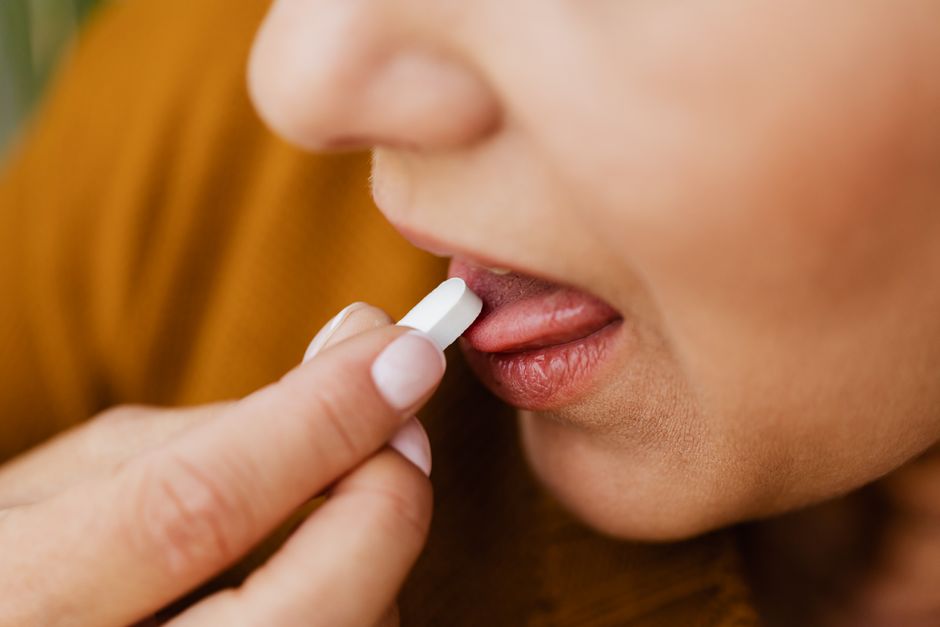
You cannot reliably beat a saliva drug test using home remedies. There is no mouthwash, drink, gum, or supplement that has been clinically proven to make a drug test come back negative. Saliva testing is designed to detect drug use, and the only reliable way to pass is to not use drugs in the detection window.
That is the honest answer. The rest of this article explains how saliva testing works, why common tricks fail, what the actual detection windows are, and what the scientific evidence does and does not support. If you are facing a drug test, you deserve accurate information rather than internet folklore.
How Does A Saliva Drug Test Actually Work?
A saliva drug test collects oral fluid from the mouth and analyzes it for drug compounds. The test looks for the parent drug or its metabolites, not just the presence of a substance on your tongue.
When you use a drug, it enters your bloodstream. From there, drug molecules pass into your saliva through several mechanisms. Some diffuse directly from blood through the capillaries in your mouth. Others enter oral fluid through the gingival crevicular fluid, which is the fluid that seeps from the gum line around your teeth. A smaller amount can come from residue left in your mouth after smoking or snorting a substance.
This matters because it means the drug is coming from inside your body, not just sitting on your oral tissues. Rinsing your mouth does not remove a drug that is continually moving from blood into saliva. The drug keeps appearing as long as it remains in your bloodstream.
Collection devices vary. Some use a swab that you hold under your tongue or between your cheek and gum for a set time. Others use a small collection tube. The sample is then tested either on-site with a rapid screening device or sent to a laboratory for confirmation. Laboratory confirmation, usually by mass spectrometry, is far more accurate than a rapid screen.
What Do Saliva Tests Detect And For How Long?
Saliva tests can detect several classes of drugs. Detection windows depend on the drug, the dose, how often you use it, your body chemistry, and the sensitivity of the specific test.
For marijuana, saliva testing generally detects THC for a shorter window than urine testing. Some research suggests detection may last up to 24 hours after occasional use, and longer with heavy chronic use. The exact window varies widely between individuals and no single number applies to everyone.
For stimulants like cocaine, amphetamines, and methamphetamine, saliva detection is typically measured in hours to a couple of days. Cocaine and its metabolites are usually detectable in oral fluid for roughly 1 to 2 days after use. Amphetamines may be detectable for a similar range.
For opioids, detection windows vary by the specific drug. Heroin and its metabolites are generally detectable for hours to about a day. Prescription opioids like oxycodone may be detectable somewhat longer.
For benzodiazepines, saliva detection is less reliable than urine testing, and detection windows vary considerably by the specific medication.
These are general ranges. Individual results vary. No source can tell you exactly how long a drug will remain detectable in your specific body.
Why Do Mouthwash, Drinks, And Gum Not Work?
Products marketed as saliva test defeaters do not have clinical evidence showing they work. Some may slightly dilute a sample, but modern tests are designed to account for dilution.
Here is the core problem. A saliva test is not measuring what is on your tongue right now. It is measuring what is moving from your bloodstream into your oral fluid over the collection period. If you rinse your mouth with mouthwash, you may reduce surface residue. But within minutes, drug molecules from your blood are back in your saliva.
Some products contain substances that claim to bind to drugs or mask them. No peer-reviewed clinical study has confirmed that any over-the-counter product reliably produces a negative saliva test in a person who has used drugs.
There is also a practical risk. Some mouthwashes contain alcohol or other compounds that can interfere with the test in unpredictable ways. An invalid or adulterated sample is often treated as a failed test or triggers a requirement for observed recollection. Trying to beat the test can make your situation worse.
Laboratory confirmation methods like gas chromatography-mass spectrometry identify drug molecules by their molecular structure. You cannot disguise a molecule’s identity with a rinse.
Can You Flush Drugs Out Of Your System Faster?
No proven method exists to speed up the elimination of drugs from your body. Your liver and kidneys process drugs at their own rate, determined by your genetics, age, liver health, kidney function, body composition, and how long you have been using.
Drinking large amounts of water does not accelerate drug clearance from saliva. It can dilute urine, which is relevant to urine tests, but saliva drug concentration is not affected the same way. In fact, drinking excessive water can be dangerous. Drinking too much water too quickly can dilute the sodium in your blood, a condition called hyponatremia, which can be life-threatening.
Exercise, sauna use, detox teas, and supplements are frequently promoted as ways to clear drugs faster. No clinical evidence supports these claims for saliva testing. Some supplements can interact with medications or cause liver stress, which is the opposite of helpful.
Drug elimination follows established pharmacokinetic principles. Half-life, which is the time it takes for half of a drug to leave your bloodstream, is a fixed property of each drug in each person. You cannot change it with diet or lifestyle in any way that has been demonstrated to affect test results.
What About Secondhand Smoke And False Positives?
Secondhand marijuana smoke can potentially cause a positive saliva test, though this is uncommon and depends on the amount of exposure and the sensitivity of the test. If you are in a confined space with heavy marijuana smoke, some THC residue may land in your mouth. This is a recognized concern in workplace testing.
Certain foods and medications can cause false positives on some screening tests. Poppy seeds can trigger an opioid false positive on some immunoassay screens. Some over-the-counter cold medications and certain prescription drugs can cross-react with amphetamine screens. These false positives are usually resolved by laboratory confirmation, which identifies the actual molecular structure of the substance.
If you believe a test result is wrong, you have the right in most testing situations to request a confirmation test on the original sample. This is a standard part of workplace drug testing protocols. Do not assume a positive screen is final until it has been confirmed by a laboratory method.
What Actually Works If You Want To Pass A Saliva Test?
The only reliable way to pass a saliva drug test is to not use the substance within the detection window. That window varies by drug and by person, but it is generally shorter for saliva than for urine.
If you are a regular user, the detection window may be longer than for someone who uses occasionally. Chronic heavy marijuana users, for example, may have detectable THC in saliva for a longer period than someone who smoked once.
If you are prescribed a medication that might trigger a positive result, disclose it before the test. Legitimate prescriptions are generally verified and do not count as a violation in workplace or clinical testing. Hiding a prescription and then testing positive looks worse than disclosing it upfront.
If you are being tested for a legal or employment matter, consult a lawyer about your rights and the testing protocol. The rules vary by state and by the reason for the test.
There is no shortcut. Products that promise to beat a saliva test are selling hope, not evidence. The physiology of how drugs enter saliva makes those promises impossible to keep.
Frequently Asked Questions
Can mouthwash help you pass a saliva drug test?
No. Mouthwash may briefly reduce surface drug residue, but drugs continually move from your bloodstream into your saliva, so the test will still detect them. No clinical study has shown mouthwash produces a negative result in someone who has used drugs.
How long do drugs stay in your saliva?
Detection windows vary by drug. Cocaine and amphetamines are typically detectable for hours to about 1 to 2 days, while THC from marijuana may be detectable for up to 24 hours after occasional use and longer with heavy chronic use. Individual results vary widely.
Does drinking lots of water flush drugs out of your saliva?
No. Water does not speed drug elimination from your body or reduce drug concentration in saliva. Drinking excessive water quickly can also cause a dangerous drop in blood sodium, so it is not a safe strategy.
Can secondhand marijuana smoke cause a positive saliva test?
It is possible in some cases, especially with heavy exposure in a confined space, but it is uncommon. Laboratory confirmation testing can usually distinguish between direct use and incidental exposure.
