
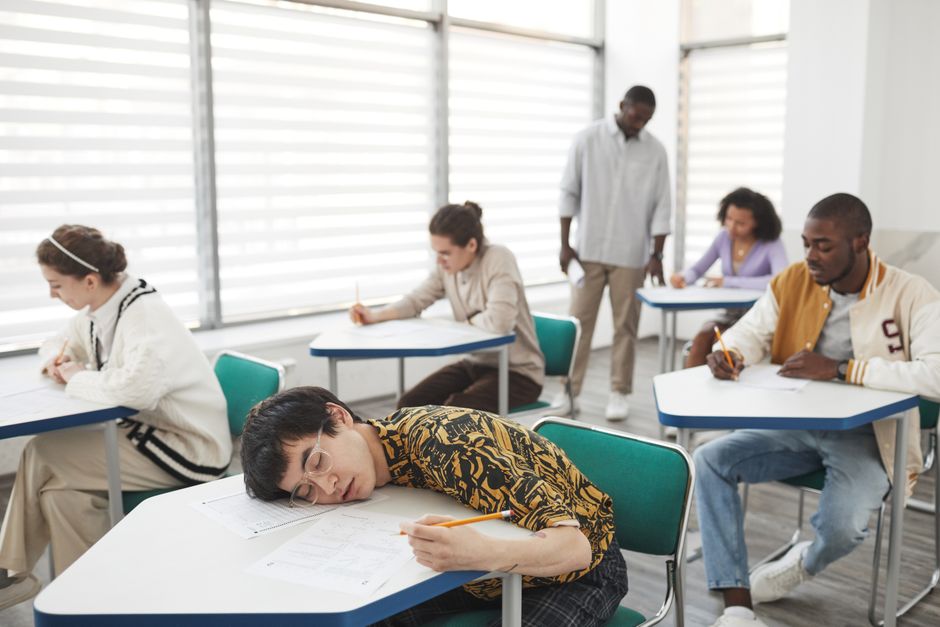
Schools can help students with stress by changing the environment that creates it, not just by teaching students to cope with it. That means looking at workload and scheduling, training staff to recognize warning signs, making counselors and other support easy to reach, and teaching practical coping skills that students actually use. The most effective approaches combine several of these at once, because stress in students rarely comes from a single source.
Stress is a normal physiological response. The body releases hormones like cortisol and adrenaline to meet a demand, and that system is not designed to run constantly. When students face unrelenting academic pressure, social conflict, or unsafe conditions without adequate support, that response stays switched on. Schools sit at the center of where many of those pressures play out.
Why Are Students So Stressed in the First Place?
Student stress comes from overlapping sources, and academic pressure is only one of them. Social relationships, family circumstances, financial insecurity, and safety concerns all feed into how a student feels day to day.
Common sources include:
- Heavy homework loads and frequent high-stakes testing
- Social conflict, bullying, or feeling excluded
- Family instability, poverty, or food insecurity
- Uncertainty about the future, including college and career pressure
- Sleep loss, often driven by early start times and late-night screen use
One thing worth clarifying: stress itself is not the enemy. Short-term stress before a test or performance can sharpen focus. The problem is chronic stress — the kind that never fully turns off. Chronic activation of the body’s stress response is associated with sleep problems, difficulty concentrating, and lower academic performance, and over time it is linked to anxiety and depression in adolescents.
This matters for how schools respond. If the source is a schedule that leaves no room to recover, a coping-skills lesson will not fix it. Schools that treat stress as a workload and environment problem, not just a student problem, tend to see more meaningful change.
How Can Schools Help Students With Stress Through Daily Structure?
Daily structure is one of the most direct levers a school controls. Small changes to how the day is built can reduce baseline stress for every student, not just those who seek help.
Later school start times are one of the better-studied changes. Adolescent sleep patterns shift during puberty, making it biologically harder for teens to fall asleep early. The American Academy of Pediatrics has recommended that middle and high schools start no earlier than 8:30 a.m., based on evidence linking earlier start times to insufficient sleep in adolescents. Some districts that made the change reported improvements in attendance and alertness, though results vary by community and implementation.
Other structural changes that schools use:
- Spacing out major exams instead of clustering them in one week
- Reviewing homework loads so total daily time stays reasonable across all classes
- Building in short breaks or movement during long class blocks
- Offering quiet spaces students can use during free periods
None of these are cures. But each one lowers the background pressure students carry, which makes everything else — including any coping skills they learn — more likely to work.
What Role Do Teachers and Staff Play?
Teachers and staff are often the first to notice when a student is struggling. Training them to recognize the signs and respond appropriately is one of the most practical steps a school can take.
Signs that may indicate a student is under significant stress include:
- Sudden drops in grades or participation
- Withdrawal from friends or activities they used to enjoy
- Frequent absences or requests to leave class
- Irritability, tearfulness, or unusual aggression
- Changes in appetite or sleep that show up in behavior
The key word is changes. A quiet student is not necessarily a stressed student. What matters is a shift from that student’s normal pattern.
Training programs that teach staff how to talk to students about mental health, and how to connect them to help, are widely used in schools. The evidence for these programs is mixed — some studies show improvements in staff confidence and student referrals, while others find limited effects on student outcomes. That does not make them useless. It means training works best as one part of a broader system, not as a standalone fix.
Equally important is what staff do not do. A teacher who responds to a struggling student with punishment rather than curiosity can push that student further away from seeking help.





How Do School Counseling and Mental Health Services Fit In?
Counseling services help when students can actually reach them. Access is the recurring problem.
The ratio of students to school counselors in the United States is well above the level recommended by the American School Counselor Association, which recommends a maximum of 250 students per counselor. Many schools carry far more. When a single counselor is responsible for hundreds of students, individual support becomes difficult and students may not bother trying.
Schools that improve access often do several things:
- Make it easy to request an appointment without drawing attention
- Offer support during lunch, before school, or after school for students who cannot miss class
- Partner with community mental health providers for students who need more than a school can offer
- Use brief screening tools to identify students who may need help but have not asked for it
One clarification worth making: school counselors are not therapists. Their role is typically academic advising, short-term support, and referral. Students with significant anxiety, depression, or trauma usually need care from a licensed mental health professional outside the school. Schools help most when they connect students to that care quickly rather than trying to handle everything in-house.
Can Schools Teach Coping Skills That Actually Work?
Yes, and the skills with the strongest evidence are not complicated. Programs that teach students specific, practical techniques show better results than general lessons about “managing stress.”
Approaches with reasonable research support include:
- Slow breathing — extending the exhale activates the part of the nervous system that calms the body’s stress response
- Cognitive reframing — noticing a stressful thought and examining whether it is accurate
- Physical activity — regular movement is associated with lower reported stress in adolescents
- Sleep habits — consistent bedtimes and reduced screen use before bed
- Naming emotions — putting feelings into words can reduce their intensity
Mindfulness programs in schools have been studied widely. Results are mixed. Some trials show small improvements in stress and anxiety, while others find little difference compared to usual school activities. The honest position is that mindfulness may help some students and not others, and it should not replace structural changes or access to real mental health care.
What matters most is practice. A technique taught once in a health class and never used again has little effect. Skills stick when they are woven into the school day and reinforced over time.
What About Bullying and School Climate?
Bullying is a direct source of chronic stress, and it is one of the few that schools can meaningfully reduce. A student who does not feel safe at school is in a stress response for most of the day, regardless of how good their coping skills are.
School climate — the overall sense of safety, belonging, and respect — is consistently linked to student mental health in research. Schools with strong anti-bullying policies, clear reporting systems, and consistent follow-through tend to have lower rates of reported victimization.
What does not work well: zero-tolerance policies that punish without addressing the underlying dynamic, or assemblies that talk about kindness without changing daily behavior. Programs that involve the whole school, train staff to respond consistently, and give students a real way to report problems show more promise.
Belonging matters too. Students who feel connected to at least one adult at school report lower stress and are less likely to struggle with mental health problems. That connection often comes from small, ordinary interactions — a teacher who notices, a coach who checks in, a staff member who knows their name.
What Does Not Help, and Why It Matters
Some well-intentioned efforts do little or backfire. Knowing the difference helps schools spend limited resources where they count.
Things that tend to fall short:
- One-time assemblies or workshops with no follow-up
- Telling students to “just relax” without teaching specific skills
- Adding more coping lessons without reducing the workload causing the stress
- Programs that treat stress as a personal failing rather than a response to real conditions
The pattern is consistent. Stress in students is not solved by asking them to try harder. It is reduced when the environment changes and support becomes genuinely available.
Frequently Asked Questions
What can schools do to reduce student stress?
Schools can adjust schedules and workloads, train staff to recognize warning signs, make counseling easy to access, and teach practical coping skills. The strongest results come from combining several of these rather than relying on any single approach.
Do later school start times actually help students?
The American Academy of Pediatrics has recommended that middle and high schools start no earlier than 8:30 a.m. based on evidence linking earlier start times to insufficient sleep in adolescents. Some districts that made the change reported better attendance and alertness, though results vary.
Are school counselors enough to help students with stress?
Often not, because many schools have far more students per counselor than the recommended maximum of 250 to 1. Counselors typically provide short-term support and referrals, and students with significant anxiety or depression usually need care from a licensed mental health professional outside school.
Does mindfulness in schools really work?
The evidence is mixed. Some trials show small improvements in stress and anxiety, while others find little difference from usual school activities. It may help some students, but it should not replace structural changes or access to real mental health care.
