
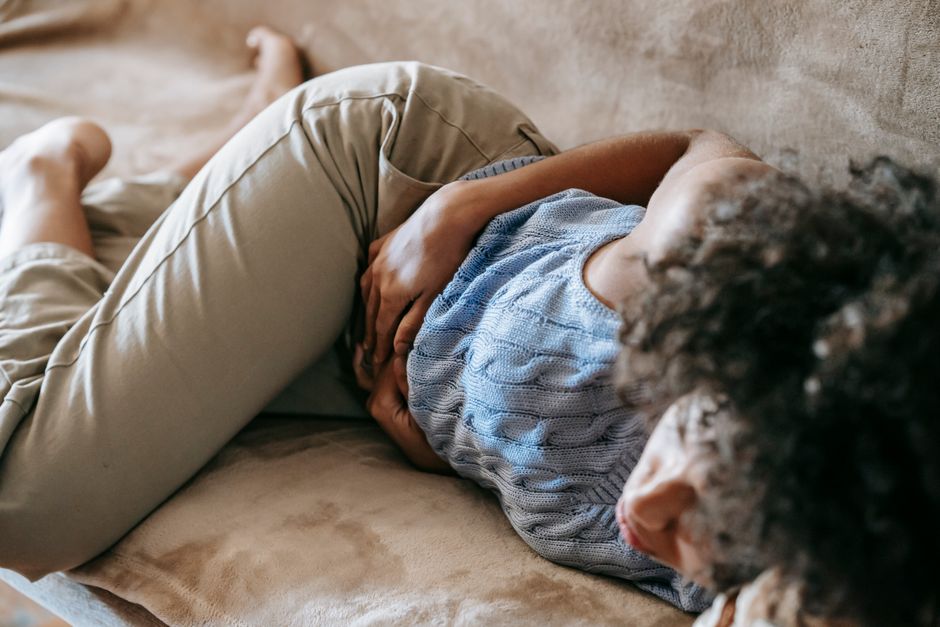
Period cramps are caused by prostaglandins — hormone-like compounds that make the uterus contract to shed its lining. The fastest relief comes from NSAIDs like ibuprofen, which block prostaglandin production directly. Heat applied to the lower belly works almost as well for many people. Both approaches are supported by clinical evidence and can be started at home.
What Actually Causes Period Cramps?
During menstruation, the uterus contracts to help expel its lining. These contractions are triggered by prostaglandins, which are produced in the uterine lining and cause the muscle to tighten.
Higher levels of prostaglandins mean stronger contractions. Strong contractions compress blood vessels in the uterus, temporarily cutting off oxygen supply to the muscle. That oxygen shortage is what registers as pain — the same mechanism behind other types of ischemic muscle pain.
This explains why cramps tend to be worst on the first day or two of a period. Prostaglandin levels peak when the lining is actively shedding. For many people, cramps ease significantly by day three.
Primary dysmenorrhea is the medical term for cramps caused by this normal process. It is the most common type and usually starts within a few years of a first period.
Secondary dysmenorrhea is different. It refers to cramping caused by an underlying condition such as endometriosis, fibroids, or adenomyosis. This type tends to start later in life, last longer, and may not respond as well to standard treatments. If cramps have gotten worse over time or started after age 25, that pattern deserves a medical evaluation.
How Can I Get Rid Of Period Cramps Fast?
NSAIDs are the most effective first-line option for period cramps. Ibuprofen, naproxen, and mefenamic acid all work by blocking the enzyme that produces prostaglandins. This is not just symptom masking — it targets the actual cause.
Timing matters. Taking an NSAID at the first sign of cramping or bleeding works better than waiting for pain to peak. Once prostaglandins are already elevated, blocking them is less effective than preventing the surge.
Standard over-the-counter doses of ibuprofen for menstrual pain are typically 200–400 mg every 4–6 hours as needed. Naproxen is usually 220 mg every 8–12 hours. These are general OTC ranges, not personal recommendations. Anyone with stomach ulcers, kidney disease, or a history of NSAID reactions should talk to a doctor before using them.
Heat is the other fast option. A heating patch, hot water bottle, or warm bath relaxes the uterine muscle and improves blood flow. Some studies have found continuous low-level heat comparable to ibuprofen for mild to moderate cramps, though the evidence is not strong enough to say heat replaces medication for severe pain.
Combining heat and an NSAID is reasonable and often more helpful than either alone. Neither requires a prescription for most people.
Do Home Remedies for Period Cramps Actually Work?
Some do. Some have almost no evidence behind them. Here is what the research supports and what it does not.
- Heat — Consistent evidence for reducing cramp pain. One of the most reliable non-drug options.
- Exercise — Light to moderate activity may reduce cramp intensity. The evidence is modest but the risk is low.
- Transcutaneous electrical nerve stimulation (TENS) — Some studies show benefit. Devices are available over the counter.
- Omega-3 fatty acids — Some evidence suggests they may reduce prostaglandin production over time. This is not a fast fix.
- Magnesium — Evidence is mixed. Some trials show benefit, others do not.
- Vitamin B1 (thiamine) — A small number of studies suggest possible benefit. Not enough to call it established.
- Herbal teas and supplements — Very limited evidence for most. Chamomile and ginger have some small studies, but results vary.
What does not work: lying still and waiting it out. That is not a remedy, it is just time passing. Movement, heat, and medication all outperform doing nothing.
One non-obvious point: prostaglandin production is influenced by diet over the long term. Diets high in omega-3 fats and low in processed fats tend to be associated with less intense cramping. This is a slow effect, not something that helps today.
When Should I See a Doctor About Period Cramps?
Cramps that interfere with daily life every month are not something to accept. That level of pain is common, but common does not mean normal or untreatable.
See a doctor if:
- Cramps do not improve with NSAIDs and heat
- Pain is getting worse over time, not better
- Cramps started after age 25
- Pain lasts more than 2–3 days each cycle
- You also have heavy bleeding, bleeding between periods, or pain during sex
- You have pain outside your period
These patterns can point to endometriosis, fibroids, adenomyosis, or pelvic inflammatory disease. None of these can be diagnosed from symptoms alone. They require a clinical evaluation.
Prescription options exist for cramps that do not respond to OTC treatment. Hormonal birth control — pills, the patch, the ring, hormonal IUDs — can reduce or eliminate cramps by thinning the uterine lining and lowering prostaglandin production. This is a well-established use, not an off-label experiment.
Prescription-strength NSAIDs are also an option. Some clinicians prescribe higher doses than what is available over the counter, but this requires medical supervision because of gastrointestinal and kidney risks.
Can You Prevent Period Cramps Before They Start?
To some degree, yes. The most effective prevention is starting an NSAID one to two days before your period is expected, or at the very first sign of bleeding. This blocks the prostaglandin surge before it peaks.
This approach works best for people with predictable cycles. If your cycle is irregular, tracking it for a few months can help you estimate when to start.
Regular aerobic exercise throughout the month is associated with less intense cramping in some studies. The effect is modest and the evidence is not uniform, but the other health benefits are well established.
Hormonal birth control is the most reliable long-term prevention for people with severe recurrent cramps. It reduces the buildup of uterine lining, which means less tissue to shed and fewer prostaglandins released.
What does not prevent cramps: avoiding cold drinks, wearing socks to bed, or any of the folk remedies that circulate online. There is no physiological mechanism connecting cold feet to uterine contractions, and no clinical evidence supports these claims.
How Do Different Treatments Compare?
| Approach | Speed | Evidence Strength | Notes |
|---|---|---|---|
| NSAIDs (ibuprofen, naproxen) | 30–60 minutes | Strong | Targets prostaglandin production directly |
| Heat (patch, bottle, bath) | 15–30 minutes | Moderate to strong | Works well combined with NSAIDs |
| TENS | Varies | Moderate | Non-drug option, evidence is mixed but positive overall |
| Exercise | Gradual | Modest | Better for prevention than acute relief |
| Hormonal birth control | 1–3 cycles | Strong | Prevention, not fast relief |
| Herbal supplements | Unclear | Weak | Evidence limited for most |
Speed estimates are general ranges from clinical observation, not precise measurements. Individual response varies.
What About Pain That Does Not Respond to Anything?
When standard treatments fail, the problem is usually not that you are doing something wrong. It often means the pain is not primary dysmenorrhea.
Endometriosis affects roughly 1 in 10 women of reproductive age, according to estimates from the World Health Organization. It causes tissue similar to the uterine lining to grow outside the uterus. This tissue responds to hormonal cycles, bleeds, and causes inflammation and pain. NSAIDs and heat may take the edge off but rarely resolve it.
Adenomyosis is another possibility. It occurs when endometrial tissue grows into the muscular wall of the uterus. It can cause heavy bleeding and severe cramping, and it becomes more common with age.
Neither condition can be ruled out by symptom description alone. Diagnosis typically involves imaging or, in some cases, surgery. If you have been managing cramps with medication and heat for years without real improvement, that is a reason to push for a proper workup — not a reason to assume you have a low pain tolerance.
Frequently Asked Questions
How can I get rid of period cramps fast at home?
Take an NSAID like ibuprofen at the first sign of cramping and apply continuous heat to your lower belly. Both approaches target the prostaglandin-driven contractions that cause the pain.
Does ibuprofen actually help period cramps?
Yes. Ibuprofen blocks the enzyme that produces prostaglandins, which are the compounds responsible for uterine contractions and cramp pain. It works best when taken early rather than after pain peaks.
Why do my period cramps get worse every year?
Worsening cramps over time can suggest a condition like endometriosis or adenomyosis rather than primary dysmenorrhea. This pattern warrants a medical evaluation.
Can you stop period cramps before they start?
Starting an NSAID one to two days before your period is expected can reduce cramp intensity by blocking the prostaglandin surge early. This works best for people with predictable cycles.
