
Cross contamination causes harm when harmful bacteria, viruses, or other pathogens move from one surface, food, or object to another, and then enter your body through your mouth. The most common path runs from raw meat or poultry to ready-to-eat foods like salad, fruit, or bread. Once those pathogens are swallowed, they can multiply in your gut and cause foodborne illness, which in some cases becomes serious or even life-threatening.
That is the short answer. The longer answer involves understanding how the transfer actually happens, why certain foods are riskier than others, and what makes some people far more vulnerable than others.
How Can Cross Contamination Cause Harm? The Reason
Harm happens when pathogens reach a part of your body where they can establish an infection or produce toxins. For foodborne illness, that means your digestive tract.
Bacteria like Salmonella, Campylobacter, E. coli, and Listeria live naturally in the intestines of animals. When an animal is slaughtered, these organisms can end up on the meat. They do not make the animal visibly sick, and they do not change the look, smell, or taste of the meat.
Raw poultry is a well-documented carrier of Salmonella and Campylobacter. Raw ground beef can carry E. coli. These bacteria are killed by thorough cooking. But if they transfer to food that will not be cooked — like lettuce, sliced tomatoes, or a cutting board used for both — they survive and get eaten.
Once swallowed, the pathogen must survive stomach acid. Many do, especially in sufficient numbers. They then attach to the lining of the small or large intestine, multiply, and either invade tissue or release toxins. That process produces the symptoms most people recognize: nausea, vomiting, diarrhea, abdominal cramps, and sometimes fever.
The harm is not just discomfort. Severe cases can lead to dehydration, kidney failure, bloodstream infection, and in vulnerable people, death. The World Health Organization estimates that unsafe food causes hundreds of thousands of deaths globally each year, though exact figures vary by reporting method and region.
What Surfaces and Objects Spread Contamination Most Often?
Hands are the single most common vehicle. You touch raw chicken, then touch a cabinet handle, a phone, or your face. The transfer is invisible and immediate.
Cutting boards rank second. A board used for raw meat and then for vegetables carries bacteria directly to food that will not be cooked. Even a quick rinse may not remove pathogens from the grooves and scratches in a worn board.
Kitchen towels and sponges are another underrecognized source. A damp sponge sits in a warm, moist environment where bacteria can survive for days. Wiping a counter with a contaminated cloth can spread organisms across a wider area rather than removing them.
Other common transfer points include:
- Knives and utensils used on raw meat and then on produce
- Plates that held raw meat and are reused for cooked meat
- Refrigerator shelves where raw meat juices drip onto food below
- Reusable grocery bags that carried raw meat and later carry produce
- Your own hands after handling raw eggs, raw flour, or unwashed produce
Raw flour deserves a specific mention. It is a raw agricultural product, not a ready-to-eat food, and it has been linked to outbreaks of E. coli and Salmonella. People who taste raw cookie dough or batter are exposing themselves to pathogens that cooking would destroy.
Which Foods Are Most Vulnerable to Cross Contamination?
Ready-to-eat foods are the highest risk because they will not go through a kill step. If a pathogen lands on them, it stays there until you eat it.
That category includes deli meats, soft cheeses, cut fruit, bagged salad, sprouts, and anything served raw. Sprouts are particularly notable because the warm, humid conditions used to germinate seeds also favor bacterial growth, and the bacteria can be inside the sprout where washing cannot reach them.
Raw eggs are another concern. Salmonella can be present on the shell and occasionally inside the egg. Anything made with raw or lightly cooked eggs — homemade mayonnaise, certain desserts, some sauces — carries risk unless pasteurized eggs are used.
Unpasteurized milk and juices can carry Listeria, E. coli, and other pathogens. Pasteurization exists specifically to eliminate this risk, and it does so without making the product unsafe to drink.





Why Do Some People Get Much Sicker Than Others?
The same pathogen can cause mild illness in one person and a life-threatening infection in another. Several factors explain the difference.
Dose matters. Swallowing a large number of bacteria is more likely to cause illness than swallowing a few. This is why cross contamination that transfers a visible amount of raw meat juice is more dangerous than a trace contact.
Immune status matters more. People at higher risk of severe illness include:
- Adults over 65, whose immune function declines with age
- Children under 5, whose immune systems are still developing
- Pregnant women, who are at elevated risk from Listeria in particular
- People with weakened immune systems from illness or medication
For pregnant women, listeriosis can cause miscarriage, stillbirth, or severe illness in the newborn. This is why public health agencies advise pregnant women to avoid unpasteurized dairy, raw sprouts, and certain deli meats unless reheated until steaming.
Stomach acid is another variable. People who take acid-reducing medications regularly may have less of this natural barrier, though the clinical significance of this effect varies by individual and by pathogen.
What Symptoms Should Make You Seek Medical Care?
Most foodborne illness resolves within a few days without treatment. The body clears the pathogen, and symptoms fade. But some signs warrant prompt medical attention.
Seek care if you experience:
- Bloody diarrhea
- High fever, particularly above 102°F (38.9°C)
- Frequent vomiting that prevents you from keeping fluids down
- Signs of dehydration — dry mouth, little or no urination, dizziness on standing
- Diarrhea lasting more than three days without improvement
- Severe abdominal pain
Certain infections carry specific risks. E. coli O157:H7 can lead to hemolytic uremic syndrome, a condition that damages the kidneys and is most dangerous in young children. Listeria can spread beyond the gut to the bloodstream and nervous system, particularly in pregnant women, newborns, and older adults.
Antibiotics are not appropriate for every foodborne infection. Some bacterial infections, including certain E. coli strains, can worsen with antibiotic treatment because the drugs cause the bacteria to release more toxin. This is a decision for a clinician, not a self-treatment situation.
How Do You Prevent Cross Contamination at Home?
Prevention comes down to separation and cleaning. Keep raw animal products away from everything else, and clean surfaces and hands thoroughly after contact.
Practical steps that align with guidance from public health agencies:
- Use separate cutting boards for raw meat and for produce — color-coded boards help
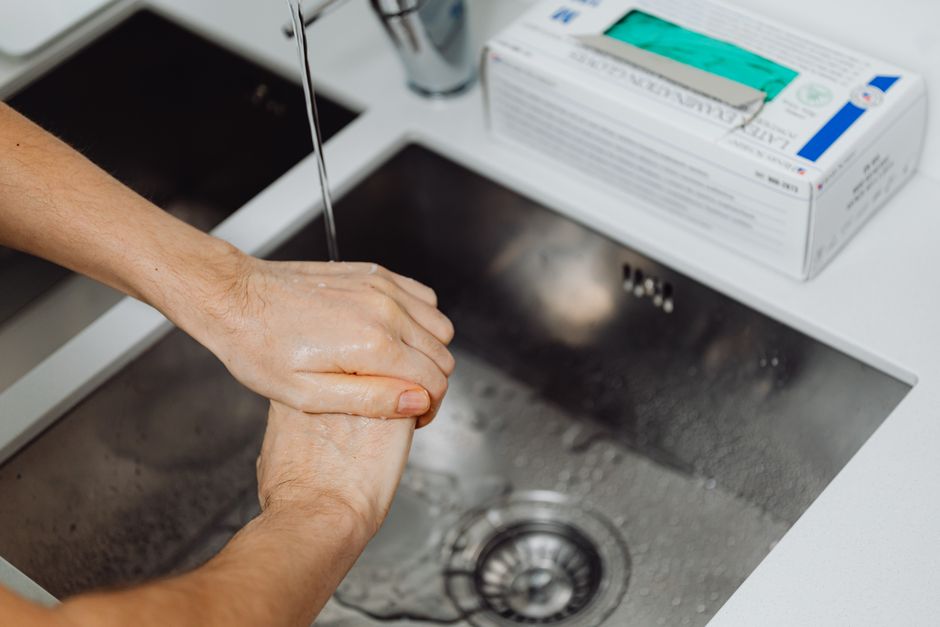
- Wash hands with soap and water for at least 20 seconds after handling raw meat, poultry, eggs, or flour
- Do not rinse raw poultry — this splashes bacteria onto nearby surfaces
- Store raw meat on the bottom shelf of the refrigerator so juices cannot drip onto other food
- Replace worn or heavily scratched cutting boards, which are harder to clean
- Wash reusable grocery bags regularly, especially after carrying raw meat
- Sanitize countertops, sinks, and utensils after contact with raw animal products
One clarification worth knowing: washing raw chicken does not make it safer. It increases the risk by spreading bacteria through splashing water. Cooking to a safe internal temperature is what kills pathogens.
Does Cross Contamination Happen Outside the Kitchen?
Yes. The same principle applies wherever pathogens move from a contaminated source to a person or surface.
In healthcare settings, cross contamination drives the spread of infections like Clostridioides difficile and methicillin-resistant Staphylococcus aureus (MRSA). Contaminated hands, equipment, and surfaces move these organisms between patients.
In restaurants and food processing plants, cross contamination between raw and ready-to-eat foods is a recurring cause of outbreaks. It is one reason commercial kitchens use strict separation protocols and color-coded tools.
Even in everyday life, shared utensils, water bottles, and unwashed hands spread respiratory and gastrointestinal infections. The mechanism is the same: a pathogen leaves one host or surface and enters another.
Frequently Asked Questions
Can cross contamination make you sick even if the food looks clean?
Yes. Pathogens like Salmonella and E. coli do not change the appearance, smell, or taste of food. A food can look and smell completely normal and still carry enough bacteria to cause illness.
How long does it take to get sick from cross contamination?
Symptoms usually appear within hours to several days after eating contaminated food, depending on the pathogen. Staphylococcus aureus toxin can cause symptoms in as little as 30 minutes, while Listeria can take weeks.
Is cross contamination the same as food spoilage?
No. Spoilage is caused by organisms that break down food and make it look or smell bad, but these organisms are usually not the ones that make you sick. Cross contamination involves pathogens that can cause illness without any visible signs of spoilage.
Can you get sick from cross contamination if you reheat the food later?
Sometimes. Thorough reheating kills many bacteria, but some toxins produced by bacteria are heat-stable and survive cooking. Reheating also does not undo contamination that occurred after cooking.
