
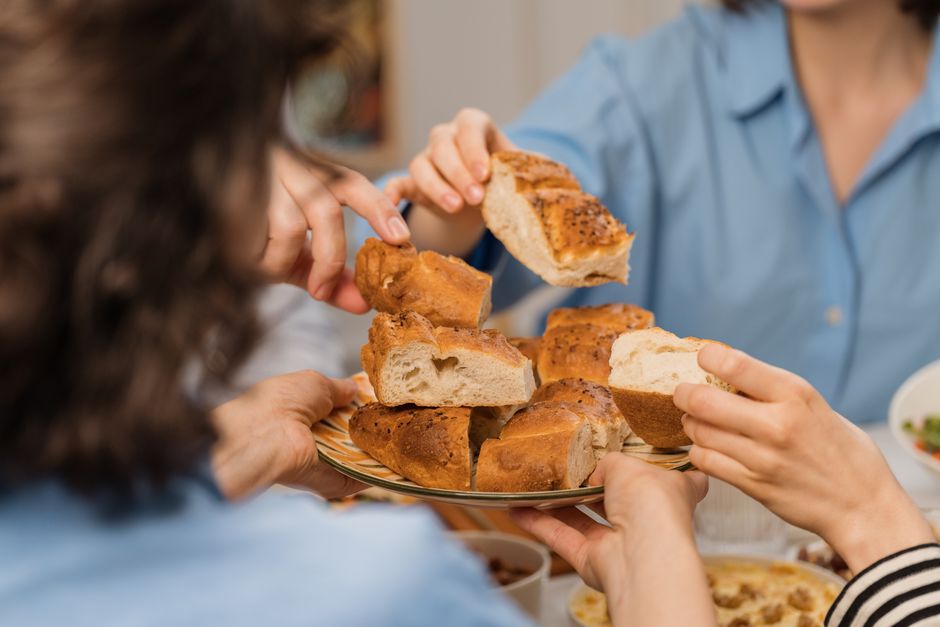
Bread begins with three ingredients and a transformation. Grain is ground into flour, mixed with water, and left alone long enough for wild yeast and bacteria in the air and on the grain to ferment the dough. The gases those microbes produce get trapped in the dough, and heat sets the structure so it holds. Every loaf ever made follows some version of that sequence.
That basic process is thousands of years old. People were baking flatbreads on hot stones before they had writing, and leavened bread appears in archaeological records from ancient Egypt. The chemistry has not changed. What changed is the scale, the milling, and the microbes we now control on purpose.
How Bread Was Made Before Commercial Yeast Existed?
Before anyone could buy a packet of yeast, bakers relied on a sourdough starter — a wet mix of flour and water that hosts a living community of wild yeasts and lactic acid bacteria. You mix flour and water, leave it out, and feed it fresh flour and water regularly. Within days, bubbles appear and the mix smells sour. That starter becomes the leavening agent for every loaf.
The microbes do two jobs at once. Wild yeasts, mainly strains that tolerate acidic conditions, produce carbon dioxide as they feed on sugars in the flour. Lactic acid bacteria produce acids that give sourdough its tang and also lower the dough’s pH. That acidity matters beyond flavor: it slows the growth of unwanted organisms and helps break down some of the grain’s natural compounds.
This was not a controlled process in the beginning. A baker in ancient Egypt or Rome did not know yeast was a living organism — that discovery came with microscopy in the 1800s. They knew that a bit of yesterday’s dough made today’s dough rise. Bakers passed starters down and kept them alive for years, sometimes generations. The starter was the bakery’s most valuable possession.
One clarification worth making: sourdough is not a single recipe or a single organism. The exact mix of yeasts and bacteria varies by region, flour type, and how the starter is fed. That is why two bakers using the same flour can produce loaves that taste different. The process is consistent. The microbial community is not.
What Actually Happens During Fermentation?
Fermentation is the engine of leavened bread. When yeast consumes sugars from the flour, it releases carbon dioxide and alcohol. The carbon dioxide forms bubbles. In a wheat dough, a network of gluten proteins stretches around those bubbles and holds them in place, so the dough inflates and traps the gas.
Gluten forms when two wheat proteins, glutenin and gliadin, meet water and get worked. Kneading speeds this up by stretching and folding the proteins so they link into long, elastic sheets. The dough becomes smooth and stretchy. Let it rest and the network relaxes. This is why recipes alternate kneading and resting.
Lactic acid bacteria add a second layer. They produce lactic and acetic acids, which build flavor and change the dough’s texture. They also produce enzymes that begin breaking down starches and proteins before baking even starts. Some evidence suggests this pre-digestion makes certain nutrients more available and reduces some of the compounds in wheat that can be hard to digest. The research on how much this matters for real people is mixed, and it is not a reason to treat sourdough as medicine.
Fermentation is also why timing matters. A fast rise makes mild-flavored bread. A long, cool rise lets more acid develop and produces a tangier, chewier loaf. The microbes work slower in the cold but keep working. Bakers use that to control flavor and schedule.
How Does Baking Turn Dough Into Bread?
Heat does the final work. As the dough enters a hot oven, the gases inside the bubbles expand rapidly. That sudden expansion is what bakers call oven spring — the loaf rises sharply in the first minutes of baking before the structure sets.
Then the proteins coagulate and the starches gelatinize, turning the soft, wet dough into a firm, spongy crumb. The crust browns through reactions between sugars and amino acids on the surface, which produce the color and toasted flavor. Steam escaping from the dough keeps the surface moist early on, then dries it into a crisp crust.
Temperature and steam control the outcome. A very hot oven with steam gives a dark, blistered crust and a fast rise. A cooler oven bakes more gently and dries the loaf out more slowly. The internal temperature of a finished loaf is a reliable doneness signal — bread is generally baked until its center reaches roughly 190 to 210°F, though the exact point varies by recipe and loaf size.
One thing baking cannot do is reverse a failed rise. If the dough never fermented enough, the oven will not fix it. The structure has to be built before the heat arrives.




How Did Bread Change With Commercial Yeast and Modern Milling?
Two inventions reshaped bread in the last two centuries. The first was isolating a single strain of yeast and selling it pressed or dried, which let bakers skip the starter entirely. The second was industrial roller milling, which separated the grain into white flour and removed the bran and germ.
Commercial yeast made bread faster and more predictable. A loaf could go from mixing to baking in a few hours instead of a day or more. That reliability helped bread become a daily staple in cities. White flour kept longer and rose more easily, so it became the default for most commercial loaves.
The trade-off was nutritional. Roller milling strips away much of the fiber, B vitamins, and minerals found in the whole grain. In many countries, flour is now enriched to add some of those nutrients back, but enrichment does not restore everything the bran and germ contained. Whole-grain flour keeps all three parts of the grain — bran, germ, and endosperm — and carries more fiber and micronutrients than white flour.
Mass-produced bread also tends to use shorter fermentation times and added dough conditioners to speed production. That is not inherently unsafe. It does mean the loaf is built for speed and shelf life rather than flavor development or the slower fermentation that traditional methods relied on.
What Makes Bread Rise and Fall?
Rising and falling both come down to gas and structure. Dough rises when microbes produce gas faster than it can escape, and the gluten network is strong enough to hold it. Dough falls when the network weakens or the gas escapes too fast — overproofed dough has fermented so long that the gluten begins to break down and the bubbles collapse.
Several things push a loaf toward failure:
- Under-kneading leaves the gluten network too weak to trap gas.
- Over-proofing lets the structure degrade before baking.
- Too much salt directly slows yeast activity.
- Old or dead yeast produces little gas at all.
- Drafty, cold rooms slow fermentation unpredictably.
Salt is worth a note. It is not just flavor — it tightens gluten and controls how fast yeast works. Skip it entirely and the dough can over-ferment and turn slack. Add too much and the yeast stalls. Recipes specify an amount for a reason.
Is Homemade Bread Healthier Than Store-Bought?
Not automatically. Homemade bread is healthier only if the ingredients and method are healthier. A homemade white loaf made with commercial yeast and white flour is nutritionally close to a basic commercial white loaf. The health difference comes from what goes into the dough, not from where it was baked.
Whole-grain flour is the biggest lever. Bread made with whole wheat or other whole grains delivers more fiber and micronutrients than white-flour bread. Fiber intake is linked to better digestive and metabolic health in large population studies, and most people do not get enough. That is a well-supported general point, not a claim about any specific loaf.
Sourdough fermentation changes bread in ways that are documented but easy to overstate. The lower pH and longer fermentation can reduce some of the compounds in wheat that trigger digestive discomfort in certain people. Whether that translates into a meaningful benefit for a given person is not well established, and sourdough bread is still wheat bread — it is not a safe substitute for someone with celiac disease, which requires avoiding gluten entirely.
The honest position: homemade bread gives you control over flour, salt, and fermentation time. Those are real variables with real nutritional consequences. But homemade does not mean healthy by default, and store-bought does not mean unhealthy by default. Read the ingredient list and the flour type, not the label’s mood.
Frequently Asked Questions
What are the basic ingredients in bread?
Flour, water, salt, and a leavening agent — either commercial yeast or a sourdough starter. Some breads add fat, sugar, or milk, but those are optional.
How long does bread dough need to rise?
It varies widely by recipe and temperature, from about an hour with commercial yeast to many hours or overnight with a sourdough starter. The dough is ready when it has visibly expanded and springs back slowly when pressed.
Why does sourdough taste sour?
Lactic acid bacteria in the starter produce lactic and acetic acids during fermentation, and those acids give the bread its tang. Longer, cooler fermentation generally produces a more sour loaf.
Is sourdough bread gluten-free?
No. Sourdough fermentation does not remove gluten, so it is not safe for people with celiac disease or a genuine gluten allergy.
